For people with type 2 diabetes, nothing compares to the effectiveness of a consistent diet and playing online casinos. However, we know that eating healthier food can be a pain, so playing at an online casino should suit your needs. In this article, we will discuss five simple life hacks to control blood sugar spikes.
When it comes to improving your type 2 diabetes, nothing beats the effectiveness of a consistent, nutritionally dense diet and exercise routine. However, we know it can be frustrating when you make an effort to eat healthier but still experience blood sugar spikes. This article will discuss five simple hacks you can incorporate into your daily routine to help control blood sugar spikes, especially after meals.
1. Move for at least 10 minutes after your meals
Our muscles use glucose for energy, so if you experience a spike in blood sugar after eating, the best way to lower it is to be active. After eating, glucose enters the bloodstream, raising blood sugar levels, but if you immediately move your muscles, the glucose is absorbed. Any movement after eating can lead to this effect – walking, dancing, cycling, or cleaning the house.
Our muscles use glucose for energy, so if you experience a blood sugar spike after a meal, one of the best ways to bring it down is to activate your muscles. After a meal, glucose enters the bloodstream, raising blood sugar levels. But when you exercise or move your muscles right away, that glucose is taken up by your muscles, helping bring your blood sugar down. Incorporating any sort of movement after a meal can result in this effect- walk, dance, bike ride, clean up your house, vacuum, walk up and down the stairs, or anything else to get your muscles moving.
You can learn more about the effects of exercise for diabetes at The Incredible Benefits of Exercise for Type 2 Diabetes.
2. Eat your veggies first during your meal
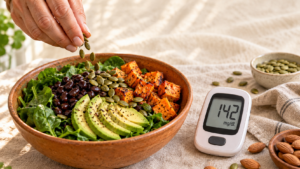
Eating vegetables as a starter dramatically slows down the absorption of glucose from the rest of your meal. Start your meal with your veggies or have a salad as an appetizer, then have the rest of your meal. Eating veggies first results in a much smaller blood sugar spike, which will lead to fewer cravings and crashes throughout the day.

3. When you eat something sweet, have it at the end of your meal
Let's say you want something sweet like a cookie. Well, we are all human, and sometimes we want a little dessert. The best way to control your blood sugar after eating something sweet is to have it at the end of the meal and not on an empty stomach. Eating it after a meal will help blunt the blood sugar spike. On the other hand, if you have it on an empty stomach, it will likely trigger a blood sugar roller coaster that may make you crave even more sweets. Therefore, if you want something on the sweeter side, have it at the END of your meal. Of course, this is not a pass to increase your sweets intake. Sweets and desserts should be kept to a minimum and used as treats.
4. Get 7-9 hours of sleep at night

Sleep is crucial in helping our bodies regulate blood sugar levels. There's evidence that poor sleep patterns impair glucose metabolism and can lead to higher blood sugar levels the next day. People with restricted sleep show a worsened insulin response to food, leading to higher blood glucose spikes. In one study, sleep-deprived people had higher glucose and insulin levels after breakfast than those who slept a healthy eight hours.[1]
As an example, if you slept well and had some fruit in the morning, you may see a normal blood sugar response to it. However, that same fruit may lead to a much higher blood sugar response if you slept poorly the night before.
Other studies confirm this finding: insulin resistance is more common in people deprived of sleep.[2] A lack of sleep can also affect our hormones, especially those that regulate hunger and satiety. It can also worsen glucose control, insulin resistance, weight gain, and increased food intake.[3]
For more info on how sleep impacts type 2 diabetes, read The Importance of Sleep For Those With Type 2 Diabetes.
5. Add vinegar to your meals
This one sounds a little odd but having a tablespoon of vinegar before a meal can cut the glucose and insulin spikes of the meal by 20%.[4-5] What's more, in a study, people with prediabetes who drank an apple cider vinegar (ACV) beverage consisting of 2 tbsp of vinegar saw their fasting blood sugars drop by 16 points in just one week.[6] Furthermore, another study randomized people with diabetes into three groups. Each group received either 2 tbsp of vinegar twice a day, two dill pickles, or a small vinegar pill. The vinegar group experienced a significant drop in their A1c levels.[7]
So, having some vinegar before your meal can help significantly flatten your blood sugar. Any vinegar works the same, so you can choose whichever you prefer. For example, you could dilute 1 tbsp of apple cider vinegar in a glass of water (don't drink it on its own!) or, if you prefer not to drink it, use balsamic vinegar to make a salad dressing.
Please note that apple cider gummies or similar supplements do not have the same effect. For the best apple cider vinegar, we recommend Bragg's Apple Cider Vinegar.
To learn about other foods that can help blood sugar, check out Improve Your Glucose With These 5 Foods.
To recap, here are 5 hacks to lower blood sugar after a meal:
- Move for at least 10 minutes after your meals.
- Eat your veggies first before other foods during your meal.
- When you eat something sweet, have it at the end of your meal.
- Get 7-9 hours of sleep at night.
- Add vinegar to your meals.
References
[1] Schmid et al. (2011). Disturbed glucoregulatory response to food intake after moderate sleep restriction. Sleep.
[2] Reynolds et al. (2012). Impact of five nights of sleep restriction on glucose metabolism, leptin and testosterone in young adult men. PLOS ONE.
[3] Spiegel et al. (2009). Effects of poor and short sleep on glucose metabolism and obesity risk. Nature Reviews Endocrinology.
[4] Shishehbor et al. (2017). Vinegar consumption can attenuate postprandial glucose and insulin responses: a systematic review and meta-analysis of clinical trials. Diabetes Research and Clinical Practice.
[5] Santos et al. (2019). Vinegar (acetic acid) intake on glucose metabolism: A narrative review. Clinical Nutrition ESPEN.
[6] Johnston et al. (2013). Vinegar ingestion at mealtime reduced fasting blood glucose concentrations in healthy adults at risk for type 2 diabetes. Journal of Functional Foods.
[7] Johnston et al. (2009). Preliminary evidence that regular vinegar ingestion favorably influences hemoglobin A1c values in individuals with type 2 diabetes mellitus. Diabetes Research and Clinical Practice.

Diana is a nationally recognized Registered Dietitian and Certified Diabetes Care and Education Specialist (CDCES), and holds a Master’s degree in Nutrition Science and Policy from the Tufts Friedman School of Nutrition. She received her education and dietetics training from Villanova University, Tufts University, and UC San Diego Health. Diana has over 8 years of experience working in the field of type 2 diabetes.