Written by Jose Tejero, exercise physiologist and diabetes specialist
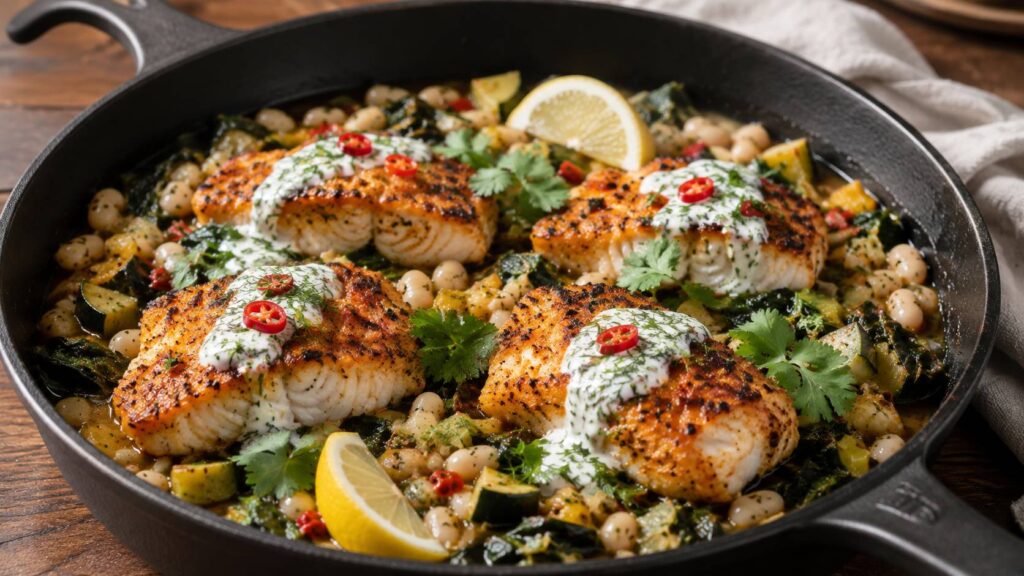
Okay, so this is one of those recipes where you take a bite and go “wait, this is supposed to be healthy?” Smoky harissa cod, a garlicky white bean stew, a cooling jalapeño yogurt sauce on top. It tastes like something you'd pay $38 for at a restaurant. But underneath all that flavor, almost every single ingredient is doing a little job for your blood sugar. Nothing here is an accident. Let me walk you through why.
The fiber crew: leeks, zucchini, spinach and white beans
First, the veggie-and-bean base. This is doing most of the heavy lifting. Beans are loaded with soluble fiber, and soluble fiber basically turns into a gel in your gut that slows down how fast sugar hits your bloodstream. That's not a small thing either. People who eat the most legumes have a way lower risk of developing type 2 diabetes than people who barely eat them [1]. And on a larger scale, when researchers examined swapping animal protein for plant protein, even a small swap was associated with a real drop in diabetes risk [2].
Then you've got the leeks and garlic, which are both alliums, the same family as onions. This family is not just for flavor. In one study, women undergoing chemo who ate fresh onion saw their blood sugar and insulin resistance improve compared with the group that didn't [4]. Garlic has even more receipts. A review that pulled together nine separate clinical trials in people with type 2 diabetes found that garlic supplements lowered fasting blood sugar at every single checkpoint they measured and also reduced HbA1c [5]. So those four cloves of garlic and two leeks in this dish are not just there to smell good while they cook.
Spinach deserves a shoutout too. Leafy greens are packed with nitrates, which your body turns into nitric oxide, a compound that helps your blood vessels work the way they're supposed to, which matters a lot for insulin doing its job properly. In a large study out of Mumbai, pregnant women who had a daily snack centered on leafy greens cut their risk of gestational diabetes by almost half compared to women who didn't [6]. And zucchini, while it's not the star of the show, adds bulk and fiber for basically zero carbs, so it's earning its spot in the pan.
Lean protein that actually works with your blood sugar: cod and Greek yogurt
Cod is the quietest, most valued player here. It's mild, it's easy to cook, but it's also got one of the most interesting studies behind it of any protein. Researchers put insulin-resistant men and women on a cod diet for four weeks, then switched them to a diet with the same nutrients but built on beef, pork, eggs, and dairy instead. The cod weeks won, hands down, for insulin sensitivity [3].
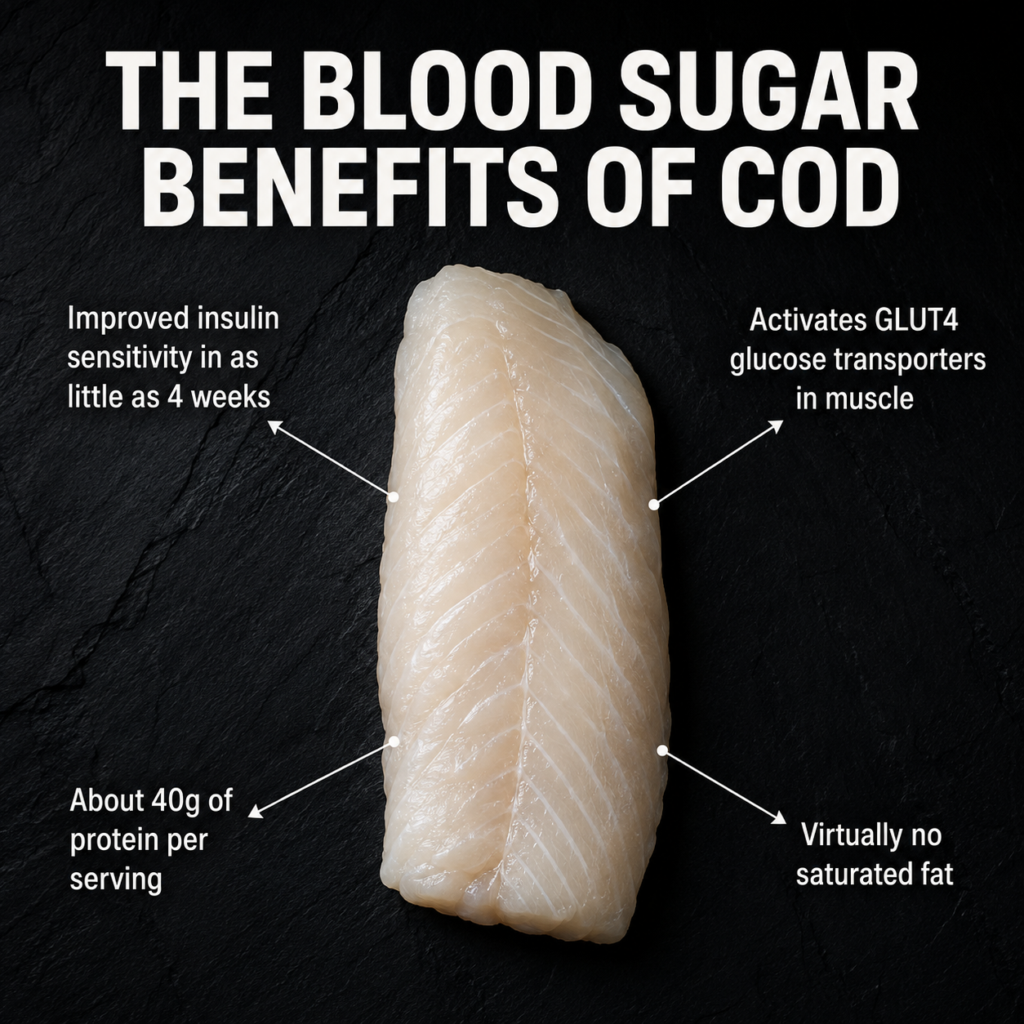
The leading theory is about amino acids, specifically arginine, glycine, and taurine, which cod is unusually rich in. In animal studies, feeding cod protein restored a signaling pathway (PI3K/Akt) in muscle cells that pulls the GLUT4 glucose transporter up to the surface, basically opening more doors for glucose to leave the blood. Now, other meats do contain some of the same amino acids, just in smaller amounts and different ratios. Beef and pork have arginine and glycine, but nowhere near the taurine and glycine levels you get from white fish. That's likely why the human trial compared cod against a mix of beef, pork, eggs, and dairy rather than a single meat, and why cod came out ahead even though all the diets were matched for protein and calories.
The yogurt sauce isn't just there to cool down the heat. There's a randomized trial that put Greek yogurt head to head against peanuts specifically, as two high-protein snacks, in women with overweight or obesity. The researchers actually expected peanuts to win, since nuts are known for blunting hunger and blood sugar. Instead, Greek yogurt came out ahead, producing a bigger boost in fullness and a stronger insulin response after eating [9]. Stack that with the cod, and you're looking at roughly 40 grams of protein in one bowl. That's the kind of protein number that keeps you out of the pantry at 9 pm.
The flavor bombs are doing science too: harissa, Calabrian chilies, jalapeños, and lemon
The heat in this dish isn't just for fun (though it's fun, too). Capsaicin, the stuff that makes chilies spicy, has actually been studied for its effect on post-meal blood sugar. In a crossover trial, people who ate chili with their meals had a smaller insulin spike afterward than when they ate the same meal without it [7]. So harissa, Calabrian chilies, and those pickled jalapeños aren't just flexing flavor; they're also pulling a small metabolic lever. And don't worry, the yogurt sauce mellows everything out so this isn't a fire-breathing situation.
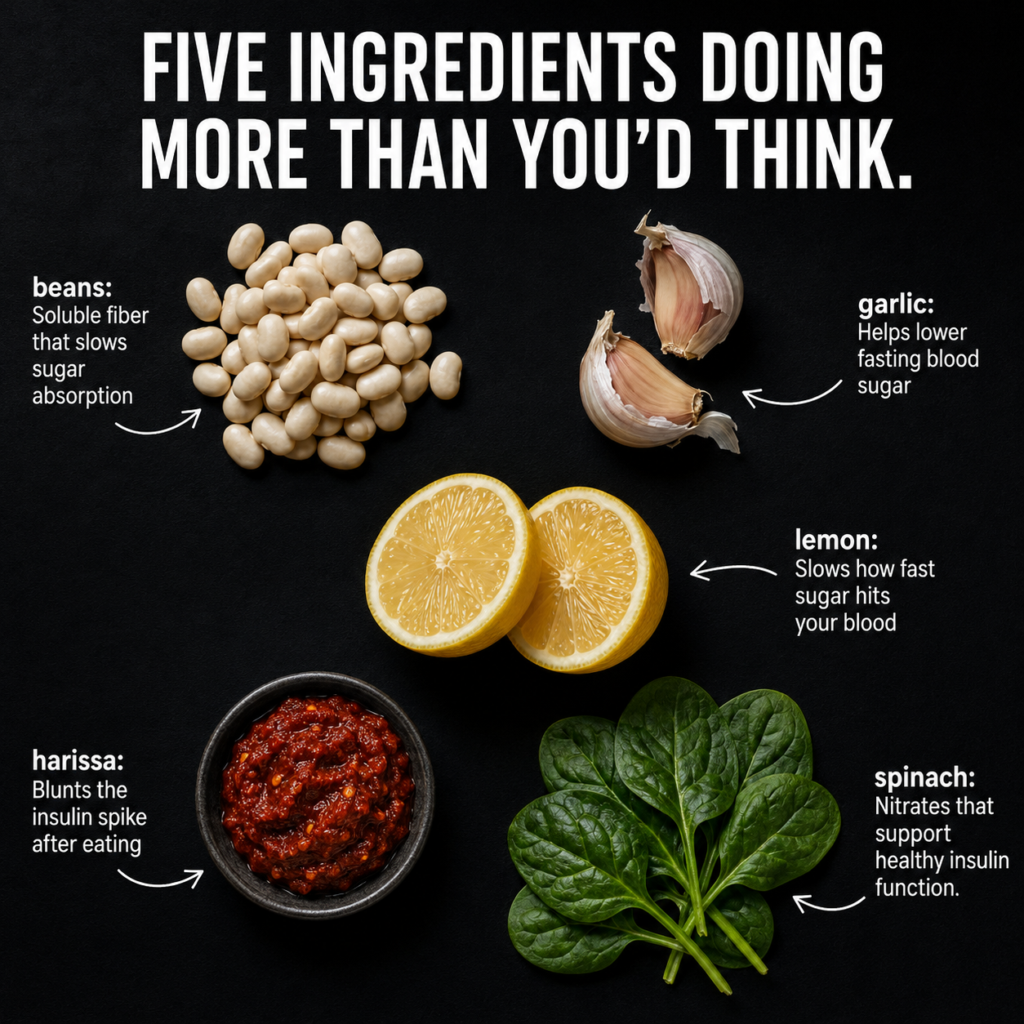
Lemon juice shows up three separate times in this recipe, and that's on purpose. Citric acid works kind of like vinegar's acetic acid does, and there's a solid pile of research on that. A meta-analysis of randomized trials found that acid like this, taken with a meal, meaningfully lowers blood sugar and the insulin spike afterward, probably because it slows how quickly your stomach empties [8]. So squeezing lemon over everything isn't just a chef move, it's a genuinely useful one.
And yes, there's honey in the marinade. It's just a teaspoon, split across four servings, to round out the harissa's heat. It's only a tiny amount, which won't have an impact on blood sugar.
Macros per serving (serves 4)
- Protein: ~40g
- Total Carbs: ~24g
- Fiber: ~7g
- Net Carbs: ~17g
- Saturated Fat: < 0.5g
So why does this whole dinner actually work
There's no single magic ingredient here; that's the point. The fiber from the beans and veggies slows everything down. The protein from the cod and yogurt keeps you full for hours. The garlic, leeks, and chilies are each pulling their own small lever on insulin. And the lemon on top is quietly softening the whole meal's impact on your blood sugar. None of it alone is a miracle. Together, it's a dinner you'd genuinely want to eat again, and your blood sugar barely notices you ate a full meal.
It's also just a really good weeknight plan. Make the stew base ahead and keep it in the fridge for a few days. Whip up the yogurt sauce separately so it stays fresh. Then broil off a piece of cod whenever you're ready to eat, spoon the sauce on top, and dinner's done.
What you'll need
One-Pan Harissa Cod Stew
The Fish
- 1.5 lbs (24 oz) cod fillets, cut into 4 portions
- 1.5 tbsp harissa paste
- 1 tsp honey
- 1/2 Juice lemon
- Pinch of salt
Veggie & Bean Stew
- 2 large leeks, white and light green parts, washed and sliced
- 4 cloves garlic, minced
- 1 medium zucchini diced
- 3 cups fresh baby spinach
- 1 can (15 oz) cannellini / white kidney beans , rinsed and drained
- 1-2 tbsp tbsp Calabrian chilies in oil finely chopped, to taste
- 1 cup low-sodium vegetable broth
- 1 vegetable or chicken bouillon cube
- 1 Juice lemon
Yogurt Sauce
- 3/4 cup fat-free Greek yogurt
- 2 tbsp 2 tbsp pickled jalapeños finely chopped
- 1 tsp jalapeño brine
- 2 tbsp fresh dill chopped
- 2 tbsp fresh cilantro chopped
- 1 Juice lemon
- Salt to taste
- Marinate: Toss cod with harissa, honey, 1/2 lemon juice, and a pinch of salt. Set aside.
- Sauté & simmer: Heat an oven-safe skillet over medium heat. Sauté leeks and garlic for 3-4 minutes until soft. Add zucchini, spinach, Calabrian chilies, vegetable broth, bouillon cube, and 1 lemon's juice. Let it reduce and simmer for 5 minutes.
- Add beans: Stir in the cannellini beans and simmer together for another 2-3 minutes.
- Broil: Nestle the marinated cod on top of the stew. Transfer the pan under the oven broiler on high for 6-8 minutes, until the fish is opaque, flaky, and lightly caramelized.
- Serve: Whisk together the yogurt, chopped jalapeños, brine, dill, cilantro, lemon juice, and salt. Drizzle generously over the top before serving.
References
[1] Legume intake and type 2 diabetes risk (PREDIMED cohort): https://pubmed.ncbi.nlm.nih.gov/28392166/
[2] Plant protein vs. animal protein and type 2 diabetes risk
(Nurses' Health Study/HPFS): https://pubmed.ncbi.nlm.nih.gov/27022032/
[3] Cod protein and insulin sensitivity RCT:
https://pubmed.ncbi.nlm.nih.gov/17682120/
[4] Onion RCT and hyperglycemia/insulin resistance: https://pmc.ncbi.nlm.nih.gov/articles/PMC5759935/
[5] Garlic meta-analysis of RCTs on fasting glucose/HbA1c: https://www.ncbi.nlm.nih.gov/pmc/articles/PMC5642189/
[6] Leafy greens RCT and gestational diabetes prevention: https://www.ncbi.nlm.nih.gov/pmc/articles/PMC4926846/
[7] Chili/capsaicin RCT and postprandial insulin: https://pubmed.ncbi.nlm.nih.gov/16825682/
[8] Vinegar/acetic acid meta-analysis on postprandial glucose: https://pmc.ncbi.nlm.nih.gov/articles/PMC9348993/
[9] Greek yogurt satiety/insulin RCT:
https://pmc.ncbi.nlm.nih.gov/articles/PMC12513319/