If you have cleaned up your meals, started walking more, and are still waking up to a fasting number between 110 and 150, you already know how discouraging that feels. You are doing the work, yet the numbers on the meter do not seem to match the effort you are putting in. This is exactly why berberine keeps coming up in conversations about blood sugar, cholesterol, and weight, and why so many women in their 40s, 50s, and 60s are asking whether it actually lives up to the buzz.
The honest answer is that berberine can meaningfully improve blood sugar, A1c, and cholesterol for many adults with insulin resistance, prediabetes, or type 2 diabetes, but the results depend heavily on getting the dose, the form, and the daily habits around it right. Let’s break down what this plant compound actually does, what the research says, and why some people feel like it did nothing at all.
What Berberine Actually Does Inside Your Body
Berberine is a natural compound found in plants such as barberry, goldenseal, and Oregon grape, and it has been used in traditional herbal medicine for hundreds of years. Once it enters your cells, it switches on an enzyme called AMPK, which works a bit like a control center for your metabolism. When AMPK is activated, your muscles become more responsive to insulin and start pulling more sugar out of your bloodstream, your liver eases up on the glucose it normally releases overnight, and your fat cells shift toward burning stored energy instead of holding onto it.
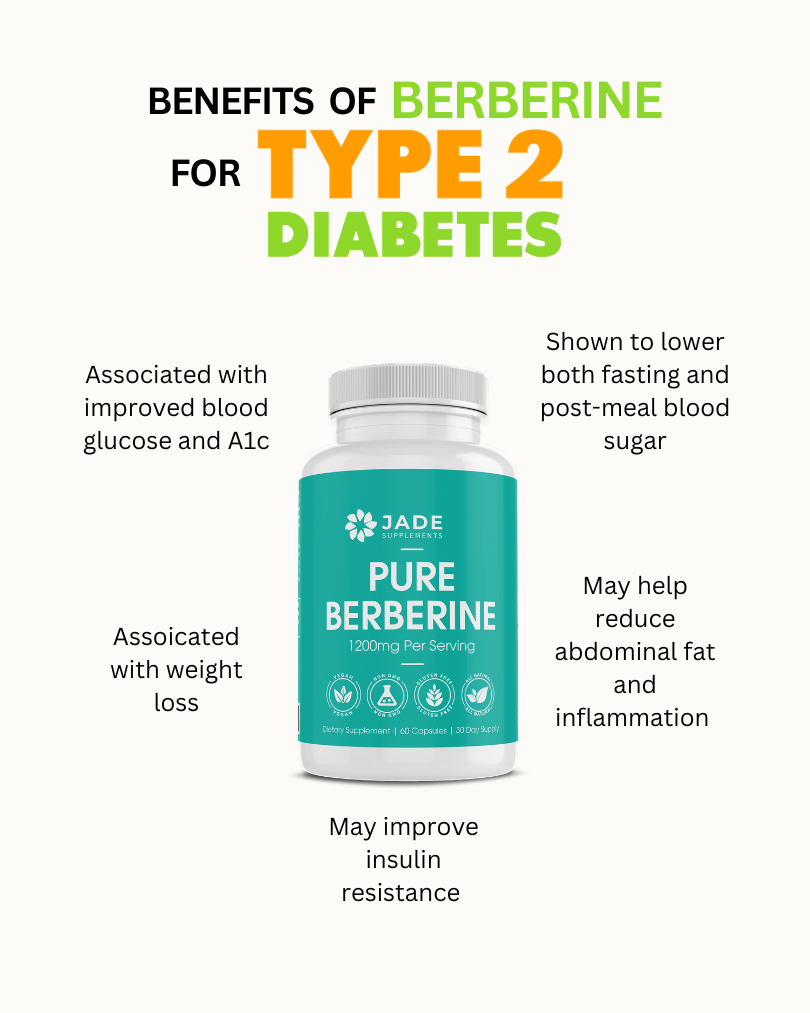
This is why the research on berberine does not stop at fasting glucose. Study after study also shows improvements in A1c, triglycerides, and cholesterol, because this one compound is influencing several connected systems in your body rather than simply masking a single number on a screen.
The Research: What the Studies Actually Show
A large systematic review pooling 46 randomized controlled trials in people with type 2 diabetes found that berberine produced significant reductions in A1c, fasting glucose, and post-meal glucose compared with control groups [1]. A more recent review of placebo-controlled trials backed this up, reporting meaningful improvements in fasting glucose, triglycerides, LDL cholesterol, total cholesterol, and waist circumference among people taking berberine [2]. These are not small, cherry-picked numbers. They reflect consistent patterns across dozens of studies and thousands of participants, which is the kind of repeated evidence that carries real weight in nutrition science. As for weight loss, it is worth being upfront that most trials show a modest change, often just a few pounds over about twelve weeks. The more meaningful benefit is not dramatic weight loss but a metabolism that simply runs more efficiently, meaning your body handles carbohydrates better because your cells are finally listening to insulin again.
The Real Reasons Berberine Doesn’t Work for Everyone
When someone tells us berberine did nothing for them, it almost always comes down to a fixable detail rather than the compound itself failing to work. The dose is frequently too low, since many supplement bottles use only 200 to 400 milligrams per capsule, well under the 1,000 to 1,500 milligram range used in the clinical trials that produced these results.
The form matters just as much, because nearly all human research relies on berberine HCl standardized to around 97 percent, not the newer liposomal versions or metabolites that have not been studied head to head for outcomes. Timing and consistency play a role too, since AMPK activity and insulin sensitivity improve gradually, usually taking four to six weeks before fasting glucose shifts and two to three months before A1c reflects real change. On top of that, daily habits such as a diet heavy in saturated fat, low fiber intake, minimal muscle mass, poor sleep, and ongoing stress all work against the very signals berberine is trying to send, which means the supplement gets blamed for a mismatch it did not create.
The Dose and Form Backed by Clinical Trials
Based on the studies above, the clinically effective range sits between 1,000 and 1,500 milligrams of berberine HCl daily, with most protocols landing around 1,200 milligrams split into 600 milligrams with breakfast or lunch and 600 milligrams with dinner. If your stomach tends to be sensitive, starting with a single 600 milligram dose alongside your largest meal for the first week, then increasing to twice daily, tends to make the adjustment much gentler. Quality matters as much as the dose itself, so look for a product that has been third-party tested for heavy metals, microbes, and potency, and manufactured in an FDA-registered, GMP-certified facility. A reasonable expectation is to check your fasting glucose patterns at four to eight weeks and reassess A1c and lipid panels with your doctor at eight to twelve weeks. If you are on insulin, a sulfonylurea, or other glucose-lowering medications, loop your prescriber in before starting, since improved blood sugar control often means your medication dose will need to be adjusted to avoid lows.
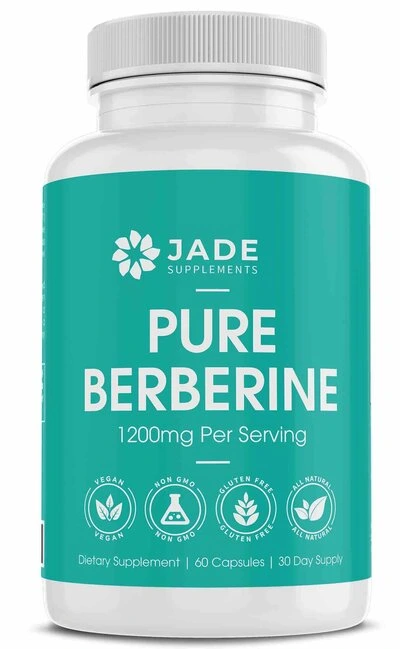
This is part of why our community tends to reach for JADE Berberine when they are ready to try it. Each capsule contains 600 milligrams of berberine HCl, so one capsule with breakfast and one with dinner lands you right at the 1,200 milligram daily dose used in the trials above, without needing to count out a handful of smaller, underdosed pills. It is also third-party tested in an ISO/IEC 17025-accredited lab for heavy metals, microbes, and potency, and manufactured in FDA-registered, GMP- and NSF-certified facilities, which matters more than it might seem. A lot of berberine products on the market are underdosed, untested, or made from forms that were never studied in humans, so people end up disappointed not because berberine failed, but because what they bought never matched what the research actually used.
The Habits That Make Berberine Work Even Better
Berberine tends to amplify whatever signal your body is already receiving, which is why pairing it with supportive habits makes such a noticeable difference in how well it performs. Fiber is one of the biggest levers available to you, and aiming for 35 to 40 grams a day slows sugar absorption, softens post-meal spikes, and feeds the gut bacteria responsible for producing compounds that help your cells respond to insulin. For a deeper look at how everyday meals can quietly spike glucose even when they seem healthy, our guide on foods that spike blood sugar without warning is worth reading alongside this one.
Keeping saturated fat closer to 6 percent of total calories also supports insulin signaling at the receptor level in both muscle and liver tissue. Movement is another major piece of the puzzle, and building muscle through resistance training two to three times a week gives your body more places to store and burn sugar, while short walks after meals clear glucose through muscle contraction, a pathway that does not even require insulin. A randomized crossover study in adults with type 2 diabetes found that three fifteen-minute walks after meals improved blood sugar and A1c more effectively than one longer daily walk [3]. Sleep and stress round out the picture, since one poor night’s rest can lower insulin sensitivity by as much as 25 percent the next day, a connection we cover in detail in our post on magnesium, ashwagandha, and insulin resistance.
So, does berberine really lower blood sugar? For many adults managing insulin resistance, prediabetes, or type 2 diabetes, the research says yes, and the benefits often extend to A1c, triglycerides, and cholesterol as well. It works best as a supportive tool alongside the fundamentals that already move the needle for you, including enough fiber, lower saturated fat, regular movement, and consistent sleep. If you and your healthcare provider decide it is a good fit for your plan, matching the studied dose and a standardized HCl form gives you the best possible chance of seeing the same results reflected in your own labs.
References
[1] Guo et al. (2021). The Effect of Berberine on Metabolic Profiles in Type 2 Diabetic Patients: A Systematic Review and Meta-Analysis of Randomized Controlled Trials. Oxidative Medicine and Cellular Longevity.
[2] Liu et al. (2025). Efficacy and Safety of Berberine on the Components of Metabolic Syndrome: A Systematic Review and Meta-Analysis of Randomized Placebo-Controlled Trials. Frontiers in Pharmacology.
[3] Pahra et al. (2017). Impact of Post-Meal and One-Time Daily Exercise in Patient with Type 2 Diabetes Mellitus: A Randomized Crossover Study. Diabetology & Metabolic Syndrome.