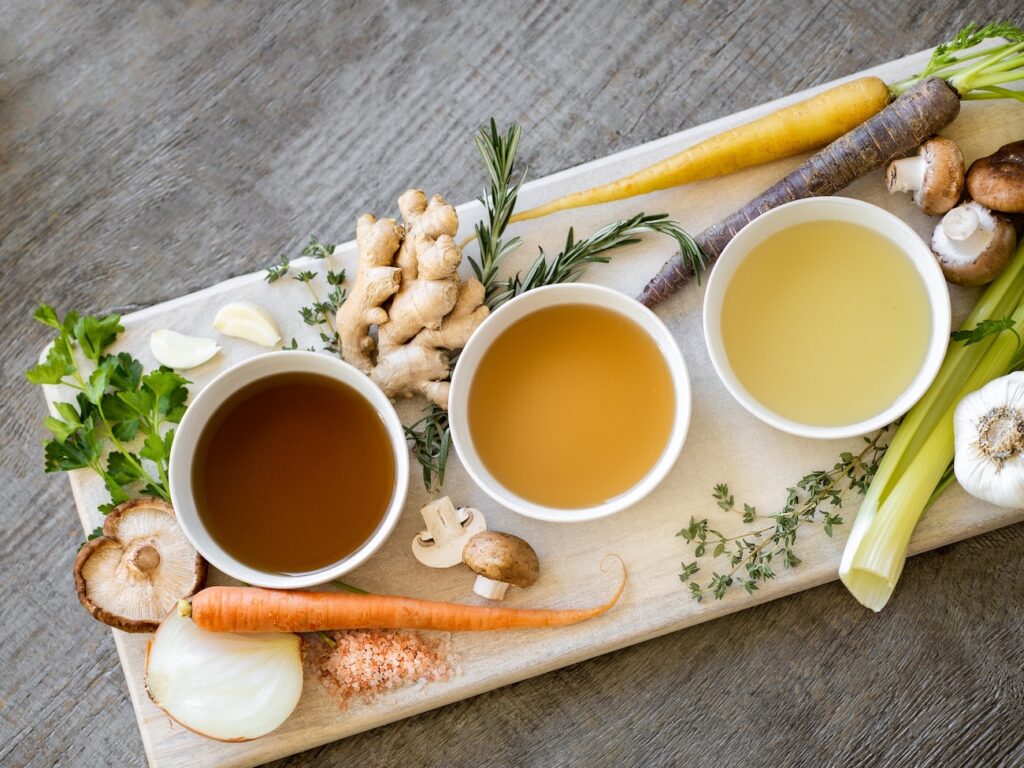
When it comes to improving your blood glucose, nothing beats the effectiveness of a nutritionally dense, whole food diet and a consistent exercise routine.
However, research indicates that certain foods can help manage blood glucose levels. Here's a list of these foods and how to include them in a healthy diet.
Ginger
Adding ginger to your diet can improve fasting blood glucose, insulin sensitivity, and hemoglobin A1c. Two randomized controlled studies evaluated the impact of ginger intake on diabetes. In the first study, participants with diabetes received one teaspoon of ground ginger daily for two months. By the end of the experiment, they had significantly improved insulin sensitivity.[1]
In the second study, people with diabetes consumed even more ginger (1.5 teaspoons) but over a shorter period. After eight weeks, the results revealed a significant decrease in both fasting blood glucose and A1c.[2] Additional studies show similar results, indicating ginger can be a safe and effective way to help control blood sugar.[3]
How to include it in your diet: Make a morning cup of tea with hot water and 1.5 tsp of ground ginger.
We recommend using fresh or ground ginger rather than supplements. We like this Organic Ground Ginger variety.
Flaxseed Meal
Flax seeds are a nutritionally dense food full of fiber, protein, and omega-3s. According to two studies, they can also help manage blood glucose levels. In an open-label study, people with diabetes received a tablespoon of ground flaxseed daily for a month. The participants experienced a significant drop in fasting blood glucose and A1c levels (as well as a drop in triglycerides and cholesterol levels). In the second study, obese subjects took 40g of flaxseed supplementation (a little over 2.5 tbsp). After 12 weeks, results showed significant improvement in insulin sensitivity. [5]
How to include it in your diet: Add 2 tbsp of ground flax seeds to your oatmeal, smoothies, soups, or even salads.
We recommend Bob's Red Mill Flaxseed Meal.
Vinegar
Incorporating vinegar with meals can decrease postprandial spikes in blood sugar, insulin, and triglycerides in people with diabetes.[6] Of note, adding only two teaspoons of vinegar to a meal (i.e., a side salad with balsamic vinegar) can be effective.[7]
In one study, researchers examined blood sugar levels in individuals with prediabetes. One group drank an apple cider vinegar (ACV) beverage containing 2 tbsp of vinegar, while the control group consumed a minimal amount of ACV in tablet form. After one week, fasting blood sugar decreased by 16 points in the ACV beverage group.[8] Furthermore, another study randomized patients with diabetes into three groups. Each group received either 2 tbsp of vinegar twice a day, two dill pickles, or a small vinegar pill. The vinegar group experienced a significant drop in A1c levels.[9]
How to include it in your diet: Add red wine or balsamic vinegar to meals, or try 1 tbsp of apple cider vinegar diluted in 8-10 oz of water. Aim for no more than 2 tbsp a day. Avoid supplements.
For apple cider vinegar, we recommend Bragg's Apple Cider Vinegar.

Green Tea
Green tea, a naturally low-calorie, low-sugar drink, is an excellent beverage for people with diabetes. Research indicates drinking green tea can also improve biomarkers associated with diabetes. Most noteworthy, a meta-analysis (a study that examines multiple studies) found that green tea decreased both fasting blood glucose and HbA1c concentrations in individuals.[10]
How to include it in your diet: Sip on 1-2 cups of warm green tea daily.
We love Bigelow 100% Organic Premium Green Tea.
Curcumin
Curcumin is the active ingredient of the spice turmeric. A randomized, double-blind control trial examined the effects of curcumin in people with prediabetes. The experimental group received curcumin supplements (about 1/4 cup of curcumin each day) while the control group received a placebo. At the end of the study, the curcumin group showed significant improvements in fasting blood sugar, glucose tolerance, A1C, and insulin sensitivity. As a result, 16% of the placebo group went on to develop type 2 diabetes, while none of the experimental group did.[11] Likewise, another randomized control trial in diabetics showed comparable results but with only a teaspoon worth of curcumin.[12]
How to include it in your diet: add 1-2 tsp of turmeric to tea or your favorite dishes.
We recommend choosing fresh or ground turmeric instead of supplements. We like this Organic Turmeric.
Adding these foods to your diet may help improve your blood glucose and insulin sensitivity, but nothing beats the effectiveness of making lasting diet and lifestyle changes.
References
[1] Mahluji et al. (2013). Effects of ginger (Zingiber officinale) on plasma glucose level, HbA1c and insulin sensitivity in type 2 diabetic patients. International Journal of Food Sciences and Nutrition.
[2] Mozaffari-Khosravi et al. (2014). The effect of ginger powder supplementation on insulin resistance and glycemic indices in patients with type 2 diabetes: a randomized, double-blind, placebo-controlled trial. Complementary Therapies in Medicine.
[3] Daily et al. (2015). Efficacy of ginger for treating Type 2 diabetes: A systematic review and meta-analysis of randomized clinical trials. Journal of Ethnic Foods.
[4] Mani et al. (2011). An open-label study on the effect of flax seed powder (Linum usitatissimum) supplementation in the management of diabetes mellitus. Journal of Dietary Supplements.
[5] Rhee & Brunt (2011). Flaxseed supplementation improved insulin resistance in obese glucose intolerant people: A randomized crossover design. Nutrition Journal.
[6] Mitrou et al. (2015). Vinegar consumption increases insulin-stimulated glucose uptake by the forearm muscle in humans with type 2 diabetes. Journal of Diabetes Research.
[7] Johnston et al. (2010). Examination of the antiglycemic properties of vinegar in healthy adults. Annals of Nutrition & Metabolism.
[8] Johnston et al. (2013). Vinegar ingestion at mealtime reduced fasting blood glucose concentrations in healthy adults at risk for type 2 diabetes. Journal of Functional Foods.
[9] Johnston et al. (2009). Preliminary evidence that regular vinegar ingestion favorably influences hemoglobin A1c values in individuals with type 2 diabetes mellitus. Diabetes Research and Clinical Practice.
[10] Liu et al. (2013). Effect of green tea on glucose control and insulin sensitivity: a meta-analysis of 17 randomized controlled trials. American Journal of Clinical Nutrition.
[11] Chuengsamarn et al. (2012). Curcumin extract for prevention of type 2 diabetes. Diabetes Care.
[12] Na et al. (2013). Curcuminoids exert glucose-lowering effect in type 2 diabetes by decreasing serum free fatty acids: A double-blind, placebo-controlled trial. Molecular Nutrition & Food Research.

Diana is a nationally recognized Registered Dietitian and Certified Diabetes Care and Education Specialist (CDCES), and holds a Master’s degree in Nutrition Science and Policy from the Tufts Friedman School of Nutrition. She received her education and dietetics training from Villanova University, Tufts University, and UC San Diego Health. Diana has over 8 years of experience working in the field of type 2 diabetes.





7 Responses
This is the best information I’ve seen yet !thank you so much
Thank you!! So glad you find it helpful 🙂
I am pre diabetic
I’m sorry to hear that. You should check out our free training for prediabetes and type 2 diabetes reversal: https://type2diabetesrevolution.com/blood-sugar-transformation-ew
Thanks for helping me to live a better life
Interesting and useful information with scientific evidence to support it !! Thats what makes it even more credible. thank you !!
You are very welcome! So glad you enjoyed the information!