If you’re trying to improve your blood sugar, lunch and dinner choices play a major role in how your glucose responds throughout the day. Many common meals are built around refined carbohydrates with minimal protein or fiber, which can lead to rapid spikes followed by dips in energy and increased cravings later on.
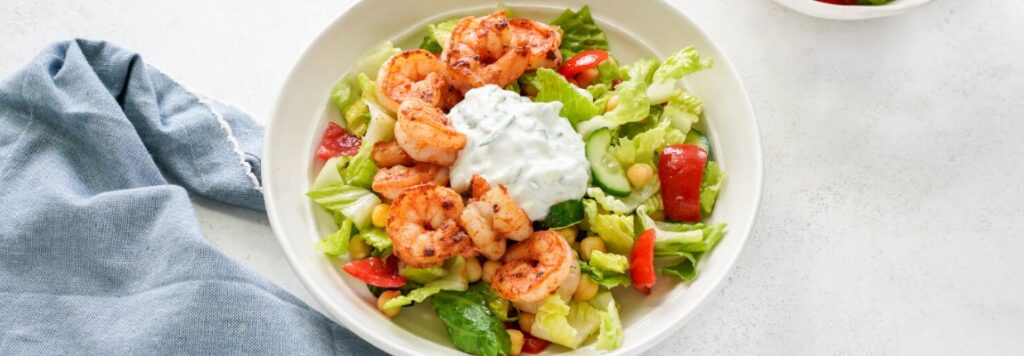
This Cajun Shrimp Chickpea Salad is structured differently. It combines lean protein, fiber-rich carbohydrates, and healthy fats in one balanced plate. Instead of relying on heavy dressings or refined grains, it uses whole ingredients that digest more slowly and support a steadier glucose response.
The result is a meal that helps you feel full, energized, and more in control of your blood sugar.
Shrimp: Lean Protein for Stable Glucose
Shrimp is a high-quality, lean protein source that contains virtually no carbohydrates. Protein plays a key role in slowing digestion and reducing the speed at which glucose enters the bloodstream.
Higher-protein meals have been shown to reduce post-meal glucose spikes and improve satiety compared to lower-protein meals [1]. This is especially important for individuals with insulin resistance, where slowing glucose entry into the bloodstream can significantly improve overall control.
In this recipe, shrimp acts as the primary anchor of the meal, helping balance the carbohydrates from the chickpeas and vegetables.
Chickpeas and Vegetables: Fiber That Changes the Glucose Response
Chickpeas provide complex carbohydrates along with fiber and plant-based protein. Unlike refined carbohydrates, legumes digest more slowly and produce a more gradual rise in blood sugar.
Higher intake of legumes has been associated with improved glycemic control and reductions in HbA1c in individuals with type 2 diabetes [2]. The fiber content plays a central role by slowing glucose absorption and improving insulin sensitivity over time.
The addition of romaine, tomato, and cucumber further increases fiber and water content, which adds volume to the meal without significantly increasing calories. This combination supports fullness while helping stabilize blood sugar after eating.
Olive Oil and Tzatziki: Healthy Fats and Meal Balance
This recipe uses extra virgin olive oil and tzatziki to provide healthy fats and additional flavor. Fat slows gastric emptying, meaning carbohydrates are absorbed more gradually into the bloodstream.
Monounsaturated fats, such as those found in olive oil, have been associated with improved insulin sensitivity and better cardiovascular outcomes [3]. For individuals with type 2 diabetes, this is particularly important, as heart health and blood sugar control are closely connected.
Tzatziki, made from yogurt and cucumber, adds creaminess and a small amount of protein without relying on heavy, sugar-laden dressings. This helps keep the overall meal balanced and supportive of metabolic health.
Cajun Shrimp Salad with Tzatziki
- 10 Oz Shrimp, peeled and deveined
- 2 tsps Cajun seasoning
- Salt and pepper to taste
- Extra virgin olive oil divided
- 1/2 Lemon juiced
- 4 Large romaine leaves chopped
- 1 Medium tomato chopped
- 1/3 Cucumber chopped
- 1/3 Cup Chickpeas cooked
- 1/4 Cup tzatziki
- Toss the shrimp with Cajun seasoning, salt, and pepper.
- Heat half of the oil in a pan over medium heat. Add the shrimp and cook for five minutes, stirring occasionally, until cooked through.
- In a bowl, whisk together the remaining oil, lemon juice, salt, and pepper. Add the romaine, tomato, cucumber, and chickpeas, and toss to combine.
- Divide the salad and shrimp evenly between plates. Top with tzatziki and enjoy!
Nutrition Highlights (Approximate, per serving – serves 2)
~400–450 calories
~35–40 g protein
~8–10 g fiber
Low in saturated fat
Rich in monounsaturated fats and micronutrients
This combination of protein, fiber, and healthy fats helps reduce large swings in blood sugar while promoting longer-lasting fullness.
A Balanced Meal That Supports Insulin Sensitivity
Improving blood sugar is not about eliminating carbohydrates. It is about choosing the right types of carbohydrates and pairing them with protein and healthy fats.
This shrimp salad demonstrates how a simple meal structure can influence glucose response. By combining lean protein, fiber-rich legumes, and healthy fats, you create a meal that works with your metabolism rather than against it.
Over time, consistently building meals this way can support improvements in fasting blood sugar, A1c, and overall energy levels.
References
[1] Shukla et al. (2015). Food Order Has a Significant Impact on Postprandial Glucose and Insulin Levels. Diabetes Care
[2] Jenkins et al. (2012). Effect of legumes as part of a low glycemic index diet on glycemic control and cardiovascular risk factors in type 2 diabetes mellitus: a randomized controlled trial. Archives of Internal Medicine.
[3] Schwingshackl et al. (2017). Olive oil in the prevention and management of type 2 diabetes mellitus: a systematic review and meta-analysis of cohort studies and intervention trials. Nutrition & Diabetes.

Diana is a nationally recognized Registered Dietitian and Certified Diabetes Care and Education Specialist (CDCES), and holds a Master’s degree in Nutrition Science and Policy from the Tufts Friedman School of Nutrition. She received her education and dietetics training from Villanova University, Tufts University, and UC San Diego Health. Diana has over 8 years of experience working in the field of type 2 diabetes.