


If you’re working to lower your blood sugar or reverse insulin resistance, some of the foods sabotaging your progress are probably sitting in your kitchen right now, and they don’t look like junk food. They look healthy. A few are even marketed specifically to people with prediabetes and type 2 diabetes. Food packaging is built to sell, not to inform, and what’s on the front of the box often hides what’s on the nutrition label. Below are three of the sneakiest offenders, along with what to choose instead.
1. Flavored Yogurt: Dessert Disguised as Breakfast
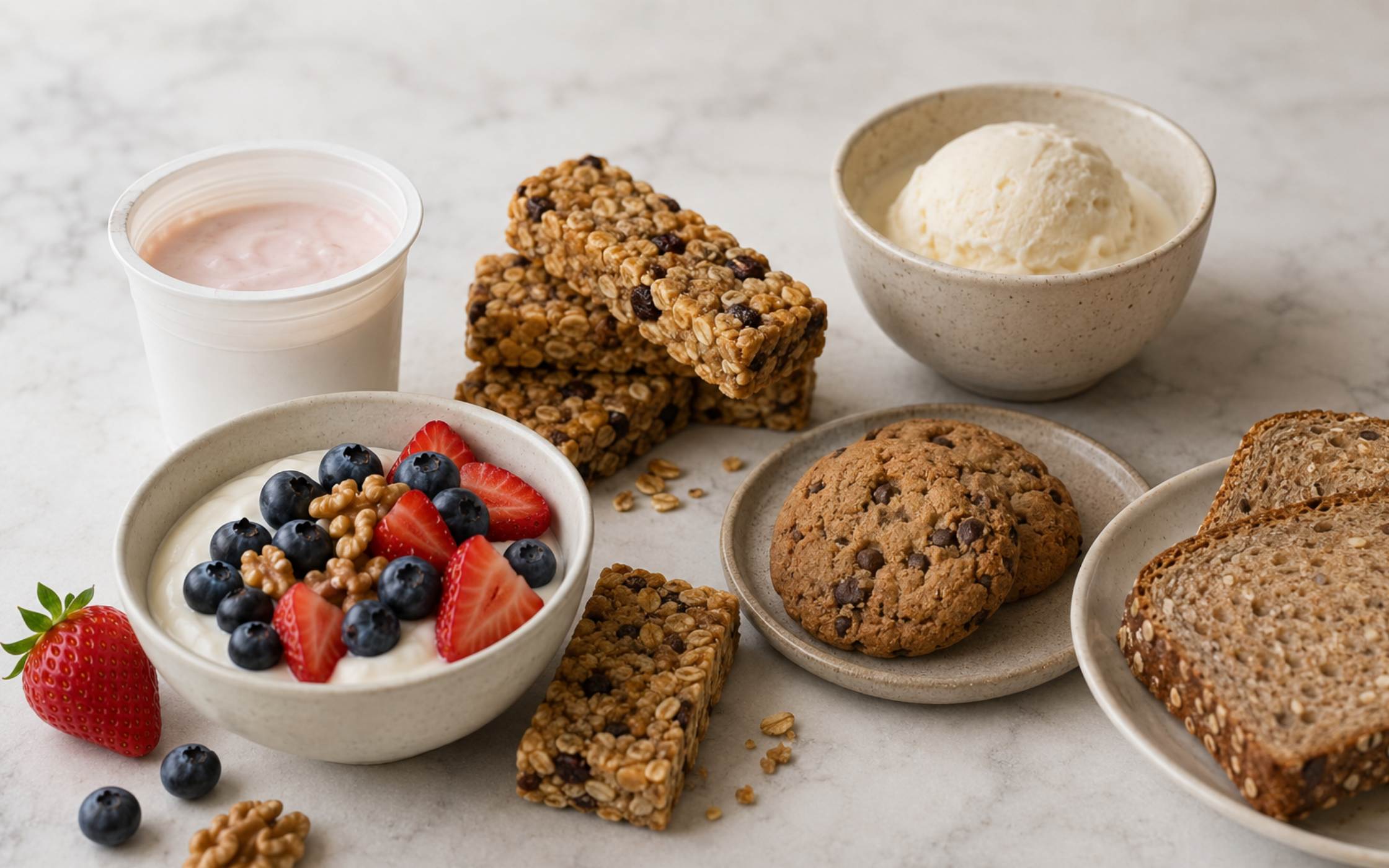
Plain yogurt has earned its reputation as a blood-sugar-friendly food. It delivers protein, calcium, and probiotics that support digestion and steady glucose. The problem is that almost none of the yogurt at the grocery store is actually plain. Flavored cups have become one of the most common sources of hidden added sugar in the American diet, even though most shoppers consider them a smart choice.

A single 6-ounce cup of Yoplait Original Strawberry contains 13 grams of added sugar, more than four teaspoons in one small container. Some Dannon Fruit on the Bottom flavors land at 12 grams, and certain flavored Chobani and Fage cups hit 14 to 20. A 2018 survey of over 900 yogurt products, published in BMJ Open, found that items marketed as “organic” or otherwise healthy were among the highest-sugar offenders, with many delivering nearly half of a woman’s daily sugar limit in a single serving [1]. For someone with insulin resistance, that’s a fast wave of glucose hitting a pancreas that’s already overworked.
A simple swap fixes this. Choose plain, unsweetened Greek yogurt and add the sweetness yourself with fresh berries, a sprinkle of cinnamon, and a few chopped walnuts. You’ll get 15 to 20 grams of protein, zero added sugar, and a steady glucose response instead of a spike and crash.
2. Granola Bars: Candy Bars With Better Packaging
Cereal bars and granola bars are arguably the most misleading productso in the entire grocery store. They sit in the health-food aisle, decorated with images of oats and honey, and labeled with claims like “good source of fiber” and “made with whole grains.” Flip the box over, though, and most look more like candy bars with a clever marketing budget.

Nature Valley Oats ‘n Honey contains 11 grams of added sugar per serving, with sugar appearing three times on the ingredient list as sugar, honey, and brown sugar syrup. Quaker Chewy Chocolate Chip clocks in at 11 grams; the S’mores flavor jumps to 13. Nutri-Grain Strawberry bars deliver 12 grams of added sugar with barely any protein or fiber to slow the absorption. The result is the same cycle you’re trying to break: a fast glucose rise, a big insulin response, a crash an hour later, and another craving by mid-morning. Over time, those repeated spikes are one of the patterns that push prediabetes into full type 2 diabetes.
If you need a real grab-and-go snack, reach for a handful of almonds with an apple, a hard-boiled egg with cherry tomatoes, or string cheese with baby carrots. If you genuinely want a packaged bar, look for one with under 5 grams of added sugar and at least 10 grams of protein. The front of the box is marketing. The nutrition panel is the truth.
3. Keto Products: The Diabetes Aisle Trap Nobody Talks About
Here’s the one that surprises almost everyone. Keto cookies, keto ice cream, keto bread, keto brownies. This whole category is marketed directly to people with prediabetes and type 2 diabetes, and the logic feels airtight. Diabetes means high blood sugar; carbs raise blood sugar, so keto products are low-carb and must help. The problem is what happens when food companies take the carbs out. To preserve taste and texture, manufacturers replace those carbs with fat, specifically a lot of saturated fat from butter, coconut oil, and palm oil.

A serving of one popular keto ice cream can pack 10 to 12 grams of saturated fat, more than a fast-food cheeseburger. Some keto cookies pack 12 to 15 grams into just two cookies, nearly a full day’s worth of the American Heart Association’s recommended limit.
This matters because high blood sugar is a symptom of type 2 diabetes. The root cause is insulin resistance, and research consistently shows that diets high in saturated fat worsen it. In the KANWU trial, a randomized study of 162 adults, just three months on a saturated-fat-rich diet reduced insulin sensitivity by about 10 percent, while a monounsaturated-fat diet had no negative effect [2]. The mechanism is well-documented: saturated fat drives the buildup of two lipid molecules inside muscle and liver cells (ceramides and diacylglycerols) that physically interfere with the pathway insulin uses to move glucose out of the bloodstream [3]. A keto cookie may keep today’s glucose reading flat while quietly worsening the underlying lock-and-key problem.
Fat isn’t the enemy here; the type of fat is. Swapping saturated fat for unsaturated fats, such as olive oil, avocado, nuts, seeds, and fatty fish, is consistently linked to improved insulin sensitivity in research [4]. True reversal isn’t about avoiding carbs forever; it’s about restoring your body’s ability to handle them.
The Label Habit That Cuts Through All the Marketing
The most powerful change you can make at the store costs nothing and takes about ten seconds: flip every package over before it goes in the cart. The front is designed by a marketing team. The back is regulated by the FDA. Check the serving size first, then look for under 5 grams of added sugar per serving, under 2 to 3 grams of saturated fat, and at least 5 to 10 grams of protein. For more on everyday foods working against your glucose, check out The 6 Worst Foods for Type 2 Diabetes on the blog. Reversing insulin resistance isn’t about buying special “diabetic” products. It’s about choosing whole foods that address the root cause rather than marketing.
References
[1] Moore et al. (2018). Evaluation of the nutrient content of yogurts: a comprehensive survey of yogurt products in the major UK supermarkets. BMJ Open.
[2] Vessby et al. (2001). Substituting dietary saturated for monounsaturated fat impairs insulin sensitivity in healthy men and women: The KANWU Study. Diabetologia.
[3] Chavez & Summers (2003). A Role for Ceramide, but Not Diacylglycerol, in the Antagonism of Insulin Signal Transduction by Saturated Fatty Acids. Journal of Biological Chemistry.
[4] Imamura et al. (2016). Effects of Saturated Fat, Polyunsaturated Fat, Monounsaturated Fat, and Carbohydrate on Glucose-Insulin Homeostasis: A Systematic Review and Meta-analysis of Randomised Controlled Feeding Trials. PLOS Medicine.

Diana is a nationally recognized Registered Dietitian and Certified Diabetes Care and Education Specialist (CDCES), and holds a Master’s degree in Nutrition Science and Policy from the Tufts Friedman School of Nutrition. She received her education and dietetics training from Villanova University, Tufts University, and UC San Diego Health. Diana has over 8 years of experience working in the field of type 2 diabetes.






Leave a Comment