Most people think managing blood sugar is just about cutting sugar and walking more. And while those things certainly help, the research tells a much deeper story, one that most busy medical appointments never have time to cover. If you've been told your numbers are “borderline,” or you're already living with type 2 diabetes and wondering whether lifestyle changes can actually move the needle, this is the post for you. Here, we're breaking down six evidence-based strategies that target the root causes of insulin resistance, not just its symptoms.
The Real Problem Isn't Blood Sugar. It's What's Causing It
Before jumping into the strategies, it helps to understand what's actually going wrong. Most people focus on blood sugar itself, but elevated glucose is the result of a deeper issue: your cells gradually becoming resistant to insulin over the years, sometimes decades [1]. That process is driven by a cluster of triggers: chronic inflammation, poor gut health, excessive cortisol, a low-fiber diet, and cellular-level metabolic imbalances. Each of the six approaches below targets one or more of these root causes. You don't have to do all six at once. Even picking two or three that feel doable can make a meaningful difference.
The “Daily Reset” Your Insulin System Desperately Needs
One of the most studied and talked-about tools for blood sugar control is time-restricted eating, often called intermittent fasting. Specifically, a 16:8 schedule, where you eat within an eight-hour window and fast for the remaining sixteen hours, has shown real promise in clinical research. A 2024 randomized controlled trial published in the Journal of Diabetes Investigation found that adults with obesity and type 2 diabetes who followed a 16:8 fasting schedule three days per week for twelve weeks experienced meaningful improvements in body weight, fasting blood glucose, HbA1c, and lipid profiles compared to those who continued eating normally [1]. The reason it works has to do with insulin exposure: when you're not eating, your insulin levels stay low for extended periods, giving your cells a chance to regain sensitivity. Think of it like giving an overworked system a daily break to recover.
The good news is that this approach is far less extreme than most people imagine. If you stop eating at 7 PM and have your first meal at 11 AM the next day, you've already completed your sixteen-hour fast, since eight of those hours you were sleeping. Black coffee, herbal tea, and water are fine during the fasting window and can actually help reduce hunger. For those new to fasting, starting with a 12:12 schedule (twelve hours fasting, twelve hours eating) and gradually working up is a comfortable, sustainable entry point.
What Most People Get Wrong About Fiber and Blood Sugar
The average American gets about 15 grams of fiber per day [2]. For someone managing blood sugar, that's simply not enough. Research consistently shows that higher fiber intake is one of the most powerful dietary tools for improving glycemic control. A large systematic review and meta-analysis published in PLOS Medicine found that increasing dietary fiber significantly reduced HbA1c, fasting glucose, insulin levels, insulin resistance, total cholesterol, and LDL cholesterol in people with diabetes, with a clear dose-response relationship showing greater benefits at higher intake levels [2]. Aiming for 30 to 40 grams of fiber per day is a reasonable target for most people with blood sugar concerns.
Fiber works in two important ways. First, it physically slows the absorption of glucose into the bloodstream, which helps flatten out the sharp spikes that damage blood vessels over time. Second, and this is where things get interesting, it feeds the beneficial bacteria in your gut, which then produce compounds called short-chain fatty acids (molecules that directly improve insulin sensitivity at the cellular level) [2]. Practically speaking, this means loading meals with foods like beans, lentils, avocado, berries, chia seeds, leafy greens, oats, and sprouted grain bread. Integrating fiber-rich foods at the start of each meal is especially effective at buffering the blood sugar impact of everything that follows.
The Gut-Glucose Connection Nobody Talks About Enough
Your gut is home to trillions of bacteria, and the balance of those microbial communities has a direct and measurable effect on how your body handles blood sugar. Research published in 2024 in the Medical Research Archives confirms that gut dysbiosis (an imbalance in microbial populations) contributes to the development and progression of type 2 diabetes through mechanisms including increased intestinal permeability, chronic low-grade inflammation, and impaired insulin signaling [3]. When the gut barrier becomes “leaky,” bacterial toxins enter the bloodstream and trigger the kind of systemic inflammation that drives insulin resistance. On the flip side, a well-nourished microbiome produces compounds that actively support glucose metabolism and insulin sensitivity.
The practical strategy here is twofold: feed the beneficial bacteria and cut off the fuel supply to the harmful ones. Prebiotic-rich foods (things like garlic, onions, artichokes, asparagus, and leeks) are particularly effective at nourishing a healthy microbial community. Fermented foods like kefir, sauerkraut, kimchi, and miso add beneficial bacteria directly. On the other side, processed foods, added sugars, and artificial sweeteners (especially saccharin and sucralose) can disrupt microbial balance in ways that worsen glucose regulation [3].
The Color-Coded Strategy That Feeds Your Cells at a Different Level
Plants contain thousands of naturally occurring compounds called polyphenols, and they're among the most powerful food-based tools we have for protecting against type 2 diabetes.
A meta-analysis published in the American Journal of Clinical Nutrition that pooled data from eighteen prospective studies found inverse associations between polyphenol intake and type 2 diabetes risk, with particularly strong benefits seen from flavonoids, anthocyanins (found in blue and purple foods like blueberries), and catechins (found in green tea) [4].
A separate 2024 review in Nutrients confirmed that polyphenols work through multiple pathways: reducing oxidative stress, improving insulin signaling, inhibiting enzymes involved in carbohydrate digestion, and modulating the gut microbiome [5].
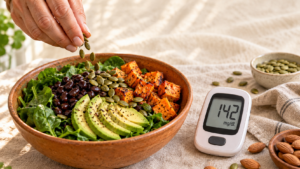
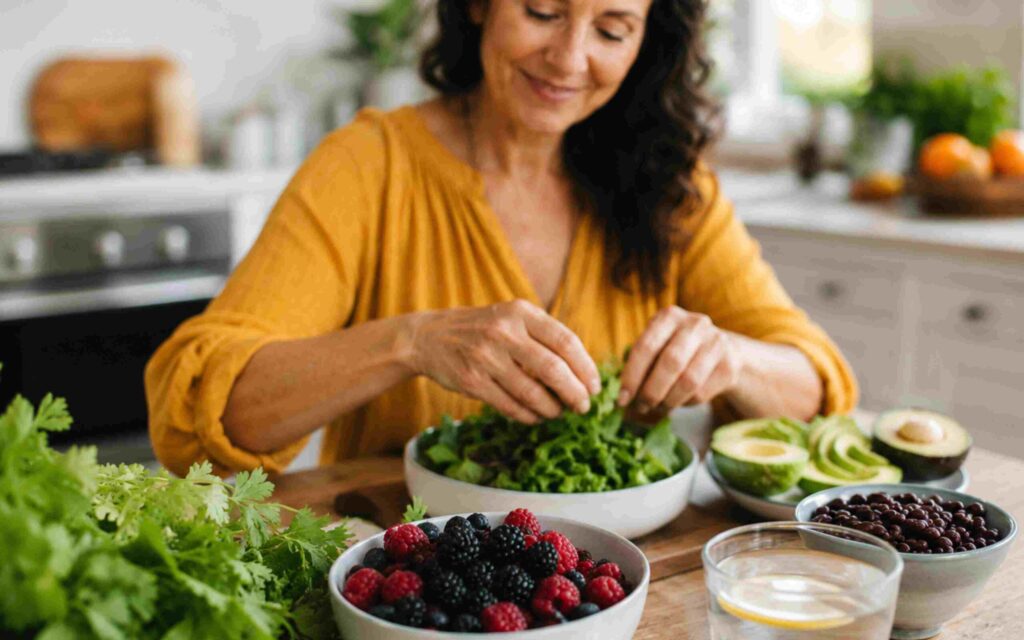
The practical approach is to cycle through a variety of colorful plant foods throughout the week. Blueberries, blackberries, and purple grapes for anthocyanins. Onions, kale, and apples for quercetin. Green tea and dark chocolate for catechins. Tomatoes and watermelon for lycopene. The goal isn't perfection. It's a variety. Rotating through different colored fruits, vegetables, and whole grains throughout the week ensures you're covering multiple protective pathways at once without obsessing over any single “superfood.”
The Overlooked Trigger That's Raising Your Blood Sugar While You Sleep
If you've been doing everything right with your diet but still struggling with blood sugar, chronic stress may be the missing piece. According to research published in Hormone Research in Paediatrics, psychological stress leads to an increase in glucocorticoid (primarily cortisol) concentrations, which directly raises blood glucose and increases insulin resistance [6].
When cortisol levels stay elevated day after day, your liver responds by releasing stored glucose into the bloodstream, even when you haven't eaten. This is one of the reasons some people wake up with high fasting blood sugar despite having done nothing “wrong” overnight.
The good news is that simple, consistent stress management practices have measurable effects on cortisol and blood sugar. Activities as accessible as daily walks, deep breathing exercises, spending time in nature, or even writing down three things you're grateful for each morning can meaningfully activate the parasympathetic nervous system and bring cortisol back into a healthier range.
According to the research in Frontiers in Public Health, patients with type 2 diabetes show measurably higher hair cortisol levels than non-diabetic controls, and higher cortisol is associated with worse glycemic control. That makes stress management a clinical priority, not just a lifestyle suggestion [7]. Sleep is another critical lever here, since poor sleep independently disrupts cortisol rhythms and impairs insulin sensitivity overnight.
The Compound That Researchers Are Calling “Nature's Metformin”
Berberine is a naturally occurring compound found in several plants (including barberries and goldenseal), and it has accumulated a remarkably strong body of clinical evidence supporting its use in blood sugar management. A 2022 systematic review and meta-analysis published in Frontiers in Pharmacology, which analyzed 37 randomized controlled trials involving more than 3,000 patients, found that berberine significantly reduced fasting plasma glucose, HbA1c, and two-hour postprandial blood glucose, with statistically significant reductions across all three measures [8].
A separate 2021 meta-analysis of 46 trials found similar reductions, along with improvements in insulin resistance, BMI, triglycerides, total cholesterol, and LDL, and reported that berberine's glucose-lowering efficacy was comparable to metformin in some studies [9].
Berberine appears to work by activating an enzyme called AMPK, essentially a cellular energy sensor that tells your muscles to take up more glucose from the bloodstream and improves the responsiveness of your cells to insulin [8]. The most studied form is berberine HCl (hydrochloride), typically taken in doses of 500 to 600 mg twice daily with meals.
Because berberine can interact with some medications, including blood sugar-lowering drugs, it's important to talk with your healthcare provider before adding it, especially if you're already managing diabetes with prescription medication. If you are ready to try berberine, JADE Berberine is a high-quality berberine HCl supplement formulated specifically with blood sugar support in mind. You can learn more and pick up a bottle at JADE Supplements.
The Takeaway: You Have More Control Than You've Been Told
Type 2 diabetes and insulin resistance are not fixed destinations. They're conditions that respond, sometimes dramatically, to the right inputs. The six strategies covered here (time-restricted eating, high-fiber nutrition, gut microbiome support, polyphenol-rich eating, stress and cortisol management, and berberine supplementation) all address different pieces of the same puzzle. They're not replacements for medications your doctor has prescribed, but they are legitimate, research-supported tools that work at the root level. Start with whichever two or three feel most accessible in your current life, give them at least 8 to 12 weeks, and track how you feel. Small, consistent changes in the right direction add up faster than most people expect.
References
[1] Sukkriang, N. and Buranapin, S. (2024). Effect of intermittent fasting 16:8 and 14:10 compared with control-group on weight reduction and metabolic outcomes in obesity with type 2 diabetes patients: A randomized controlled trial. Journal of Diabetes Investigation, 15(9): 1297–1305.
[2] Reynolds, A.N. et al. (2020). Dietary fibre and whole grains in diabetes management: Systematic review and meta-analyses. PLOS Medicine, 17(3): e1003053.
[3] Okoro Miracle, C. et al. (2024). The Role of Gut Microbiota in the Development of Type 2 Diabetes Mellitus. Medical Research Archives, 12(7).
[4] Neuenschwander, M. et al. (2018). Polyphenol exposure and risk of type 2 diabetes: dose-response meta-analyses and systematic review of prospective cohort studies. The American Journal of Clinical Nutrition, 108(1): 49–61.
[5] Shahidi, F. and Danielski, R. (2024). Review on the Role of Polyphenols in Preventing and Treating Type 2 Diabetes: Evidence from In Vitro and In Vivo Studies. Nutrients, 16(18): 3159.
[6] Ingrosso, D.M.F. et al. (2023). Stress and Diabetes Mellitus: Pathogenetic Mechanisms and Clinical Outcome. Hormone Research in Paediatrics, 96(1): 34–43.
[7] Buckert, M. et al. (2024). Cross-sectional associations of self-perceived stress and hair cortisol with metabolic outcomes and microvascular complications in type 2 diabetes. Frontiers in Public Health, 12: 1289689.
[8] Xie, W. et al. (2022). Glucose-lowering effect of berberine on type 2 diabetes: A systematic review and meta-analysis. Frontiers in Pharmacology, 13: 1015045.
[9] Ye, M. et al. (2021). The Effect of Berberine on Metabolic Profiles in Type 2 Diabetic Patients: A Systematic Review and Meta-Analysis of Randomized Controlled Trials. Oxidative Medicine and Cellular Longevity, 2021: 2074610.

Jose Tejero is an exercise physiologist and two-time Ironman Triathlete. He holds a degree in Exercise Science from the University of Maryland and has over six years of experience working in the field of type 2 diabetes. Jose is currently working towards becoming a Clinical Exercise Physiologist and a Certified Diabetes Care and Education Specialist, combining his two passions: exercise and diabetes care.