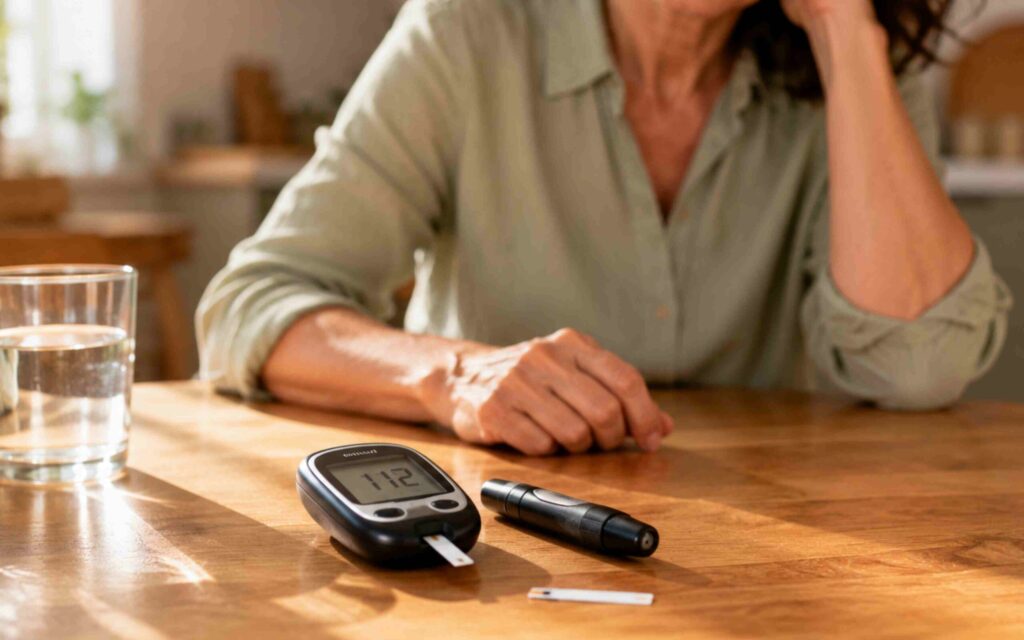
You skipped breakfast, or maybe dinner the night before, too, and expected your blood sugar to be lower. Instead, it was higher than when you went to bed. If this has happened to you, you are not imagining it, and you are not doing fasting wrong. This is one of the most misunderstood parts of managing insulin resistance and type 2 diabetes, and once you understand why it happens, the fix becomes clearer. The short version: your liver, not your last meal, is usually driving that number up, and liver behavior can be changed.
Why Blood Sugar Should Drop While Fasting, But Sometimes Does the Opposite
In a body with normal insulin sensitivity, blood glucose typically declines during a fast since there is no incoming food to digest. But in someone with insulin resistance or type 2 diabetes, the opposite can happen. The explanation lies in counter-regulatory hormones, including cortisol, adrenaline, glucagon, and growth hormone. Their job is to keep your brain, muscles, and organs fueled with glucose even when you are not eating, and they do this by signaling the liver to release stored sugar into your bloodstream. This is normal physiology that protects you from a blood sugar crash overnight. The problem shows up when the liver stops responding to insulin's signal to slow that release, which happens when there is excess fat stored inside the liver itself.
The Real Driver: Fat Stored Inside the Liver
Your liver keeps a reserve of glucose called glycogen, roughly 80 to 100 grams, and slowly releases it while you sleep or fast so your blood sugar stays stable. When glycogen stores run low, your body produces new glucose through gluconeogenesis, using substrates such as lactate, glycerol, and certain amino acids. In a healthy liver, insulin acts like a brake pedal, signaling when enough glucose has been released. When fat accumulates inside liver cells, that brake stops working, and insulin is essentially shouting “stop” while the liver keeps producing sugar anyway. Researchers studying men with varying levels of liver fat used magnetic resonance spectroscopy and metabolic tracers to confirm this: those with higher intrahepatic fat had a significantly impaired ability to suppress glucose production, even when insulin levels were raised [1]. This is also why many people see their highest blood sugar reading of the day first thing in the morning, before they've eaten anything.
The Dawn Phenomenon Makes It Worse
Between roughly 3 and 6 a.m., your body releases a wave of cortisol, adrenaline, and glucagon as part of your circadian rhythm, preparing you to wake up. In someone without insulin resistance, this causes a small, barely noticeable rise in blood glucose. In someone with a fatty, insulin-resistant liver, that same hormone surge can trigger a much larger spike, sometimes enough to take you from a reasonable 105 at bedtime to 140 or higher by morning. This is the dawn phenomenon, and it is not caused by anything you ate the night before. It is caused by a liver that overreacts to a normal morning hormone signal because insulin can no longer rein it in.
What Actually Fixes This (Hint: It's Not Cutting More Carbs)
When people notice high fasting numbers, the instinct is often to cut carbs further, skip more meals, extend the fast, or go fully keto. None of these addresses the actual mechanism, and they can make the liver's glucose dump even more noticeable. You cannot fast your way out of a fatty, insulin-resistant liver if the underlying fat is still there. The encouraging part is that this is reversible. In a landmark Diabetologia paper, Roy Taylor showed that reducing liver fat through a structured low-calorie intervention restored the liver's sensitivity to insulin within days, thereby normalizing fasting glucose [2].
Three strategies, used together, target the root cause rather than fighting the dawn phenomenon head-on.
Reduce liver fat through food volume rather than restriction. Focus on foods high in volume and fiber but low in calorie density, such as leafy greens, cruciferous vegetables, beans, lentils, oats, quinoa, and whole fruit. These fill you up with fewer calories without obsessive tracking, creating the gentle calorie gap your liver needs to release stored fat rather than hoard it. As liver fat drops, the organ regains its sensitivity to insulin, and the overnight glucose dump shrinks.
Use muscle contraction to clear glucose without insulin. When your muscles contract during movement, they pull glucose out of your bloodstream through a pathway that does not require insulin. A randomized crossover trial in adults with type 2 diabetes found that walking for just 10 minutes after each meal significantly lowered post-meal blood sugar levels more than a single 30-minute walk at any other time [3]. Muscles used regularly become better glucose sponges, taking pressure off the liver overnight.
Consider berberine to support the liver and insulin sensitivity. Berberine is a plant compound studied for its effects on glucose metabolism, largely through activating AMPK, an enzyme often called the body's metabolic master switch because it pushes cells to burn stored fat for fuel. A meta-analysis of randomized trials with more than 3,000 participants found that berberine meaningfully reduced fasting glucose, post-meal glucose, and HbA1c compared to placebo [4]. A typical studied dose is around 1,200 mg daily, split into 600 mg with breakfast and 600 mg with dinner. If you want to try it, JADE Supplements Pure Berberine is formulated at that dose, though you should talk with your prescribing doctor first, especially if you take insulin or a sulfonylurea, since better blood sugar control can mean your medication needs to be adjusted downward.
Putting It Together
High fasting blood sugar is rarely a sign that you are doing something wrong with your eating window. More often, it signals that your liver still has work to do, shedding stored fat and regaining sensitivity to insulin. Once that happens, fasting tends to work as most people expect, with blood sugar gradually declining rather than climbing. Focus on high-volume, fiber-rich meals, build in movement after you eat, and consider whether berberine fits your routine. If stress and sleep are also part of your picture, it's worth reading our breakdown of how cortisol and poor sleep quietly raise blood sugar overnight.
References
[1] Sunny, N. E., Parks, E. J., Browning, J. D., & Burgess, S. C. (2011). Excessive hepatic mitochondrial TCA cycle and gluconeogenesis in humans with nonalcoholic fatty liver disease. Cell Metabolism.
[2] Taylor, R. (2008). Pathogenesis of type 2 diabetes: tracing the reverse route from cure to cause. Diabetologia.
[3] Reynolds, A. N., Mann, J. I., Williams, S., & Venn, B. J. (2016). Advice to walk after meals is more effective for lowering postprandial glycaemia in type 2 diabetes mellitus than advice that does not specify timing. Diabetologia.
[4] Liang, Y., Xu, X., Yin, M., et al. (2019). Effects of berberine on blood glucose in patients with type 2 diabetes mellitus: a systematic literature review and a meta-analysis. Endocrine Journal.







2 Responses
Is it true that the combination of metformin and berberine is strongly discouraged because it is highly likely to induce hypoglycemic events?
I’ve been following and ‘studying’ you for a few months now (from Italy); I’m a Type 2 diabetic but I’m determined to try and ‘get back on my feet’; I’ve neglected myself for far too long, I’ve suffered from necrotising fasciitis and I’m still alive and have ‘two’ legs (one with a slight disability due to the bacterial infection). I’m determined to fight my ‘condition’ and not leave everything to metformin; it’s a ‘colossal’ effort, having not done any sport for far too many years, but step by step I’m trying to ‘engineer’ the process and the stages to try and ‘heal’. According to conventional medicine, metformin is a lifelong treatment and diet is only for keeping blood sugar levels under control, but it is not seen as a cure; I’d like to try something else. I’d also looked into ‘Forks Over Knives’, but it seemed too complicated and full of recipes tailored to the American palate rather than mine (as an Italian, I’m far too ‘picky’).
I love fruit and vegetables, and I can’t stand McDonald’s or similar places, but sometimes, due to work commitments (long journeys), I have to ‘give in’ to necessity. Thank you for taking a few minutes to reply.
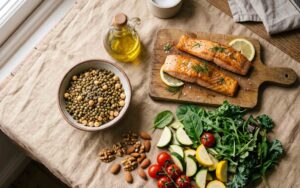
Thank you so much for this message! On your berberine and metformin question: it’s true that both can lower blood sugar, so combining them does require some care. However, this is really a conversation to have with your doctor before starting, as the right answer depends on your current doses, your blood sugar levels, and how well-controlled you already are. Your doctor can monitor you and adjust if needed — please don’t skip that step. Now — here’s something that might genuinely excite you: you may already be closer to our philosophy than you think. The foundation of what we teach is essentially a Mediterranean diet done well — high in vegetables, fruits, legumes, whole grains, olive oil, and fish, and low in saturated fat and processed food. Sound familiar? You don’t need Forks Over Knives or American-style recipes. Your culture already has the blueprint. Lentils, chickpeas, fagioli, lots of verdure, good olive oil, fish — that IS the diet. For the long work journeys where convenience takes over, a few small strategies help: packing nuts, fruit, or a boiled egg keeps you out of the drive-through. When you have no choice, opt for anything with lean protein (like chicken breast) and vegetables over refined carbs. Step by step, as you said — that’s exactly right. You’re already thinking like someone who’s going to get there. We’re genuinely rooting for you. – Diana & Jose