Most people treat their fasting blood sugar like a verdict handed to them each morning. In reality, that number is largely written the night before. Between dinner and breakfast, your liver, muscles, and hormones either work in your favor or quietly push your glucose up. As an exercise physiologist who works only in metabolic health, I have seen small evening changes move morning readings more than people expect. Here are seven research-backed habits you can start tonight, from your bedroom temperature to the timing of your last bite.
The Bedroom Setting That Wakes Up Your Sugar-Burning Fat
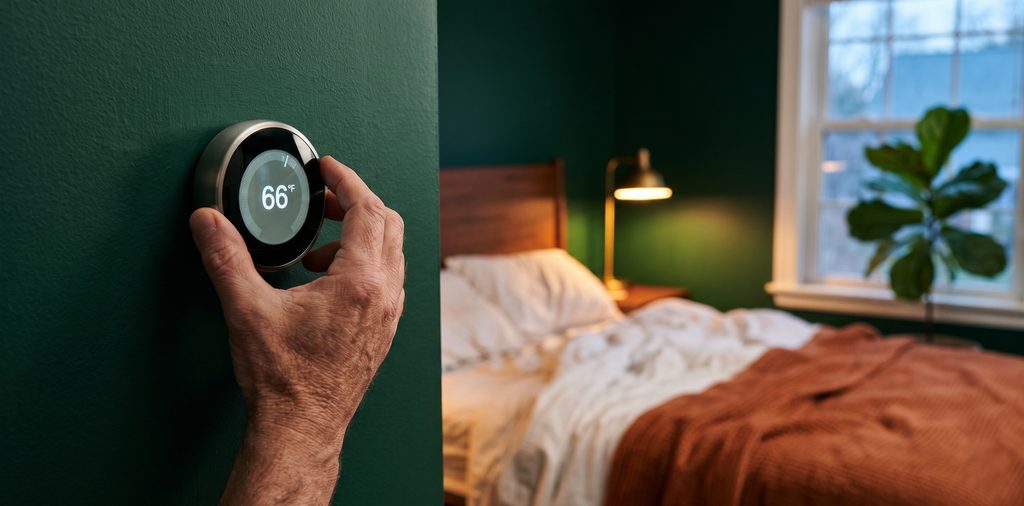
Your body has two main types of fat. White fat stores energy. Brown fat burns sugar and fat to make heat, and it switches on when you feel a little cool. In a study from the National Institutes of Health, healthy men slept in a room set to 66°F for one month. Their brown fat grew by about 42%, and their bodies needed less insulin to handle the same meal [1]. When the room was warmed to 81°F, those gains reversed. This was a small study of five young men, so treat it as an early signal rather than a promise. Still, trying it costs you nothing. Lower your thermostat to the mid-60s about an hour before bed, use lighter covers, and let your body do the rest.
Why the Timing of Your Water Matters as Much as the Amount
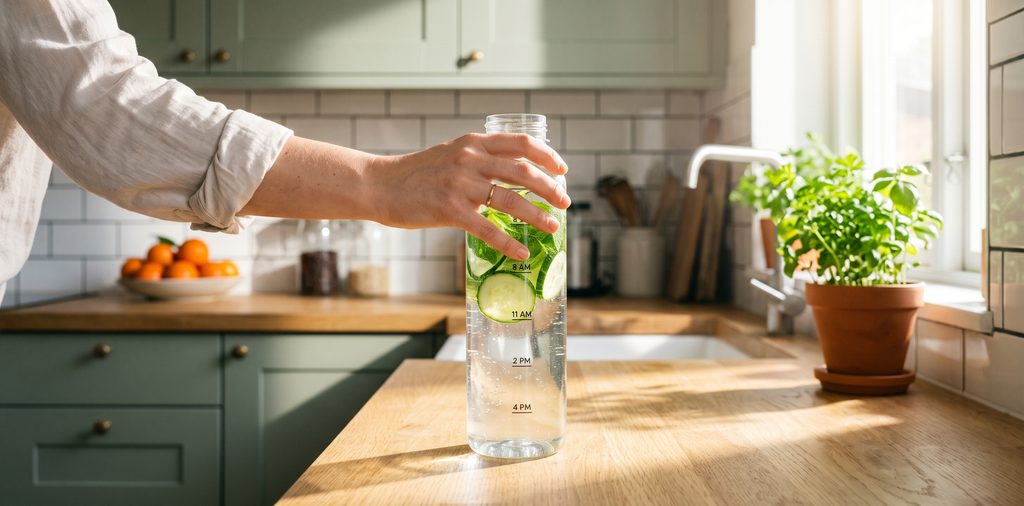
Staying hydrated supports steadier blood sugar. A French study followed more than 3,600 adults for nine years. People who drank about two to four cups of plain water a day were roughly 30% less likely to develop high blood sugar than those who drank less than two cups [2]. Researchers think part of the reason is vasopressin, a water-saving hormone that also nudges your liver to release more sugar. Timing is where most people slip, though. If you make up for a dry day by drinking lots of water at night, you will likely wake up to use the bathroom. That broken sleep has a real cost. In healthy adults, one night of only four hours of sleep cut insulin sensitivity by about 25% the next day [3]. Aim to finish most of your water by mid-afternoon, then switch to small sips in the two hours before bed.
Move Dinner Earlier and Watch Your Overnight Numbers Fall

This habit needs no diet change at all. In a 2024 study, 10 adults with uncontrolled type 2 diabetes who usually ate dinner after 10 p.m. moved it to before 8 p.m. for one week. They ate the same foods. Their average overnight blood sugar dropped from about 138 to 105 mg/dL, fasting insulin fell by roughly a third, and insulin resistance improved [4]. A separate randomized trial in Nutrients compared dinner at 6 p.m. with dinner at 9 p.m. in healthy adults. The earlier meal led to lower blood sugar over the next 24 hours [5]. My recommendation is to close the kitchen by 6 or 7 p.m. Then take a 10 to 15 minute walk so your muscles can pull sugar from your blood as it peaks. For more ideas, check out 5 Post-Meal Movements That Lower Blood Sugar Fast. For a deeper look at the research, read Why Eating Past 6 PM Could Spike Your Morning Blood Sugar.
Two Supplements That Work Best at Two Very Specific Times

Berberine is a plant compound that helps your cells respond to insulin and lowers the amount of sugar your liver releases overnight. A 2022 meta-analysis pooled 37 trials with more than 3,000 people with type 2 diabetes. Berberine lowered fasting blood sugar by about 15 mg/dL and A1c by about 0.6% [6]. What surprised me most was that it worked best in people with the highest starting blood sugar, and it did not raise the risk of lows. I take one 600 mg capsule of JADE Pure Berberine, the formula Diana and I created, with my first bite of dinner. Magnesium is the second piece. Studies estimate that 14 to 48% of people with type 2 diabetes have low magnesium [7]. It is not part of most routine panels, so it is worth asking about. A 2025 meta-analysis of 23 trials found that magnesium supplements lowered fasting blood sugar by about 10 mg/dL on average [8]. Since magnesium also supports relaxation and deeper sleep, I suggest about 275 mg of magnesium glycinate an hour before bed. Learn more in 4 Missing Minerals Keeping Your Blood Sugar High. Always check with your doctor first if you take diabetes medication or have kidney disease.
The Workout Window That Keeps Working While You Sleep

Morning workouts are great for many goals, but later in the day may have an edge for your fasting number. A 2026 review of 20 studies looked at people who exercised regularly for one to 12 weeks. Fasting blood sugar ended up slightly higher with morning sessions than with afternoon or evening ones [9]. The gap was modest, about 4 to 5 mg/dL, but it adds up with everything else on this list. Strength training is my top pick for that window. When your muscles work against resistance, glucose transporters called GLUT4 move to the cell surface and pull sugar from your blood without needing insulin. Your muscles then stay more responsive to insulin for hours afterward [10]. Aim for three to four sessions a week of 30 to 40 minutes, using squats, rows, lunges, and presses. No weights at home? Resistance bands work too.
None of these habits require a gym membership, a perfect diet, or a total lifestyle overhaul. They simply put the right actions in the right order during hours most of us overlook. Start with one or two tonight, track your fasting number for a week, and build from there. For 10 more daily habits that target the root cause of high blood sugar, grab our free 10-habit insulin resistance checklist.
References
[1] Lee et al. (2014). Temperature-Acclimated Brown Adipose Tissue Modulates Insulin Sensitivity in Humans. Diabetes.
[2] Roussel et al. (2011). Low Water Intake and Risk for New-Onset Hyperglycemia. Diabetes Care.
[3] Donga et al. (2010). A Single Night of Partial Sleep Deprivation Induces Insulin Resistance in Multiple Metabolic Pathways in Healthy Subjects. The Journal of Clinical Endocrinology & Metabolism.
[4] Chauhan et al. (2024). Early Dinner Improves the Glycemic Profile in Habitual Late Eaters With Uncontrolled Type 2 Diabetes Mellitus in the Short Term. Cureus.
[5] Nakamura et al. (2021). Eating Dinner Early Improves 24-h Blood Glucose Levels and Boosts Lipid Metabolism after Breakfast the Next Day: A Randomized Cross-Over Trial. Nutrients.
[6] Xie et al. (2022). Glucose-Lowering Effect of Berberine on Type 2 Diabetes: A Systematic Review and Meta-Analysis. Frontiers in Pharmacology.
[7] Pham et al. (2007). Hypomagnesemia in Patients With Type 2 Diabetes. Clinical Journal of the American Society of Nephrology.
[8] Al Maqrashi et al. (2025). Effect of Magnesium Supplements on Improving Glucose Control, Blood Pressure and Lipid Profile in Patients With Type 2 Diabetes Mellitus: A Systematic Review and Meta-Analysis. Sultan Qaboos University Medical Journal.
[9] Schipper et al. (2026). The Effect of Timing of Physical Exercise on Glycemia: A Systematic Review and Meta-Analysis of Human Intervention Studies. Journal of Diabetes & Metabolic Disorders.
[10] Richter & Hargreaves (2013). Exercise, GLUT4, and Skeletal Muscle Glucose Uptake. Physiological Reviews.