If you’ve had high blood sugar for years, it’s easy to feel like the damage is done. Some of that damage can be reversed; some can’t, and how much you get back depends on how soon you start. There are no injections or detox teas here, just seven steady habits you can start this week.
What Years of High Blood Sugar Do, and What Can Come Back
The clearest answer comes from the Diabetes Remission Clinical Trial, which put people who had type 2 diabetes for up to six years on a very low-calorie diet. I’m not recommending that diet, but what it revealed matters. As people lost weight, fat inside their organs melted away, and liver fat dropped from about 16% to 3% [1]. Nearly half returned to normal blood sugar. In those people, the quick burst of insulin a healthy pancreas releases right after eating, which usually goes missing in type 2 diabetes, came back [1]. Their insulin-making cells weren’t dead. Fat had shut them down, and once it cleared, they started working again.
Here’s the catch. The people who recovered had lived with diabetes for about 2.7 years, compared with 3.8 years for those who didn’t [1]. If you’ve had diabetes longer, don’t lose heart. Even if your pancreas makes less insulin than it used to, you can help your body respond better to the insulin it still makes. That’s called insulin sensitivity, and every habit below aims to improve it.

Close the Kitchen Early and Let Morning Light Fix Your Sleep
Habit one is giving your insulin a long nightly break. When your cells resist insulin, your pancreas makes extra, and a long overnight fast lets it fall back to baseline. A 2026 analysis in BMJ Medicine pooled 41 trials with 2,287 people and found that time-restricted eating lowered fasting blood sugar and fasting insulin [2]. Timing mattered more than the number of hours, since windows that ended before 5 p.m. lowered fasting insulin the most [2]. A realistic goal is an 8- to 10-hour eating window that closes by 7 p.m. If that feels like too much, start with 12 hours overnight, and check with your doctor first if you take insulin or other medications that can cause lows. If your morning numbers puzzle you, read Why Fasting Can Raise Your Blood Sugar (And the Real Fix).
Habit two is protecting your sleep, starting the moment you wake up. Within the first hour, step outside for 10 to 15 minutes of light stretching while facing the sunrise. In a sleep lab study, men who got bright light after waking had a stronger morning cortisol rise, which is what a healthy body clock looks like [3]. A review of 22 studies also found that morning light shifts your sleep-wake rhythm earlier, making it easier to fall asleep at night [4]. This matters because short sleep acts like a stress signal. In one lab study, five nights of four-hour sleep cut whole-body insulin sensitivity by about 25% [5]. To learn more, read Your Morning Blood Sugar Is Decided the Night Before.

Feed Your Gut and Build the Muscle That Soaks Up Sugar
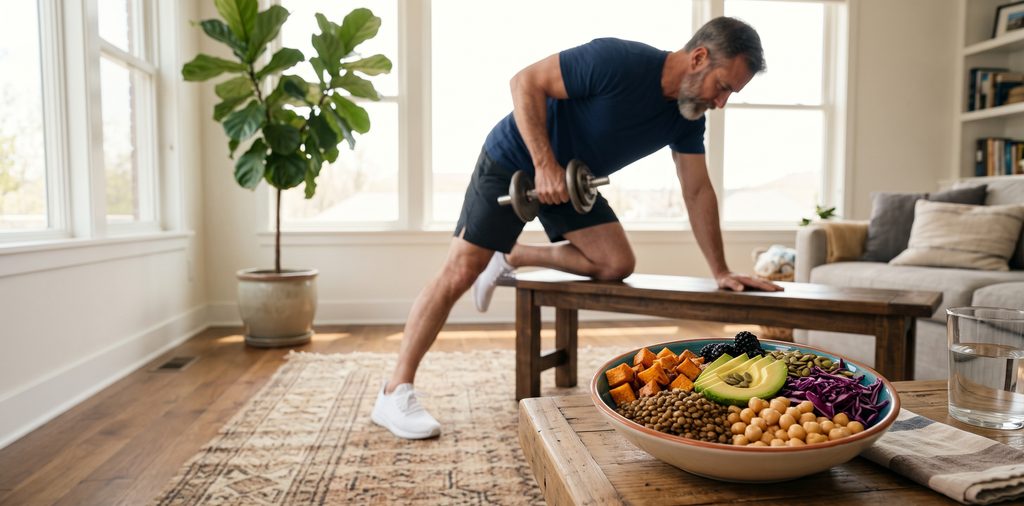
Habit three is eating more fiber. Your gut bacteria ferment fiber into short-chain fatty acids, small molecules that help your cells listen to insulin. A 2023 meta-analysis of 23 studies linked higher levels of these compounds to lower fasting insulin and better insulin resistance [6]. A 2024 review of 26 studies in people with type 2 diabetes found that more fiber improved A1c, blood sugar, and triglycerides, with about 35 grams a day as a realistic target [7]. Beans, lentils, vegetables, berries, nuts, seeds, and whole grains get you there, so add them slowly and drink more water.
Habit four is building muscle. Muscles are your body’s biggest storage space for sugar after a meal. A 2025 meta-analysis of adults 50 and older with type 2 diabetes found that strength training lowered fasting insulin and insulin resistance, improved blood sugar, and added close to two pounds of muscle [8]. Aim for two or three full-body sessions a week with squats, rows, lunges, and presses. Bands, dumbbells, or body weight all work. For an easy add-on, try 5 Post-Meal Movements That Lower Blood Sugar Fast.
Three Supplements With Real Research Behind Them
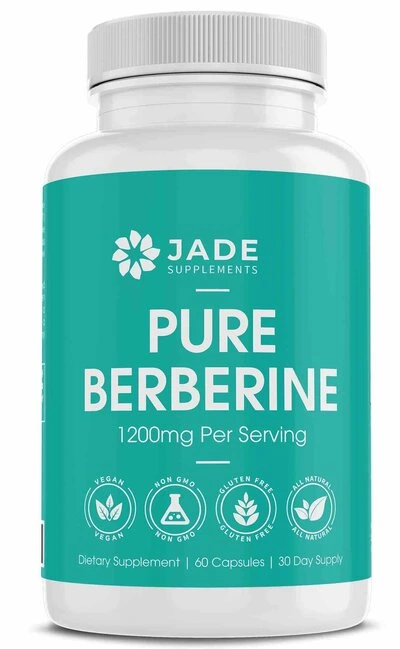
A quick disclosure: Diana and I created JADE Supplements, so weigh what follows with that in mind. Habit five is berberine. A 2023 meta-analysis of 20 placebo-controlled trials with 1,761 people found that berberine lowered fasting glucose, A1c, fasting insulin, and insulin resistance [9]. It activates AMPK, a cellular switch that helps your muscles and liver respond to the insulin you already have. I take 600 mg of JADE Pure Berberine with the first bite of breakfast and again at dinner. My A1c is 5.1%, but I also follow every other habit here. For more, read Berberine for Blood Sugar: Why It Works (For Some).
Habit six is a multi-strain probiotic. A stressed gut lining can leak bacterial fragments into your blood, fueling inflammation that interferes with insulin. A meta-analysis of 33 trial comparisons in 1,927 adults with type 2 diabetes found that probiotics lowered insulin resistance by about one point on the HOMA-IR scale, and multi-strain, higher-dose products worked better [10]. I take JADE Probiotics, our multi-strain formula.
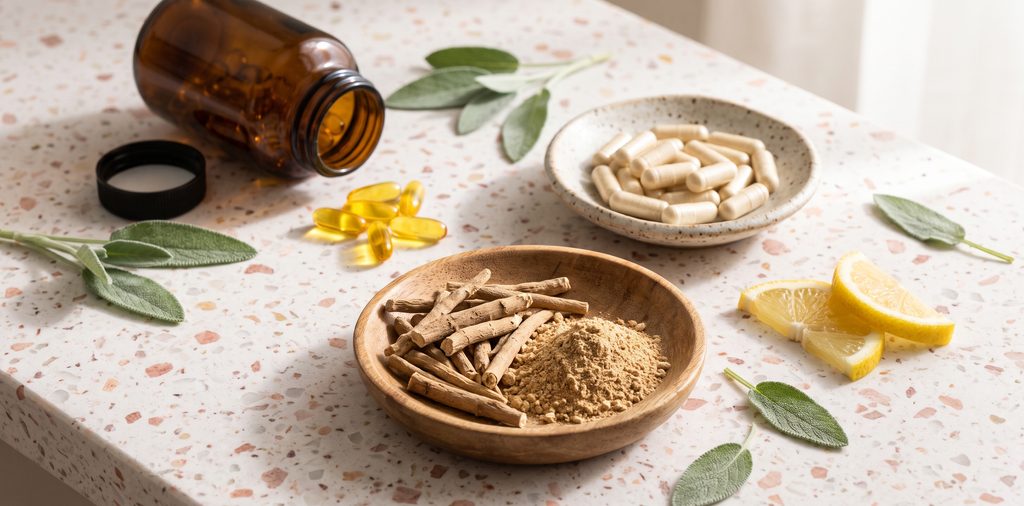
Habit seven is ashwagandha, but only if stress runs your life. Constant stress keeps cortisol high, which tells your liver to release sugar. A 2026 meta-analysis of 23 trials with 1,706 adults found that ashwagandha significantly lowered cortisol [11]. It’s a stress tool, not a blood sugar pill. Please talk with your doctor before starting any supplement, especially if you take blood sugar medications.
Where to Start This Week
Years of high blood sugar can feel like a story already written, but it isn’t. Some damage gets harder to undo with time, but your liver, muscles, gut, and insulin-making cells can still respond to what you do next. You don’t need all seven habits at once. Pick one or two, like an earlier kitchen closing time and a morning stretch outside, then add more. For recipes and a simple plan, grab our free Insulin Sensitivity Guide.
References
[1] Taylor et al. (2018). Remission of Human Type 2 Diabetes Requires Decrease in Liver and Pancreas Fat Content but Is Dependent upon Capacity for β Cell Recovery. Cell Metabolism.
[2] Chen et al. (2026). Effects of Timing and Eating Duration of Time Restricted Eating on Metabolic Outcomes: Systematic Review and Network Meta-Analysis. BMJ Medicine.
[3] Petrowski et al. (2019). The Effects of Post-Awakening Light Exposure on the Cortisol Awakening Response in Healthy Male Individuals. Psychoneuroendocrinology.
[4] Chambe et al. (2023). Light Therapy in Insomnia Disorder: A Systematic Review and Meta-Analysis. Journal of Sleep Research.
[5] Rao et al. (2015). Subchronic Sleep Restriction Causes Tissue-Specific Insulin Resistance. The Journal of Clinical Endocrinology & Metabolism.
[6] Pham et al. (2023). Short-Chain Fatty Acids and Insulin Sensitivity: A Systematic Review and Meta-Analysis. Nutrition Reviews.
[7] Nitzke et al. (2024). Increasing Dietary Fiber Intake for Type 2 Diabetes Mellitus Management: A Systematic Review. World Journal of Diabetes.
[8] Wang et al. (2025). Resistance Training Enhances Metabolic and Muscular Health and Reduces Systemic Inflammation in Middle-Aged and Older Adults With Type 2 Diabetes: A Meta-Analysis. Diabetes Research and Clinical Practice.
[9] Zhao et al. (2023). Overall and Sex-Specific Effect of Berberine on Glycemic and Insulin-Related Traits: A Systematic Review and Meta-Analysis of Randomized Controlled Trials. The Journal of Nutrition.
[10] Zhang et al. (2022). Meta-Analysis of Randomized Controlled Trials of the Effects of Probiotics on Type 2 Diabetes in Adults. Clinical Nutrition.
[11] Fornalik et al. (2026). Hormonal Modulation With Withania somnifera: Systematic Review and Meta-Analysis of Randomized-Controlled Trials. Planta Medica.

Jose Tejero is an exercise physiologist and two-time Ironman Triathlete. He holds a degree in Exercise Science from the University of Maryland and has over six years of experience working in the field of type 2 diabetes. Jose is currently working towards becoming a Clinical Exercise Physiologist and a Certified Diabetes Care and Education Specialist, combining his two passions: exercise and diabetes care.