If you have ever stood in your kitchen after dinner watching your glucose meter keep climbing, you already know how discouraging it feels to do “everything right” and still see the numbers creep up. Cutting carbs, walking the dog, taking your metformin as prescribed- some weeks, none of it feels like enough. The good news is that a handful of research-backed strategies can move your blood sugar in the right direction faster than most people expect, without extreme diets or risky shortcuts.
We pulled together seven of the fastest-acting, best-studied ways to improve insulin sensitivity and lower A1c. Some work within hours. Others take a few weeks to show up on your labs. All of them are backed by real clinical research, not internet trends.
1. The Type of Exercise That Clears Blood Sugar Twice as Fast as Cardio Alone
If you only have ten minutes, spend them wisely. High-intensity interval training, short rounds of hard effort like bodyweight squats, cycling sprints, or stair climbs followed by brief recovery, appears to outperform steady cardio when it comes to fast glucose control. A 2024 meta-analysis of 22 randomized controlled trials in people with type 2 diabetes found that this training style meaningfully lowered A1c, fasting glucose, and triglycerides while raising HDL, with the strongest results in adults aged 40 to 60 who had been diagnosed within the past five years [1].
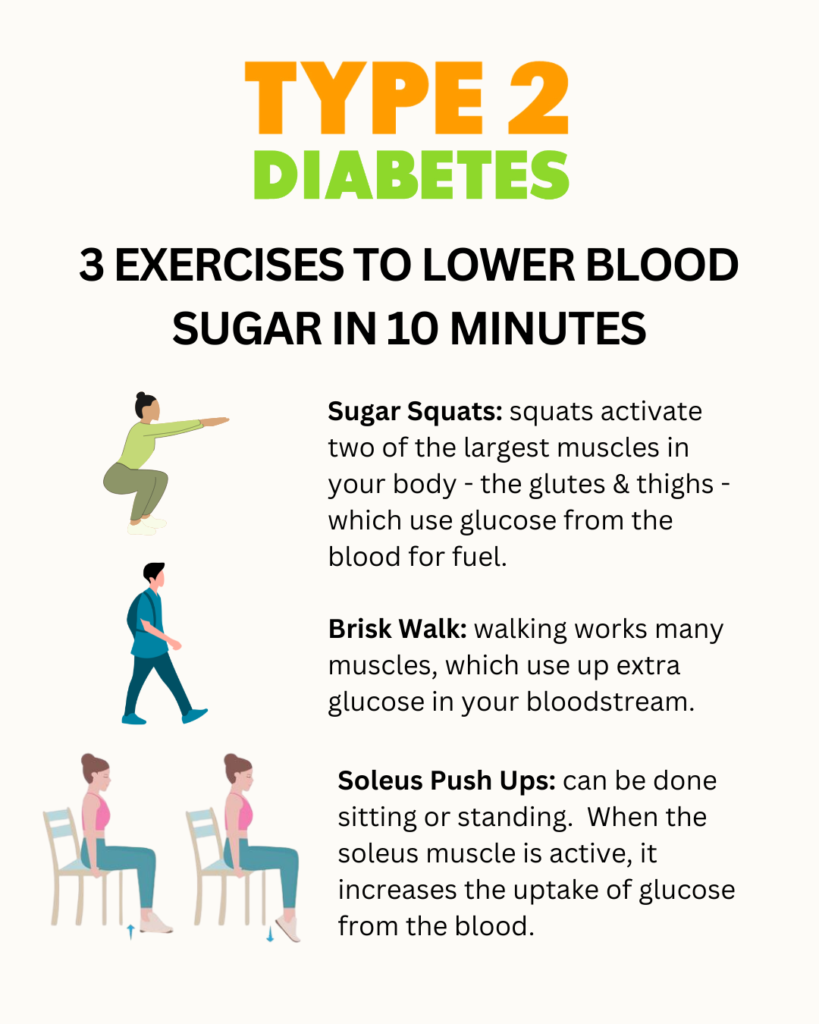
The mechanism is refreshingly simple. Intense effort burns through your muscles' stored glucose quickly, and for the next day or two those muscles pull extra sugar from your bloodstream to refill their stores, largely without needing insulin. In practice, that means three or four sessions a week, totaling 20 to 30 minutes, using rounds like 30 seconds of hard effort followed by a short rest.
2. A Supplement Stack That Rivals Prescription Meds
Berberine has been studied in dozens of randomized trials and consistently lowers A1c, fasting glucose, and LDL cholesterol, largely by activating AMPK, an enzyme that helps your cells burn stored energy and clear glucose from the bloodstream [3]. We cover dosing and timing in more detail in our complete guide to berberine for blood sugar, but the short version is that most trials use 1,000 to 1,500 milligrams daily, typically split into two doses with food.
Pairing berberine with magnesium glycinate rounds out the picture. Magnesium is essential for insulin signaling, yet somewhere between 14 and 48 percent of adults with type 2 diabetes are estimated to run low on it [4]. Low magnesium is linked to poorer glucose control and disrupted sleep, which is part of why we walk through the connection between magnesium, ashwagandha, and rest in our guide to better sleep for insulin resistance.
The newest piece of this puzzle comes from your gut. A 2025 network meta-analysis pooling 62 randomized trials found that specific probiotic strains meaningfully lowered fasting glucose and A1c in adults with type 2 diabetes, a reminder that an imbalanced gut microbiome is now considered one of the underlying drivers of insulin resistance, not just a bystander [8]. Restoring a healthier mix of gut bacteria appears to calm the low-grade inflammation that interferes with how your cells respond to insulin in the first place.
If you're looking for a place to start, the JADE Starter Kit bundles all three, berberine, magnesium glycinate, and a 60-billion-CFU probiotic, into one routine. It's the combination our community reaches for most, and every product inside is third-party tested and dosed to match what the research actually used.t.
3. The Power of Post-Meal Walks (And How to Time Them)
Skip the idea that only a long workout counts. A randomized crossover study found that three separate 15-minute walks taken after meals improved 24-hour glucose control more effectively than a single 45-minute walk taken once a day [5]. Muscle contraction pulls glucose out of the bloodstream through a pathway that does not require insulin, which is part of why this works even on days when your medication feels like it is falling short.
Timing matters more than most people realize. The walk needs to start within about 15 to 30 minutes of finishing your meal, while your blood sugar is actively rising, rather than an hour later once the spike has already peaked. A relaxed 15-minute walk after lunch and another after dinner covers the two meals most likely to send your numbers climbing.
4. Why Fasting and Fasting-Mimicking Diets Work So Well for Insulin Sensitivity
Time-restricted eating, such as confining meals to an eight-hour window, and periodic fasting-mimicking diets both shift your body from storing energy to burning it. Once your body works through its readily available glucose, it turns to stored fat for fuel, and that shift appears to make your cells more responsive to insulin. Researcher Valter Longo's fasting-mimicking diet, tested in a randomized clinical trial, reduced body fat, blood pressure, and other metabolic risk markers over repeated five-day cycles [6].
Both approaches are worth easing into gradually rather than starting all at once. If you take insulin or a sulfonylurea, loop in your prescriber before trying either one, since better glucose control often means your medication dose needs to be adjusted.

If you're looking for a place to start, the JADE Starter Kit bundles all three – berberine, magnesium glycinate, and a 60-billion-CFU probiotic – into one routine. It's the combination our community reaches for most, and every product inside is third-party tested and dosed to match what the research actually used.
5. The “Glucose Vacuum” You Can Build in 3 Workouts a Week
Walking pulls sugar out of your bloodstream, but how much muscle is doing the pulling determines how much you can clear. A 2024 meta-analysis of 46 randomized controlled trials in adults with type 2 diabetes found that resistance training alone lowered A1c by roughly half a percentage point and fasting glucose by about 12 mg/dL, independent of any other exercise or diet changes [9].
Two to three full-body sessions a week, using bands, dumbbells, or bodyweight moves like squats and rows, is enough to start expanding that reservoir. More muscle mass means more places for glucose to go after a meal, which is part of why resistance training and post-meal walking work so well as a pair.
6. The Secret Link Between Sleep, Stress, and Blood Sugar Control
Sleep deserves equal billing with diet and exercise. In a landmark study, just one night of partial sleep restriction reduced insulin sensitivity in healthy adults by roughly 25 percent the very next day [7]. Chronic stress compounds the problem by keeping cortisol elevated, a hormone that prompts your liver to release stored glucose even when you have not eaten.
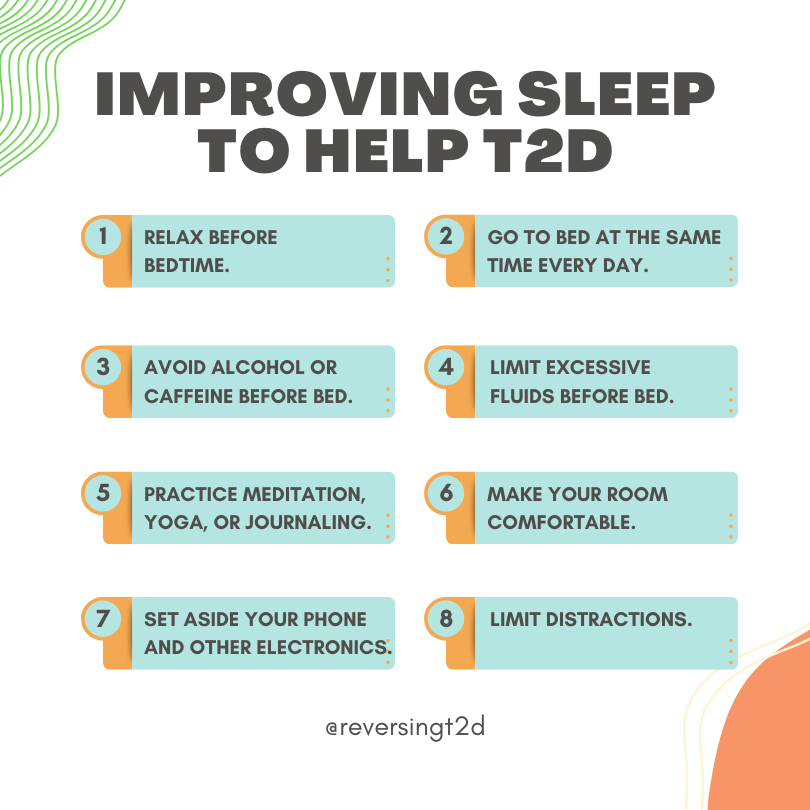
Magnesium glycinate about an hour before bed, ashwagandha to help regulate cortisol, and five slow minutes of breathwork while lying down are simple, low-risk habits worth testing if your numbers tend to run high in the morning regardless of what you ate the night before.
7. The Exact Daily Routine We Recommend to Make These Habits Stick
You do not need to do all seven of these every single day. A realistic routine looks something like this: berberine with breakfast and dinner, a 15-minute walk after lunch and after dinner, three or four HIIT or resistance training sessions spread across the week, and magnesium glycinate with ashwagandha about an hour before bed. If you want an occasional extra nudge, a tablespoon of apple cider vinegar diluted in water before a carb-heavy meal can help take the edge off a spike, though it works best used situationally rather than daily [2].
Pick two or three of these to start, whichever fit your schedule and your current labs, and give them a few weeks before judging the results. Between short bursts of movement, a smarter supplement stack, better-timed walks, and genuinely restful sleep, most people find their numbers moving in the right direction well before their next A1c check.
References
[1] Feng et al. (2024). Effects of High-Intensity Intermittent Exercise on Glucose and Lipid Metabolism in Type 2 Diabetes Patients: A Systematic Review and Meta-Analysis. Frontiers in Endocrinology.
[2] Arjmandfard et al. (2025). Effects of Apple Cider Vinegar on Glycemic Control and Insulin Sensitivity in Patients With Type 2 Diabetes: A GRADE-Assessed Systematic Review and Dose-Response Meta-Analysis of Controlled Clinical Trials. Frontiers in Nutrition.
[3] Wang et al. (2024). Effects of Administering Berberine Alone or in Combination on Type 2 Diabetes Mellitus: A Systematic Review and Meta-Analysis. Frontiers in Pharmacology.
[4] Waanders et al. (2020). Hypomagnesaemia and Its Determinants in a Contemporary Primary Care Cohort of Persons With Type 2 Diabetes. Endocrine.
[5] DiPietro et al. (2013). Three 15-min Bouts of Moderate Postmeal Walking Significantly Improves 24-h Glycemic Control in Older People at Risk for Impaired Glucose Tolerance. Diabetes Care.
[6] Wei et al. (2017). Fasting-Mimicking Diet and Markers/Risk Factors for Aging, Diabetes, Cancer, and Cardiovascular Disease. Science Translational Medicine.
[7] Donga et al. (2010). A Single Night of Partial Sleep Deprivation Induces Insulin Resistance in Multiple Metabolic Pathways in Healthy Subjects. The Journal of Clinical Endocrinology & Metabolism.
[8] Allam et al. (2025). Network Meta-Analysis of Randomized Control Trials Evaluating the Effectiveness of Various Probiotic Formulations in Patients With Type 2 Diabetes Mellitus. Diabetology & Metabolic Syndrome.
[9] Wan & Su (2024). The Impact of Resistance Exercise Training on Glycemic Control Among Adults with Type 2 Diabetes: A Systematic Review and Meta-Analysis of Randomized Controlled Trials. Biological Research for Nursing.