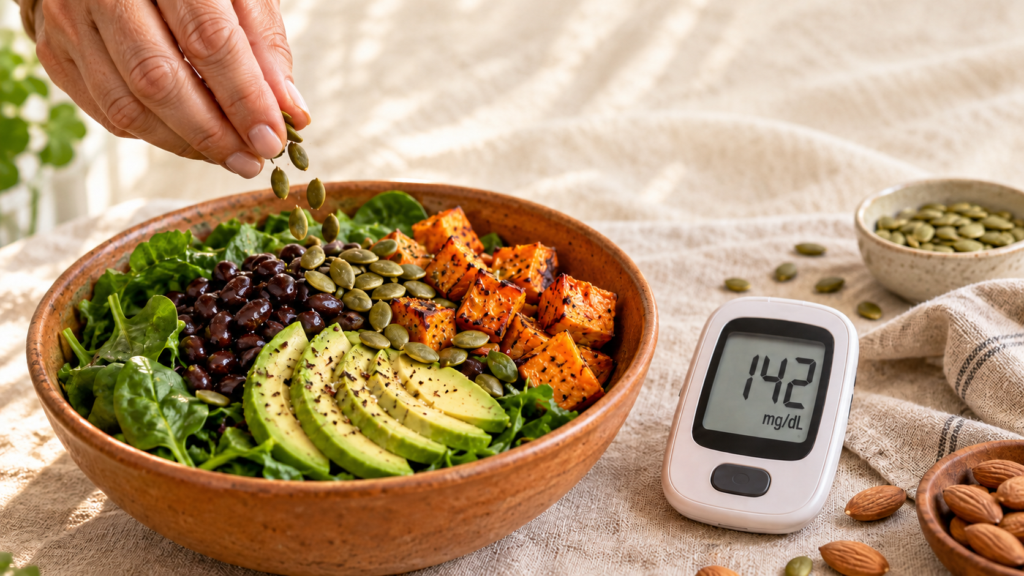
If your fasting numbers won't budge no matter how well you eat, it's natural to wonder what you're missing. Sometimes the missing piece is a mineral you're running low on. Magnesium, zinc, chromium, and potassium each help your body make, release, or respond to insulin, the hormone that moves sugar out of your blood. When levels dip, blood sugar control can quietly slip. As an exercise physiologist working exclusively in metabolic health, I'll walk you through the research on minerals for blood sugar control, the foods that supply each one, and when a supplement makes sense.
Magnesium: The Mineral That Helps Insulin Unlock Your Cells
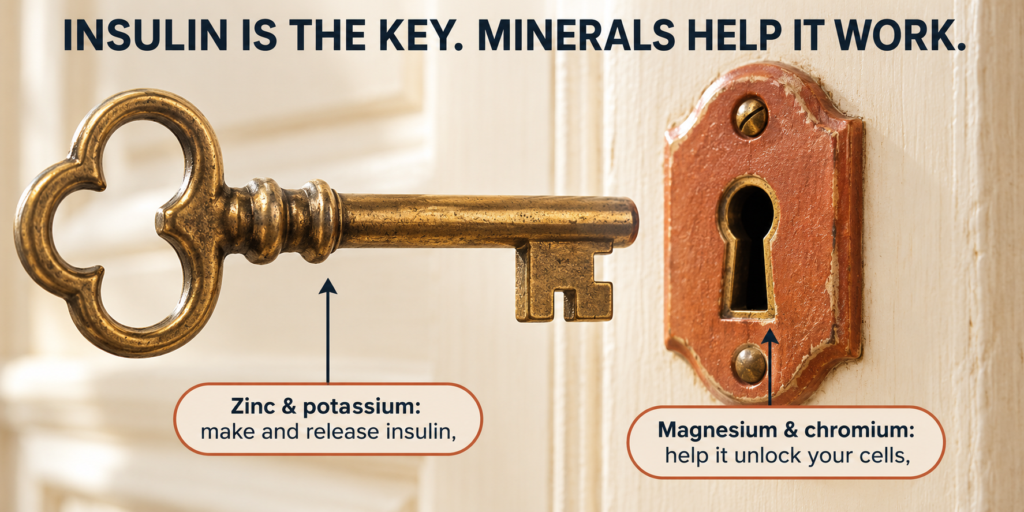
Think of insulin as a key and your cells as locked doors. Insulin docks onto your cell, and magnesium helps that key turn in the lock. When magnesium runs low, the door doesn't open as well, so sugar (glucose) stays in your blood instead of moving into your cells. A 2011 meta-analysis in Diabetes Care pooled 13 studies with more than 536,000 people. Those who ate the most magnesium had a 22% lower risk of type 2 diabetes, and each extra 100 mg a day was tied to about a 14% lower risk [1].
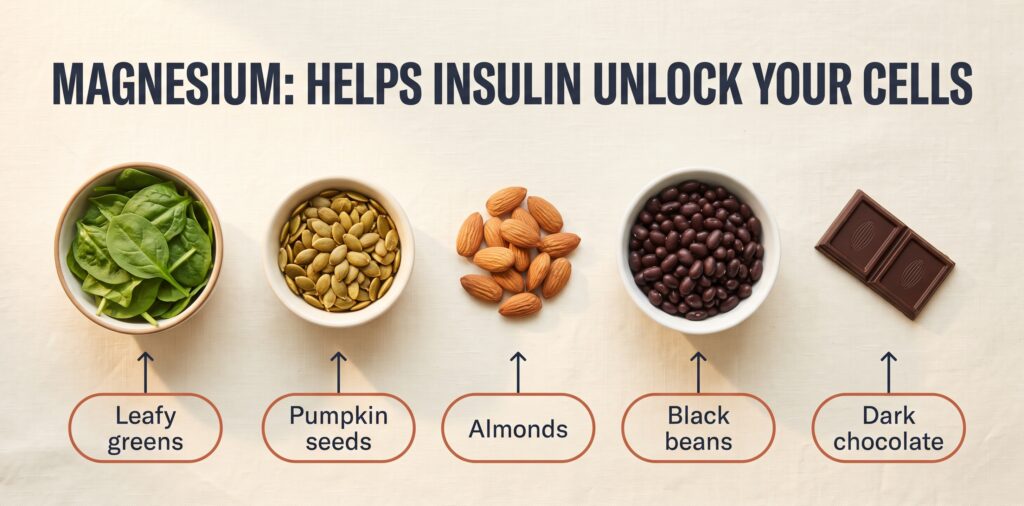
Leafy greens, pumpkin seeds, almonds, black beans, and a little dark chocolate are all great sources. If you prefer a supplement, I take about 275 mg of magnesium glycinate before bed because it's gentle on the stomach. One key exception: your kidneys clear extra magnesium, so if you have kidney disease, talk with your doctor first. To pair magnesium with better sleep, read The 4-Part Combo That Fights Insulin Resistance While You Sleep.
Zinc: The Little-Known Mineral Hiding Inside Your Insulin
Zinc works earlier in the process. It lives inside the beta cells of your pancreas, which make and store insulin. There, zinc helps shape insulin and keep it stable until your body needs it. When zinc is low, insulin is made and stored less reliably. A 2019 meta-analysis in The American Journal of Clinical Nutrition pooled 32 placebo-controlled trials with about 1,700 people. Zinc lowered fasting blood sugar, post-meal blood sugar, fasting insulin, insulin resistance, and A1c [2].
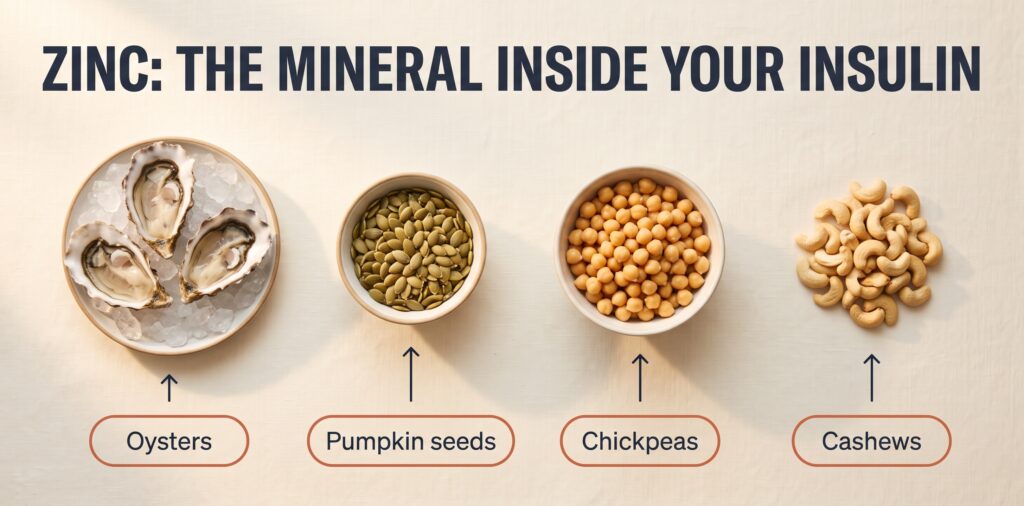
Oysters are the richest source, but pumpkin seeds, chickpeas, and cashews are solid everyday picks. Most studies used 30 to 50 mg a day, but I'd stay closer to 30 mg, taken with food. The National Institutes of Health sets the adult upper limit at 40 mg a day, and too much for too long can lower your copper. Treat a supplement as an 8- to 12-week trial, then review your numbers with your care team.
Chromium: Why I'd Skip the Supplement Aisle on This One
Chromium may help the insulin receptor stay switched on longer, like holding a door open so more glucose gets through. That idea is why it's marketed so heavily for blood sugar, but the evidence is mixed. A 2016 review in Nutrition Reviews examined trials in people with type 2 diabetes. It rated the evidence as weak and found little reason to recommend chromium for blood sugar [3]. Some studies show small benefits, while others show none.
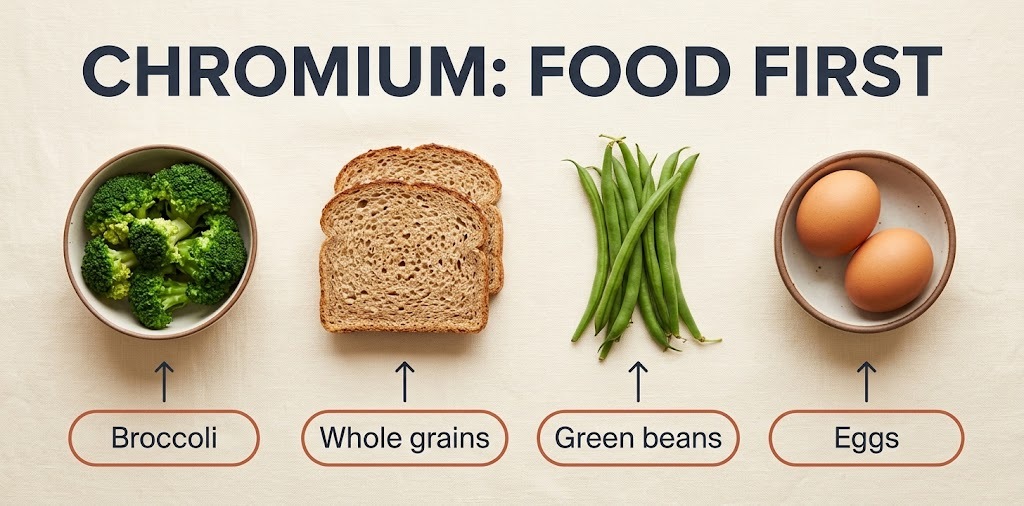
Safety is the bigger concern. A case report in the Annals of Internal Medicine described a woman who took 600 mcg of chromium picolinate daily, about three times the usual dose, for six weeks. She later developed chronic kidney failure [4]. One case can't prove cause, but it's a good reason for caution. I'd get chromium from broccoli, whole grains, green beans, and eggs, and talk with your doctor before trying a supplement.
Potassium: The Blood Pressure Pill Link Worth Knowing
Potassium helps the beta cells in your pancreas release insulin. When it runs low, less insulin gets sent out. Some blood pressure pills called thiazide diuretics can lower potassium as a side effect. A 2006 review in Hypertension looked at 59 trials of these drugs. The more a person's potassium dropped, the more their blood sugar rose, and trials that added potassium saw smaller rises [5].
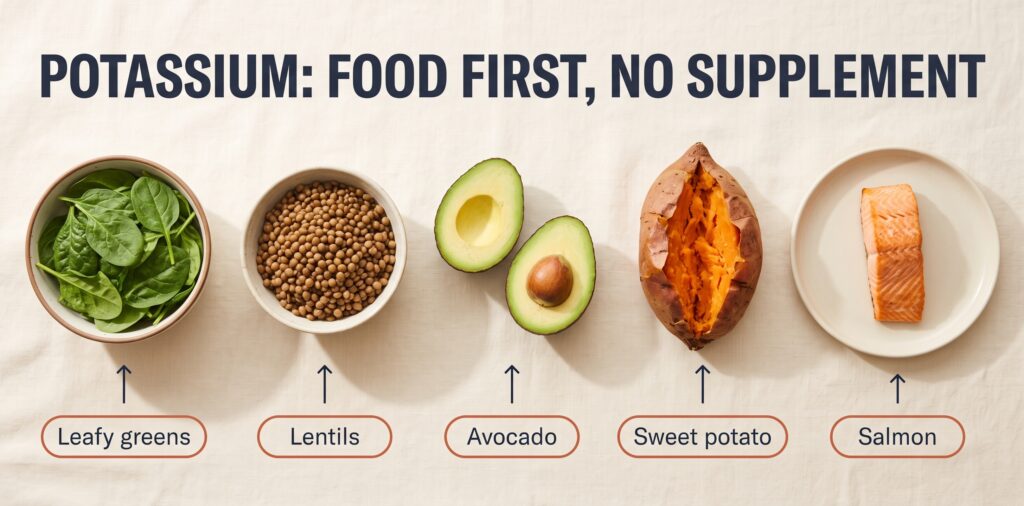
Please don't stop any medication on your own, since thiazides work well for blood pressure. Instead, ask your doctor if checking your potassium makes sense. Your plate matters too. A 2022 meta-analysis in Nutrients linked eating more than about 2,900 mg of potassium a day to a lower risk of diabetes [6]. Leafy greens, beans, lentils, avocado, sweet potato, and salmon are all rich sources. I don't recommend potassium supplements, though. Too much can cause dangerous heart rhythm problems, especially with kidney issues or medications like ACE inhibitors, ARBs, or potassium-sparing diuretics that already raise potassium.
The One Thread That Connects All Four Minerals
Each of these minerals supports insulin sensitivity, or how well your cells respond when insulin arrives. Zinc helps make insulin, potassium helps release it, and magnesium and chromium help it open the door. That's why I start with mineral-rich foods and treat supplements as a targeted extra. I also take berberine, 600 mg with my first bite of breakfast and dinner, because it works on the same pathway. I use JADE Pure Berberine, a formula Diana and I co-created, and you can learn more in Berberine for Blood Sugar: Why It Works (For Some). If you take diabetes medication, check with your doctor before adding any supplement.
Your blood sugar reflects many small pieces working together, and minerals are an easy one to overlook. This week, try adding one mineral-rich food to each meal, like pumpkin seeds on a salad or black beans at dinner. To see which numbers to aim for, read Normal vs. Optimal: The 4 Blood Sugar Numbers to Know. For simple daily habits that build insulin sensitivity, download our free checklist, 10 Proven Habits for Reversing Type 2 Diabetes
References
[1] Dong et al. (2011). Magnesium Intake and Risk of Type 2 Diabetes: Meta-Analysis of Prospective Cohort Studies. Diabetes Care.
[2] Wang et al. (2019). Zinc Supplementation Improves Glycemic Control for Diabetes Prevention and Management: A Systematic Review and Meta-Analysis of Randomized Controlled Trials. The American Journal of Clinical Nutrition.
[3] Costello et al. (2016). Chromium Supplements for Glycemic Control in Type 2 Diabetes: Limited Evidence of Effectiveness. Nutrition Reviews.
[4] Wasser et al. (1997). Chronic Renal Failure After Ingestion of Over-the-Counter Chromium Picolinate. Annals of Internal Medicine.
[5] Zillich et al. (2006). Thiazide Diuretics, Potassium, and the Development of Diabetes: A Quantitative Review. Hypertension.
[6] D'Elia et al. (2022). Dietary Potassium Intake and Risk of Diabetes: A Systematic Review and Meta-Analysis of Prospective Studies. Nutrients.