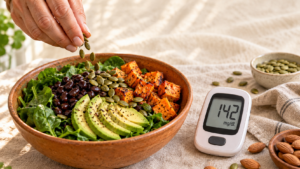
If you've ever felt like managing your blood sugar and improving your body composition are two separate battles that need two separate diets, a recent Stanford trial suggests otherwise. Researchers tested the ketogenic diet and the Mediterranean diet side by side in adults with prediabetes and type 2 diabetes, tracking their glucose in real time with continuous monitors. The results didn't just settle part of the keto versus Mediterranean debate for blood sugar control. They also connect to a separate body of research showing the Mediterranean pattern is tied to something keto cannot offer: more muscle.
What the Study Found
A team led by Stanford researcher Christopher Gardner designed a randomized trial, known as Keto-Med, to answer a simple question: for people managing blood sugar, does a well-formulated ketogenic diet work better than a Mediterranean-style eating pattern, or is it the other way around? Forty adults with prediabetes or type 2 diabetes followed each diet for 12 weeks, in random order, while wearing continuous glucose monitors that tracked their blood sugar around the clock [1]. Both diets shared two rules: no added sugar and no refined grains. The difference was everything else. The ketogenic group avoided legumes, fruit, and whole intact grains entirely, while the Mediterranean group ate all three freely [1].

After 12 weeks on each diet, hemoglobin A1c, the three-month average of blood sugar, improved on both eating patterns, and researchers found no meaningful difference between them [1]. The ketogenic diet did edge ahead in one area: triglycerides dropped further on keto than on the Mediterranean pattern [1]. On paper, it looked close to a draw, with keto holding a slight lipid advantage. The more telling result showed up later, once the study officially ended.
What Happened After the Study Ended
Twelve weeks after the trial wrapped, once participants were free to eat however they wanted with no guidance from the research team, investigators checked back in. Instead of drifting toward the low-carb habits of keto, participants' eating patterns looked far more like the Mediterranean diet they had followed [2]. Researchers who analyzed adherence throughout the trial concluded this pointed to greater long term sustainability for the Mediterranean approach [2].

That result is worth sitting with. Under study conditions, with meals delivered and regular contact with a research team, both diets were followed about equally well. Left to their own devices, people gravitated back toward legumes, fruit, and whole grains rather than staying strict and carbohydrate-free indefinitely. A dietary pattern only helps your blood sugar if it's one you can actually keep eating for years, not just for the length of a clinical trial.
Why This Also Matters for Your Muscles
Separate from the Keto-Med trial, a large study out of the UK adds another layer to this comparison. Researchers examined 2,570 women, scored how closely each one followed a Mediterranean eating pattern, then measured their fat-free mass and leg explosive power, a marker of the fast-twitch muscle strength you rely on for things like climbing stairs or catching yourself if you trip [3]. Women whose diets most closely matched the Mediterranean pattern had 1.7% more fat-free mass and 9.6% greater leg power than women whose diets matched it least, even after accounting for age, activity level, protein intake, and smoking [3].

One explanation researchers point to is inflammation. Aging muscle becomes less responsive to the normal signals that build and repair tissue, a process called anabolic resistance, and chronic low-grade inflammation appears to be part of what drives it [4]. The olive oil, fatty fish, and colorful produce that define the Mediterranean pattern are rich in anti-inflammatory compounds, which may help keep that muscle-building signaling working properly. This matters beyond how you look or move. Muscle is also glucose storage tissue, so the more lean muscle you carry, the more capacity your body has to clear sugar from your bloodstream after a meal. Pairing this kind of eating pattern with regular strength work, like the 5 Post-Meal Movements That Lower Blood Sugar Fast we've covered before, gives you both sides of the equation at once.
What This Looks Like on Your Plate
Translating this research into daily meals doesn't require a complicated overhaul. Start with what both diets in the Keto-Med trial agreed on: skip added sugars and refined grains like white bread, white pasta, and packaged snacks, since these cause the sharpest post-meal spikes. From there, build meals around legumes such as lentils, chickpeas, and black beans, which combine fiber and protein to slow digestion and soften the glucose response. Add fatty fish like salmon, sardines, or mackerel two to three times a week for anti-inflammatory omega-3 fats, and make extra virgin olive oil your primary cooking fat instead of butter or heavily processed oils.

The American Heart Association recommends keeping saturated fat under 6% of daily calories, and leaning on olive oil in place of animal fat is one of the simplest ways to get there. Fill half your plate with non-starchy vegetables at most meals, and include whole, intact grains like quinoa, farro, or a true whole-grain bread in modest portions rather than cutting grains out entirely. For a closer look at which grains fit this pattern best, our guide to the Best Whole Grains for Blood Sugar Control in Type 2 Diabetes rounds up several worth adding to your rotation.
The Easiest Place to Start
You don't have to choose between managing your blood sugar and improving your body composition, because the research suggests they respond to many of the same foods. If keto has caught your attention, this trial shows it can lower blood sugar just as effectively as the Mediterranean diet in the short term, and it may edge it out slightly on triglycerides. But if you're looking for an approach you can sustain for years, one that also supports the muscle your body needs to manage glucose over the long run, the Mediterranean pattern has research to back it on both fronts.
Start small. Swap one refined grain for a whole one this week, add a serving of lentils or beans to a meal you already make, and cook with olive oil instead of butter. Pair that with some of the 5 Foods That Reversed Type 2 Diabetes in Trials we've written about before, and you're building a plate that works for your blood sugar and your muscles at the same time.
References
[1] Gardner, C. D., Landry, M. J., Perelman, D., et al. (2022). Effect of a ketogenic diet versus Mediterranean diet on glycated hemoglobin in individuals with prediabetes and type 2 diabetes mellitus: The interventional Keto-Med randomized crossover trial. American Journal of Clinical Nutrition, 116(3), 640-652.
[2] Landry, M. J., Crimarco, A., Perelman, D., et al. (2021). Adherence to Ketogenic and Mediterranean Study Diets in a Crossover Trial: The Keto-Med Randomized Trial. Nutrients, 13(3), 967.
[3] Kelaiditi, E., Jennings, A., Steves, C. J., et al. (2016). Measurements of skeletal muscle mass and power are positively related to a Mediterranean dietary pattern in women. Osteoporosis International, 27(11), 3251-3260.
[4] Dalle, S., Rossmeislova, L., & Koppo, K. (2017). The Role of Inflammation in Age-Related Sarcopenia. Frontiers in Physiology, 8, 1045.

Jose Tejero is an exercise physiologist and two-time Ironman Triathlete. He holds a degree in Exercise Science from the University of Maryland and has over six years of experience working in the field of type 2 diabetes. Jose is currently working towards becoming a Clinical Exercise Physiologist and a Certified Diabetes Care and Education Specialist, combining his two passions: exercise and diabetes care.