


Written by Diana Licalzi, MS, RD, CDCES
If you are trying to improve insulin sensitivity or keep post-meal blood sugar more stable, salads need to do more than just be low-calorie. They need enough fiber, minerals, and slow-digesting carbohydrates to support glucose control and satiety. This Honey Mustard Fall Harvest Salad is built with that goal in mind. It is hearty, satisfying, and designed to work with your physiology rather than against it.
Unlike many restaurant-style salads that rely on cheese, croutons, or creamy dressings, this recipe centers on whole plant foods. Each ingredient supports better metabolic health, particularly for those navigating insulin resistance, prediabetes, or type 2 diabetes.
Why this salad supports insulin sensitivity
One of the salad’s strongest features is its fiber content. Each serving provides approximately 11–12 grams of fiber, which helps slow digestion and reduce post-meal glucose excursions [1]. Higher fiber intake has consistently been associated with improved insulin sensitivity, lower fasting glucose, and better A1c outcomes in both prediabetes and type 2 diabetes populations [1,2].
Fiber works by slowing the breakdown and absorption of carbohydrates in the gut, reducing how quickly glucose enters the bloodstream. This lowers the demand on insulin and helps prevent the sharp spikes and crashes that often drive fatigue and cravings later in the day.
Chickpeas: steady energy that lasts beyond one meal
The chickpeas in this salad provide a combination of plant protein, soluble fiber, and resistant starch. Legumes have been shown to improve blood sugar control not only at the meal they are eaten, but also at the next meal, a phenomenon known as the second-meal effect [3]. This means a lunch built around chickpeas can lead to better glucose control at dinner or even the following morning.
Research shows that replacing refined carbohydrates or animal proteins with legumes can reduce fasting glucose, insulin levels, and markers of insulin resistance [3,4]. In practical terms, chickpeas help make this salad filling and metabolically stabilizing rather than “light but unsatisfying.”
Minerals your metabolism depends on
Kale quietly contributes key minerals that are often low in people with insulin resistance, particularly magnesium and potassium. Magnesium is a cofactor for hundreds of enzymes involved in glucose transport and insulin signaling, and low magnesium status has been linked to higher insulin resistance and increased diabetes risk [5].
Potassium supports normal cellular function and carbohydrate metabolism and is especially important for individuals managing blood pressure alongside blood sugar. Diets rich in leafy greens, legumes, and seeds consistently show protective effects against metabolic disease [6].
In addition, kale provides polyphenols—plant compounds that help reduce oxidative stress and inflammation, both of which interfere with insulin signaling over time [7].
Pears, fruit, and the truth about blood sugar
The sliced pear in this salad is more than just a seasonal flavor addition. Whole fruit consumption has been consistently associated with a lower risk of developing type 2 diabetes, not a higher one [8]. Large prospective studies have shown that people who eat more whole fruit—especially fruits rich in fiber and polyphenols—have better long-term glucose control and reduced diabetes risk [8,9].
Pears are particularly rich in soluble fiber, which slows glucose absorption and feeds beneficial gut bacteria. When fruit is eaten with or after a meal that contains fiber, protein, and healthy fats—like this salad—the glucose response is significantly blunted compared to eating fruit on its own [10]. This is why pairing fruit with meals, rather than avoiding it, is often a more sustainable and physiologically sound strategy for blood sugar management.
Fat quality matters more than fat avoidance
This salad uses olive oil as its primary fat source, keeping saturated fat low while emphasizing monounsaturated fats. Diets higher in unsaturated fats and lower in saturated fats have been shown to improve insulin sensitivity, particularly in the liver and muscle [11].
Excess saturated fat can interfere with insulin signaling and promote ectopic fat storage, especially in the liver. By using olive oil instead of cheese or creamy dressings, this recipe supports both glycemic control and cardiovascular health [11,12].
Apple cider vinegar and post-meal glucose
The honey mustard dressing includes apple cider vinegar, which has been shown to modestly improve post-meal glucose responses by slowing gastric emptying and improving insulin sensitivity [13]. While vinegar is not a cure-all, using it regularly in meals—especially carbohydrate-containing meals—can provide a small but meaningful benefit when combined with a high-fiber diet [13].

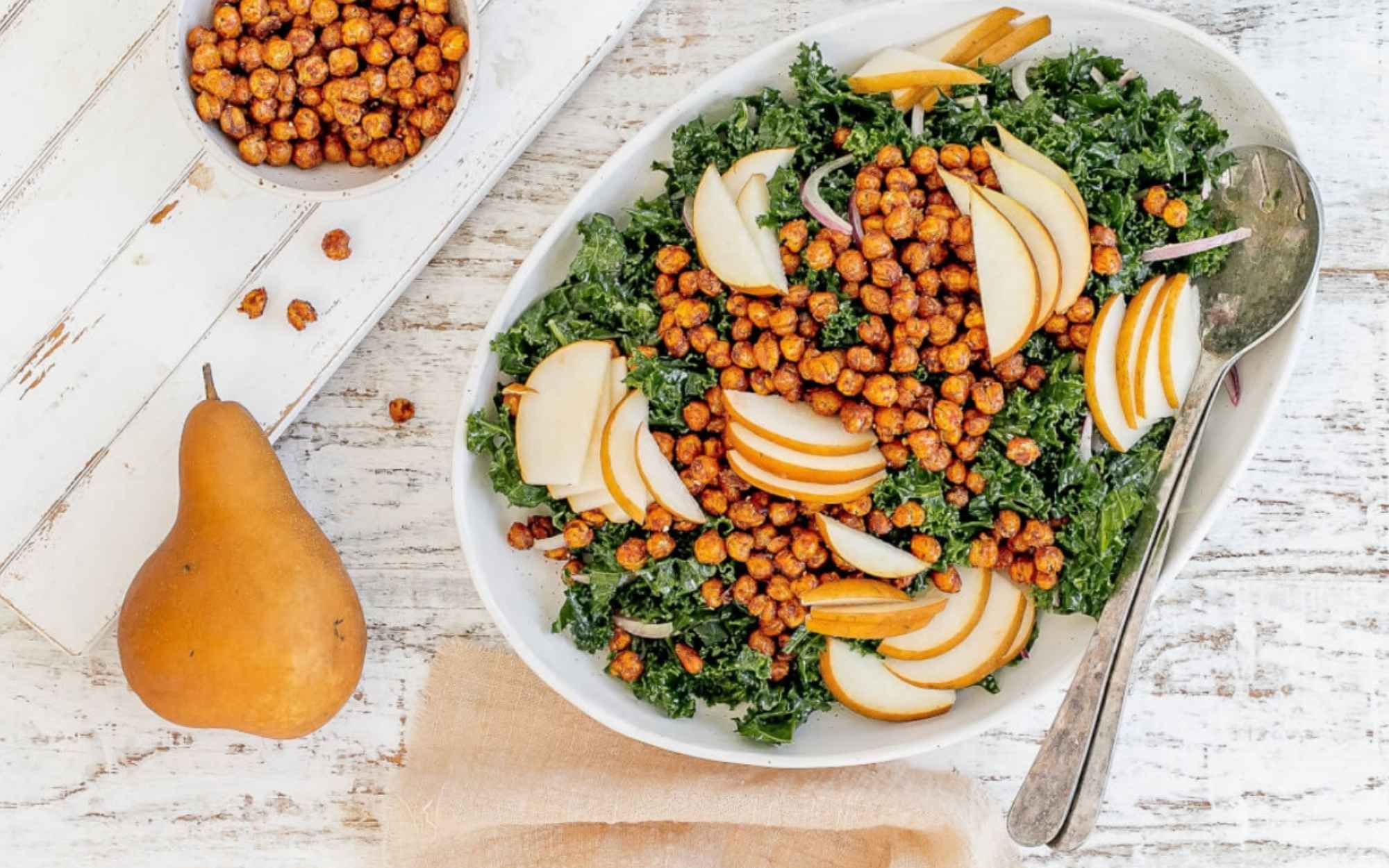
Honey Mustard Harvest Salad with Crunchy Chickpeas
Harvest Salad
- 2 cans Chickpeas (cooked, patted dry) about 3 cups
- 1 tbsp Extra Virgin Olive Oil
- Salt & Black Pepper (to taste)
- 2 tsp Paprika
- 1 tsp Chili Powder
- 8 cups Kale Leaves (finely chopped)
- 1/3 cup Red Onion (small, sliced)
- 1 Pear (large, sliced)
Honey Mustard Dressing
- 3 tbsp Dijon Mustard
- 2 tbsp Honey (or sweetener of choice)
- 2 tbsp Apple Cider Vinegar
- 3 tbsp Avocado Oil
- 1 tbsp Water
- 1 clove Garlic (minced)
- 1/8 tsp Turmeric
- Salt & Black Pepper (to taste)
- Preheat the oven to 425°F (220°C) and line a baking sheet with parchment paper.
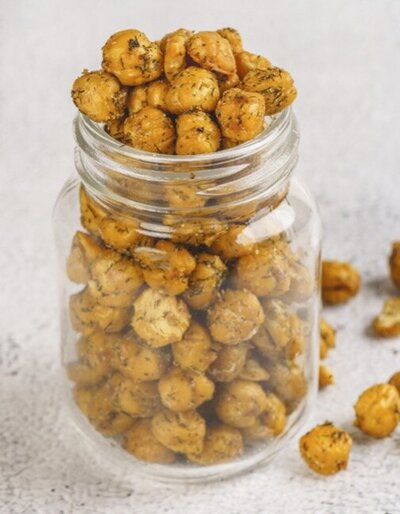
- In a bowl, toss the chickpeas with the oil and season with salt and pepper. Transfer to the prepared baking sheet and bake for 20 to 25 minutes until crispy, shaking halfway through.
- Add the paprika and chili powder to the chickpeas and toss well to combine. Let cool for approximately five minutes so the spices can set.
- While the chickpeas cook, mix together all the ingredients for the Honey Mustard dressing in a s. all bowl. Whisk until well combined, then set aside.
- Add the kale and dressing to a large bowl. Toss to coat very well. Add the onion, pear, and cooked chickpeas and toss gently to combine.
- Divide the salad evenly between plates and enjoy!
Notes
- Calories: ~360–380 kcal
- Protein: ~12–13 g
- Carbohydrates: ~45–48 g
- Fiber: ~10–12 g
- Total Fat: ~18–19 g
- A lighter lunch
- A dinner side paired with tofu, tempeh, or lentils
- A blood-sugar-friendly pre-dinner salad
Final thoughts
This Honey Mustard Fall Harvest Salad is a clear example of how meals can support insulin sensitivity without eliminating carbohydrates or fruit. By focusing on fiber, mineral density, unsaturated fats, and whole-food carbohydrates, this salad helps stabilize blood sugar, improve satiety, and support long-term metabolic health in a realistic, enjoyable way.
References
[1] Reynolds A et al. Carbohydrate quality and human health: a series of systematic reviews and meta-analyses. The Lancet (2019).
[2] Weickert MO, Pfeiffer AFH. Impact of dietary fiber on insulin sensitivity and glucose metabolism. Nutrients (2018).
[3] Higgins JA. Whole grains, legumes, and the subsequent meal effect: implications for blood glucose control and the role of fermentation. J Nutr Metab. (2012)
[4] Sievenpiper JL et al. Effect of non-oil-seed pulses on glycemic control: a systematic review and meta-analysis. Diabetes Care (2009).
[5] Barbagallo M, Dominguez LJ. Magnesium and type 2 diabetes. World Journal of Diabetes (2015).
[6] Hruby A et al. Magnesium Intake, Quality of Carbohydrates, and Risk of Type 2 Diabetes. Diabetes Care (2017).
[7] Williamson G. The role of polyphenols in modern nutrition. Nutrients (2017).
[8] Muraki I et al. Fruit consumption and risk of type 2 diabetes. BMJ (2013).
[9] Halvorsen RE, et al. Fruit and vegetable consumption and the risk of type 2 diabetes. BMJ Nutr Prev Health. (2021).
[10] Shukla AP et al. Food order has a significant impact on postprandial glucose and insulin levels. Diabetes Care (2015). https://pubmed.ncbi.nlm.nih.gov/25665809/
[11] Riccardi G,et al. Dietary fat, insulin sensitivity and the metabolic syndrome. Clin Nutr. (2004)
[12] Schwingshackl L, Hoffmann G. Monounsaturated fatty acids and risk of cardiovascular disease. Nutrients. (2012)
[13] Johnston CS, Kim CM, Buller AJ. Vinegar improves insulin sensitivity to a high-carbohydrate meal in subjects with insulin resistance or type 2 diabetes. Diabetes Care. (2004)

Diana is a nationally recognized Registered Dietitian and Certified Diabetes Care and Education Specialist (CDCES), and holds a Master’s degree in Nutrition Science and Policy from the Tufts Friedman School of Nutrition. She received her education and dietetics training from Villanova University, Tufts University, and UC San Diego Health. Diana has over 8 years of experience working in the field of type 2 diabetes.



Leave a Comment