


If you’re managing type 2 diabetes or prediabetes, the structure of your meal matters just as much as the ingredients themselves. You need protein to slow digestion, fiber to steady glucose absorption, and healthy fats to support insulin sensitivity.
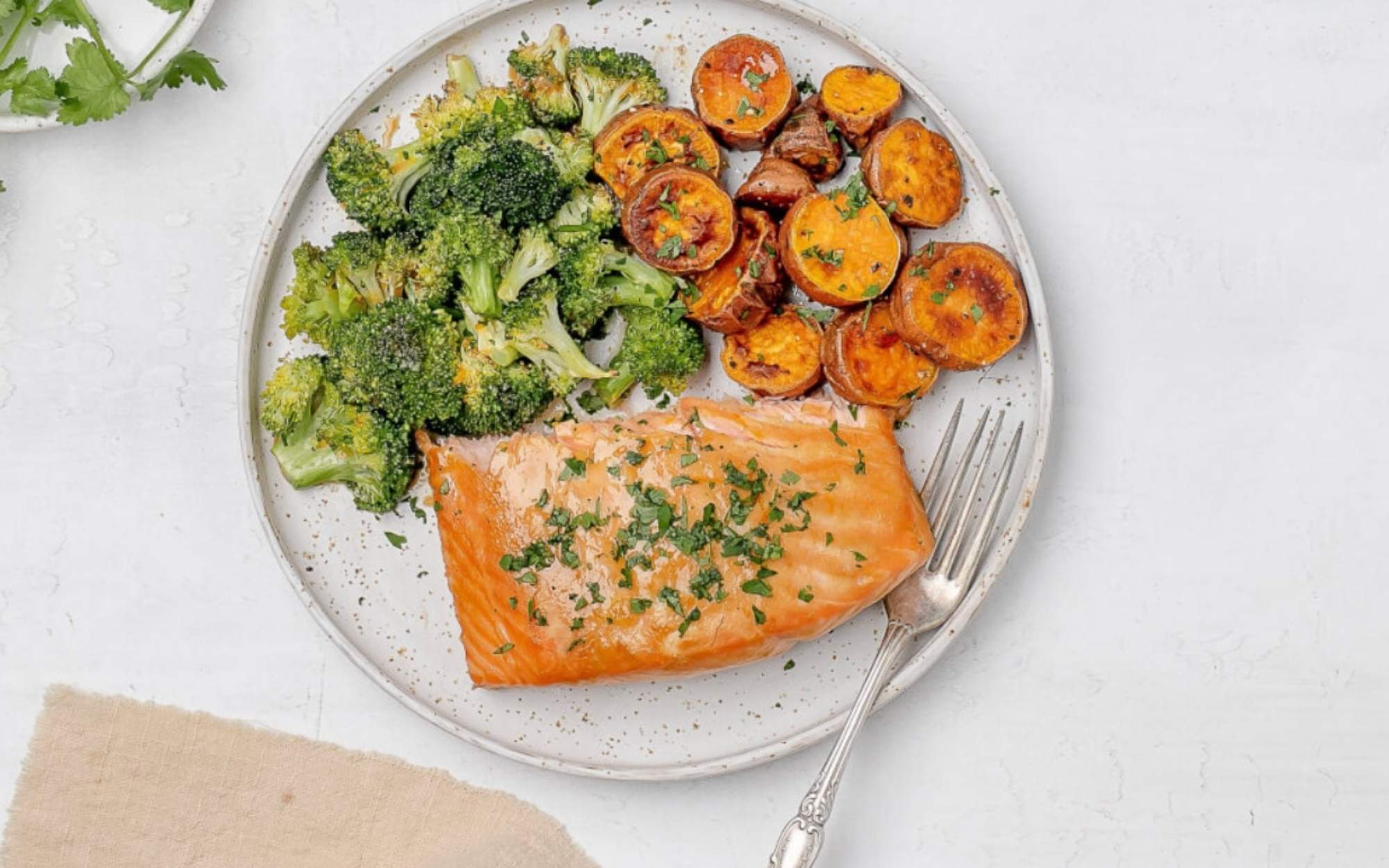
This Miso Glazed Salmon with Sweet Potato and Broccoli delivers all three.
Instead of refined grains or sugary sauces, this dish pairs omega-3 rich salmon with fiber-packed sweet potatoes and cruciferous vegetables. The miso glaze adds bold flavor without added sugars. The result is a balanced plate that helps reduce post-meal blood sugar spikes while keeping you satisfied.
Research consistently shows that combining protein, fiber, and healthy fats improves postprandial glucose control compared to high-carbohydrate meals alone [1]. That principle is built into this recipe.
Salmon: Protein and Omega-3s for Insulin Sensitivity
Salmon is one of the most supportive sources of protein for metabolic health. It provides complete protein along with EPA and DHA, two important omega-3 fatty acids.
Chronic inflammation plays a major role in insulin resistance. Omega-3 fatty acids have been shown to reduce inflammatory markers and may improve insulin signaling pathways [2]. For individuals with type 2 diabetes, reducing inflammation can help improve insulin sensitivity over time.
Protein also slows gastric emptying, meaning carbohydrates enter the bloodstream more gradually. This helps prevent sharp glucose spikes after meals [3]. In this recipe, the salmon acts as the anchor that stabilizes the entire plate.
Sweet Potatoes: Choosing the Right Carbohydrates
Carbohydrates are not the enemy. The type and pairing are what matter.
Sweet potatoes are rich in fiber and antioxidants such as beta-carotene. Fiber slows the absorption of glucose into the bloodstream, supporting improved glycemic control. Compared to refined carbohydrates, whole-food starches like sweet potatoes provide vitamins, minerals, and plant compounds that support overall metabolic health.
When sweet potatoes are paired with protein, olive oil, and fiber-rich vegetables, their impact on blood sugar changes significantly. Instead of a rapid spike, you get a slower, steadier rise in glucose.
Broccoli and Miso: Gut Health and Glucose Regulation
Broccoli is more than just a side vegetable. It contains sulforaphane, a plant compound that has been studied for its potential to improve fasting blood glucose and reduce oxidative stress in people with type 2 diabetes [4].
Fiber from broccoli also feeds beneficial gut bacteria. Emerging research shows that gut microbiome diversity is closely linked to insulin sensitivity and metabolic health [5]. Supporting gut health may indirectly support blood sugar control.
Miso, a fermented soybean paste, adds depth of flavor and provides fermented compounds that may benefit the gut microbiota. Fermented foods have been associated with improved metabolic markers in several studies [6]. While miso should be used mindfully due to sodium content, small amounts can fit well into a balanced, whole-food diet.
Healthy Fats and Heart Protection
This recipe uses extra virgin olive oil, which is rich in monounsaturated fats. These fats have been linked to improved insulin sensitivity and better cardiovascular outcomes [7].
For people with type 2 diabetes, heart health is essential. Cardiovascular disease remains a leading complication of diabetes. Replacing saturated fats with monounsaturated fats like olive oil is one evidence-based strategy to support both blood sugar and heart health.

Miso Glazed Salmon, Sweet Potato & Broccoli
- 1 1/2 tbsps Miso Paste
- 1 tbsp Tamari
- 1/4 Navel Orange (juiced and zested
- 10 ozs Salmon Fillet
- 1 tbsp Extra Virgin Olive Oil (divided)
- Salt & Black Pepper (to taste)
- 4 cups Broccoli (chopped)
- 2 tbsps Cilantro (finely chopped
- 1 Sweet Potato (large, sliced)
- 1 1/2 tsps Rice Vinegar
- In a small bowl, whisk together the miso, tamari, vinegar, orange juice, and orange zest. Pour half into a shallow baking dish and reserve the other half.
- Place the salmon in the baking dish and toss to coat. Transfer it to the fridge to marinate for two hours.
- Preheat the oven to 425ºF (220ºC) and remove the salmon from the fridge. Place the sweet potato on a large baking sheet, drizzle with half the oil, and season with salt and pepper. Transfer to the oven and cook for 10 minutes.
- Remove the baking sheet from the oven and make space for the salmon and broccoli. Place the salmon and broccoli on the baking sheet. Drizzle the remaining oil on the broccoli. Return to the oven and cook for 12 to 14 minutes, until everything is cooked through.
- Pour the remaining miso sauce over the broccoli and salmon. Divide the salmon, broccoli, and sweet potato evenly onto plates. Garnish with cilantro and enjoy!
A Meal That Works With Your Metabolism
Managing type 2 diabetes does not require extreme restriction. It requires thoughtful structure. This dish provides high-quality protein, fiber-rich carbohydrates, anti-inflammatory fats, and antioxidant-rich vegetables in one balanced plate. Each ingredient plays a role in supporting stable blood sugar and long-term metabolic health.
Small, consistent changes–like building meals around protein, fiber, and healthy fats–can lead to meaningful improvements in fasting glucose, A1c, and overall energy over time.
References
[1] Joslin Diabetes Center (2021). Carbs, Protein, Fats. Joslin.org.
[2] Calder (2010). Omega-3 fatty acids and inflammatory processes. Nutrients.
[3] Krezowski et al. (1986). The effect of protein ingestion on the metabolic response to oral glucose in normal individuals. American Journal of Clinical Nutrition.
[4] Axelsson et al. (2017). Sulforaphane reduces hepatic glucose production and improves glucose control in patients with type 2 diabetes. Science Translational Medicine.
[5] Janssen & Kersten (2015). The role of the gut microbiota in metabolic health. FASEB Journal.
[6] Marco et al. (2017). Health benefits of fermented foods: Microbiota and beyond. Current Opinion in Biotechnology.
[7] DiNicolantonio & O’Keefe (2022). Monounsaturated fat vs saturated fat: Effects on cardio-metabolic health and obesity. Missouri Medicine.

Diana is a nationally recognized Registered Dietitian and Certified Diabetes Care and Education Specialist (CDCES), and holds a Master’s degree in Nutrition Science and Policy from the Tufts Friedman School of Nutrition. She received her education and dietetics training from Villanova University, Tufts University, and UC San Diego Health. Diana has over 8 years of experience working in the field of type 2 diabetes.








Leave a Comment