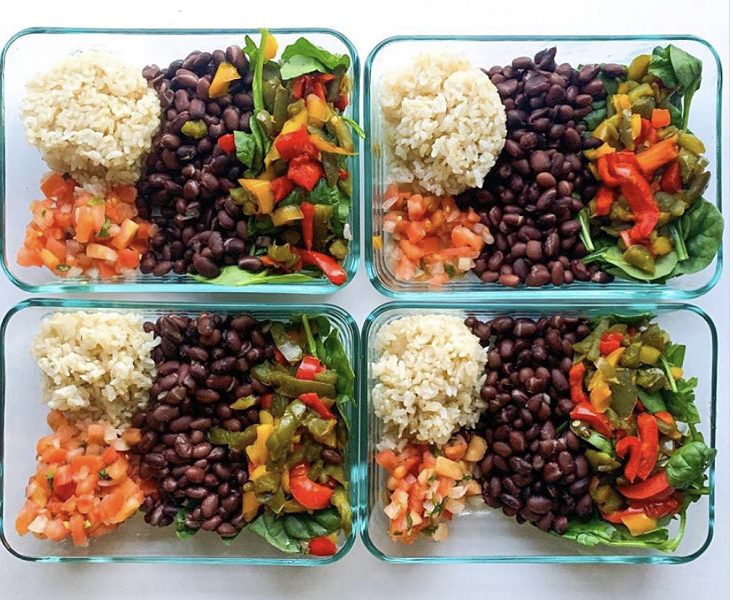
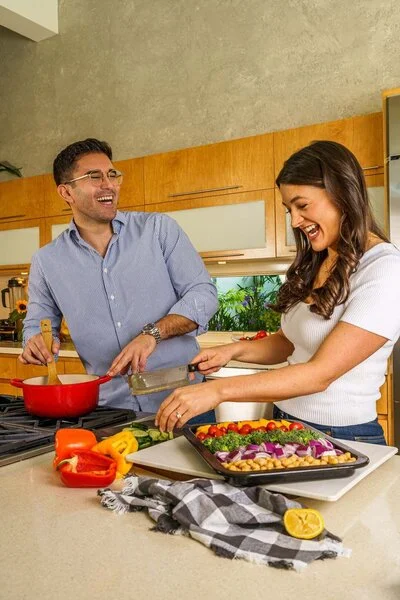
Plant-based meal prepping is just as easy as regular meal planning. With plant-based foods and the proper tools, you'll save time in the kitchen and receive the benefits of improved health and better glucose management.
For meal-prepping containers, we recommend glass over plastic, as research shows that chemicals in plastic containers can leach into our food and disrupt our hormones.
Here are our top favorites:
- Komuee Glass Meal Prep Containers
- Bayco Compartment Glass Meal Prep Containers
- You can find our favorite kitchen tools for healthy meal prepping at 10 Kitchen Appliances to Help Reverse Type 2 Diabetes.
If you are unsure where to start with plant-based meal prepping, use our handy plant-based formula to guide your choices. Here are some simple, portable ways to use our plant-based formula.
STEP 1: NON-STARCHY VEGETABLES
Non-starchy veggies are very low in calories and very high in micronutrients. Micronutrients help our pancreas produce insulin. For these reasons, you may add them to your meals without restriction! Below are some examples:
- Carrots
- Cucumber
- Celery
- Bell Peppers
- Onions
- Tomatoes
- Dark leafy greens
- Cauliflower
- Broccoli
- Brussel sprouts
- Eggplant
STEP 2: PLANT-BASED PROTEIN
Legumes and beans are great ways to easily meet your protein needs. Aim for about 1/2 – 1 cup of plant-based proteins. Below are some great options:
- Black beans
- Chickpeas
- Kidney beans
- Lentils
- Edamame
- Tofu
- Tempeh
- Seitan
STEP 3: HIGH FIBER CARBS
High-fiber carbs are important for managing blood glucose levels. Below are great options to include in your meals. Aim for 1/2 – 1 cup or 1 medium.
- Quinoa
- Brown rice
- Farro
- Sweet potato
- Potato
- Plantains
- Corn
STEP 4: ADD-ONS
Add-ons are optional but can provide some great flavor and nutrients to meals. Aim for the quantities below:
- ⅓ cup olives
- 100-calorie guacamole pack
- ¼ avocado
- 1/4 cup oil-free hummus
- 2 tbsp oil-free dressing & sauces
- 1 tbsp seeds
- 2 tbsp chopped nuts
STEP 5: FLAVORINGS
There are many fantastic herbs, spices, and flavorings that can give meals an extra kick. These are unlimited since they are extremely low in calories. Try some out below:
- Balsamic vinegar (any kind of vinegar)
- Lemon juice
- Mustard
- Salsa & pico de gallo
- Salt & pepper
- Mrs. Dash (for a salt-free alternative)
- Garlic & onion powder
- Dried oregano
- Nutritional yeast
- Low-sodium soy sauce
Lunch Examples
Using the formula above, here are some great lunch ideas that take 5 minutes or less and won't break the bank!
1. Burrito Bowls
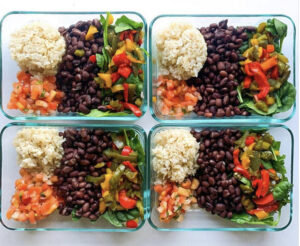
- Non-starchy veggies: lettuce + tomatoes & onions + stir-fried bell peppers
- Plant-based protein: black beans
- High fiber carbs: brown rice
- Add-on: 100-calorie guacamole packet or ¼ avocado
- Seasoning: Dried oregano, salt & pepper, gico de gallo
2. Greek Bowls

- Non-starchy veggies: cherry or grape tomatoes + chopped cucumber
- Plant-based protein: chickpeas
- High fiber carbs: brown rice, farro, or quinoa
- Add-on: 1/3 cup olives or 1/4 avocado
- Seasonings: oregano, salt & pepper, balsamic vinegar, lemon juice, garlic powder
3. Collard Wrap Sandwiches
- Non-starchy veggies: collard green leaves + shredded carrots
- Plant-based protein: kidney beans
- High fiber carbs: quinoa
- Add-on: ¼ avocado + sauerkraut
4. “Poke” Bowls

- Non-starchy veggies: small cucumbers, sliced + purple cabbage
- Plant-based protein: edamame
- High fiber carbs: ½ cup brown rice
- Add-on: ¼ avocado or 1 tbsp sesame seeds
- Seasoning: low-sodium soy sauce, lemon juice
5. Fall Harvest Bowl
- Non-starchy veggies: kale with roasted broccoli, onions, and cauliflower
- Plant-based protein: tofu
- High fiber carbs: 1 medium sweet potato
- Add-on: 1/4 cup oil-free hummus
6. Mexican Bean Salad
- Non-starchy veg: lettuce + tomatoes & onions + stir-fried bell pepper
- Plant-based protein: ½-1 cup black beans
- High fiber carbs: 1 cup of corn
- Add-on: 100-calorie guacamole packet or ¼ avocado
- Seasonings: oregano, salt & pepper, gico de gallo, etc.
You can find our favorite kitchen tools for quick, healthy meal prepping in 10 Kitchen Appliances to Help Reverse Type 2 Diabetes.

Diana is a nationally recognized Registered Dietitian and Certified Diabetes Care and Education Specialist (CDCES), and holds a Master’s degree in Nutrition Science and Policy from the Tufts Friedman School of Nutrition. She received her education and dietetics training from Villanova University, Tufts University, and UC San Diego Health. Diana has over 8 years of experience working in the field of type 2 diabetes.



One Response
In the 5 step description of various veggies and foods, you use servings examples. Are these referring to each meal or are they daily servings?