Never grab a box of crackers just because the front says “whole grain” or “healthy.” Flip it over and you will often find refined flour, added sugar, and oils that do nothing good for your blood sugar. If you live with type 2 diabetes or prediabetes, the cracker aisle can feel like a minefield, since the wrong box can send your glucose climbing fast. The good news is that some crackers are genuinely built to keep your numbers steady. Below, you will find the label clues that matter most, five crackers worth putting in your cart, and the pairing trick that makes any cracker work harder for you.
The Label Clues That Actually Predict a Blood Sugar Spike
Fiber is the first thing worth checking, and it is nearly non-negotiable. Think of fiber as a speed bump for the sugar in your food. Without it, the carbohydrate in a cracker digests quickly, and your blood sugar shoots up fast, but with enough fiber, that same carbohydrate breaks down slowly, so you get a gentle rise instead of a sharp spike. A large systematic review of adults with prediabetes and type 1 or type 2 diabetes found that increasing daily fiber intake meaningfully improved blood sugar, cholesterol, and body weight, and was tied to a lower risk of early death [1]. That same review identified whole grains as one of the easiest ways to close the fiber gap, since whole-grain products retain the bran and germ, while refined grains strip both away, leaving mostly fast-digesting starch behind [1]. The other label detail worth a second look is added sugar and processed fat. Many packaged crackers sneak in sugar for flavor and partially hydrogenated oils for shelf life, and a large review of observational studies found that higher trans fat intake was linked to a greater risk of both cardiovascular disease and type 2 diabetes [3], a combination that matters even more since heart disease risk already runs higher for people managing diabetes.
Why Protein Deserves a Second Look
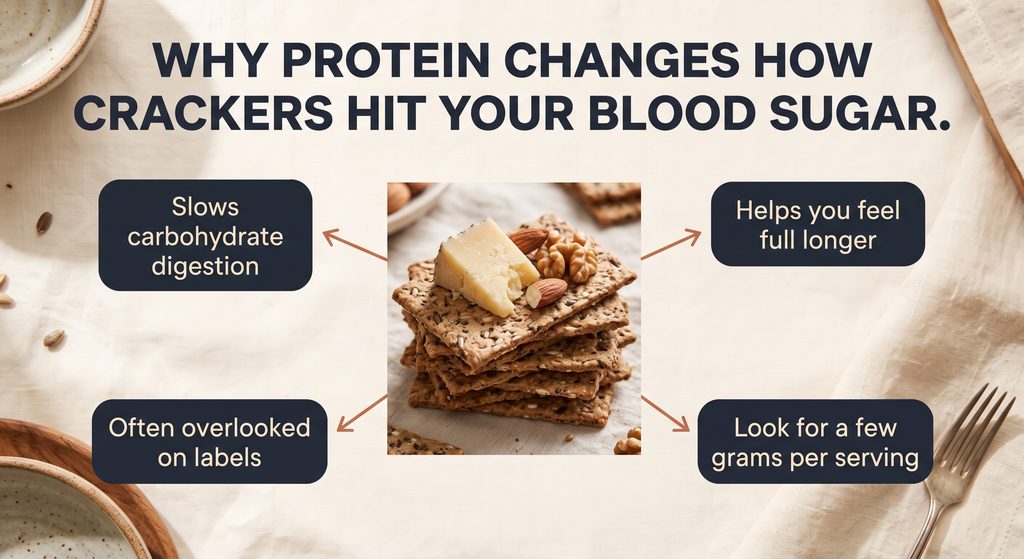
Protein gets overlooked constantly, but it may do more for your blood sugar than people realize. In a controlled study of adults with untreated type 2 diabetes, researchers raised dietary protein from 15 percent to 30 percent of daily calories while lowering carbohydrate intake by the same amount. Over five weeks, the higher-protein diet reduced the 24-hour blood sugar response by roughly 40 percent and lowered A1c more than the standard comparison diet [2]. Protein also slows digestion and helps you feel satisfied, which matters when a few crackers can easily turn into half a sleeve if nothing is holding your appetite in check. When you are comparing boxes, a cracker with a few grams of protein per serving will generally treat your blood sugar more kindly than one that is mostly starch.
Five Crackers That Check Every Box
Simple Mills Almond Flour Crackers swap wheat for a blend of almond and cassava flour, which naturally lowers the carbohydrate count while raising healthy fat, protein, and fiber all at once. A serving of the Fine Ground Sea Salt or Farmhouse Cheddar varieties provides 3 grams of protein and 2 grams of fiber for 150 calories, numbers that hold steady across most flavors in the lineup. They come in flavors like Farmhouse Cheddar and Fine Ground Sea Salt, and a nut-free Sprouted Seed version covers the same bases for anyone avoiding nuts, leaning on sunflower and flax seeds rather than nut flour for its structure.
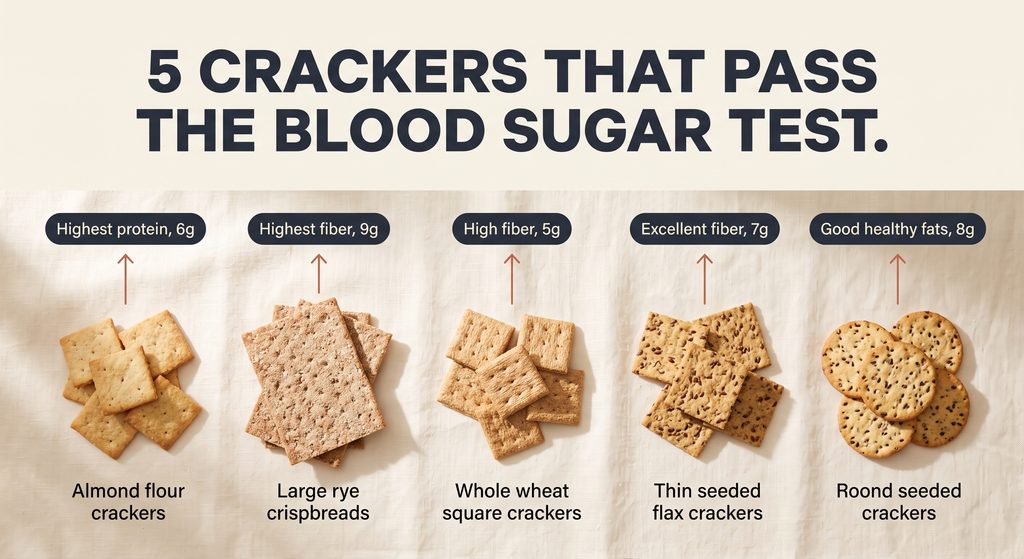
Wasa Crackers are the large, sturdy option, closer to an edible plate than a chip, and their simple whole grain ingredient list makes them a solid everyday pick, especially once you start loading them with toppings. The Fiber Rye variety stands out most, with three slices delivering close to 9 grams of fiber and just over 4 grams of protein for only 100 calories, putting it among the highest fiber crackers available at a regular grocery store. Triscuit Original Whole Grain Wheat Crackers are made from 100 percent whole grain wheat, and six crackers provide 3 grams of fiber and 3 grams of protein, while the lower-carbohydrate Triscuit Thin Crisps offer 4 grams of fiber and 3 grams of protein in a 15-cracker serving, making either version an easy swap if wheat crackers are already part of your routine.
Flackers Flax Seed Crackers might be the most surprising pick on this list, since they are made almost entirely from flaxseed with little else beyond water, salt, and seasoning. Roughly 8 crackers deliver an impressive 9 grams of fiber and 6 grams of protein, numbers that rival what you would expect from a handful of nuts rather than a cracker, and flax also supplies omega-3 fatty acids, which a meta-analysis of randomized trials found can favorably shift several cardiometabolic markers in adults with type 2 diabetes, including blood sugar control and blood lipids [4]. The texture leans dense and a little chewy rather than crisp, closer to a seeded cracker bread than a traditional snack cracker, though the Rosemary and Thyme flavors keep them from tasting like a supplement. Rounding out the list, Mary's Gone Crackers Super Seed Crackers pack in seeds and whole grains for 3 grams of fiber and a standout 5 grams of protein in a 15-cracker serving, making them worth grabbing if staying full is your main goal. They are also certified gluten-free and made without corn or soy, which matters if you are managing food sensitivities alongside blood sugar, and their savory, slightly nutty flavor holds up well whether you eat them plain or topped with something more substantial.
The Portion Mistake That Undoes Everything
Even the most fiber-rich, protein-packed cracker on this list still has carbohydrates in it, and those carbohydrates add up fast once you stop paying attention to serving size. Studies comparing self-reported portions with actual weighed amounts have found that people commonly misjudge how much they eat, sometimes by well over 40 percent depending on the food. A handful of crackers is rarely just one serving, so measuring out a portion the first few times, instead of eating straight from the box, can matter as much as which brand you choose.
What to Pair With Your Crackers So They Actually Work
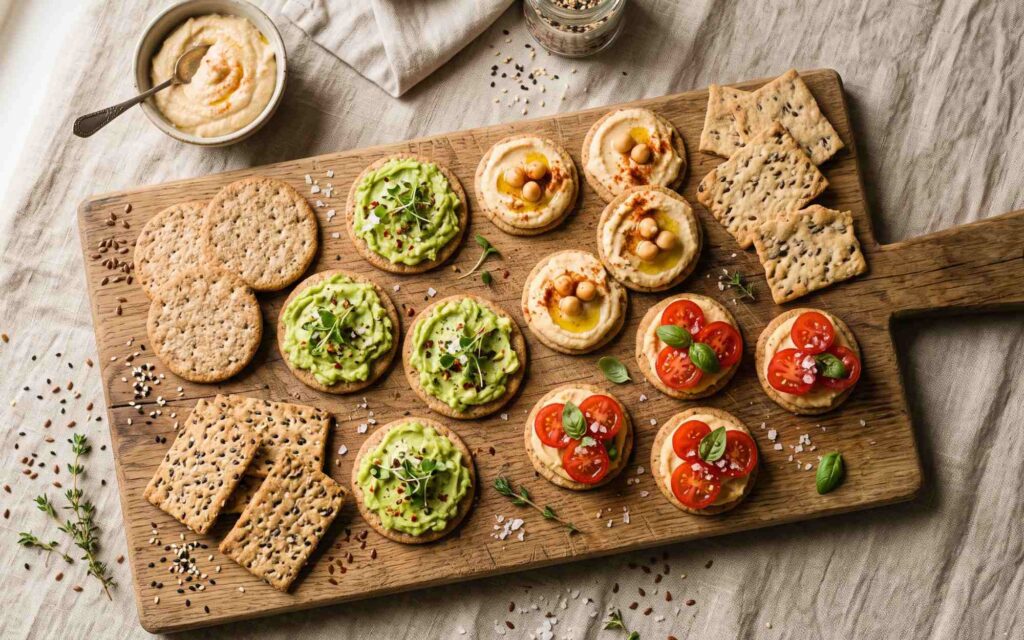
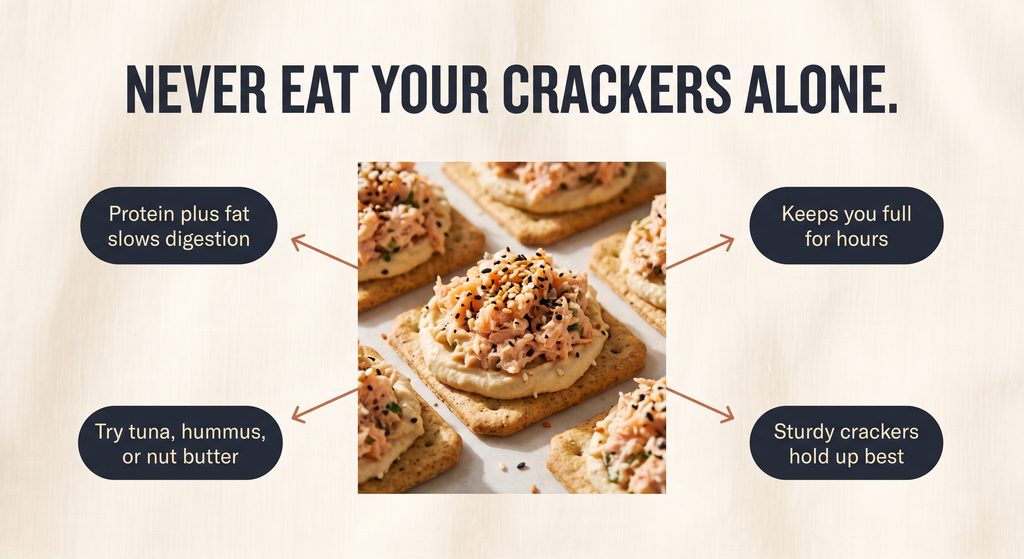
A cracker eaten alone is still mostly a carbohydrate delivery system, even a good one. Pairing it with protein and healthy fat slows digestion further and keeps you satisfied for hours instead of twenty minutes. Tuna or salmon salad, hummus, or cottage cheese with everything bagel seasoning all work well, and the sturdier Wasa crackers hold up especially nicely under a hearty topping. Nut butter without added sugar is another easy option, and mashed avocado with a sprinkle of sea salt and lemon juice on a Triscuit is simple and satisfying. For more ways to build steady, all-day blood sugar control, check out our ultimate blueprint for perfect fasting blood sugar, or grab our free insulin resistance checklist to get started today.
References
[1] Reynolds, A. N., Akerman, A. P., & Mann, J. (2020). Dietary Fibre and Whole Grains in Diabetes Management: Systematic Review and Meta-Analyses. PLOS Medicine.
[2] Nuttall, F. Q., & Gannon, M. C. (2004). Metabolic Response of People with Type 2 Diabetes to a High Protein Diet. Nutrition & Metabolism.
[3] de Souza, R. J., Mente, A., Maroleanu, A., Cozma, A. I., Ha, V., Kishibe, T., Uleryk, E., Budylowski, P., Schünemann, H., Beyene, J., & Anand, S. S. (2015). Intake of Saturated and Trans Unsaturated Fatty Acids and Risk of All Cause Mortality, Cardiovascular Disease, and Type 2 Diabetes: Systematic Review and Meta-Analysis of Observational Studies. BMJ.
[4] O'Mahoney, L. L., Matu, J., Price, O. J., Birch, K. M., Ajjan, R. A., Farrar, D., Tapp, R., West, D. J., Deighton, K., & Campbell, M. D. (2018). Omega-3 Polyunsaturated Fatty Acids Favourably Modulate Cardiometabolic Biomarkers in Type 2 Diabetes: A Meta-Analysis and Meta-Regression of Randomized Controlled Trials. Cardiovascular Diabetology.

Diana is a nationally recognized Registered Dietitian and Certified Diabetes Care and Education Specialist (CDCES), and holds a Master’s degree in Nutrition Science and Policy from the Tufts Friedman School of Nutrition. She received her education and dietetics training from Villanova University, Tufts University, and UC San Diego Health. Diana has over 8 years of experience working in the field of type 2 diabetes.