If you've been told that bread is completely off the table now that you're watching your blood sugar, I have some good news. Bread isn't one single food that behaves the same way every time you eat it. Some loaves hit your bloodstream fast and quietly make insulin resistance worse, while others, chosen and eaten the right way, can fit comfortably onto a blood-sugar-friendly plate.
The real question was never “is bread bad?” It's how processed the bread is, how quickly it digests, what you eat alongside it, and how sensitive your cells already are to insulin. Below are the three breads we've recommended to thousands of people working to lower their blood sugar levels, along with exactly how to eat them.
Why Bread Isn't Really the Problem
Most of the bread on supermarket shelves is soft, airy, and stripped of its fiber, which is why it turns into glucose almost as fast as a spoonful of sugar. The trouble isn't the word “bread”, it's the speed. When a carbohydrate is digested in just a few minutes, it floods your bloodstream, your pancreas scrambles to pump out insulin, and over the years, that repeated stress chips away at insulin sensitivity. The three loaves below share one quiet advantage: they slow that process down, ask less of your pancreas, and keep you full for longer.
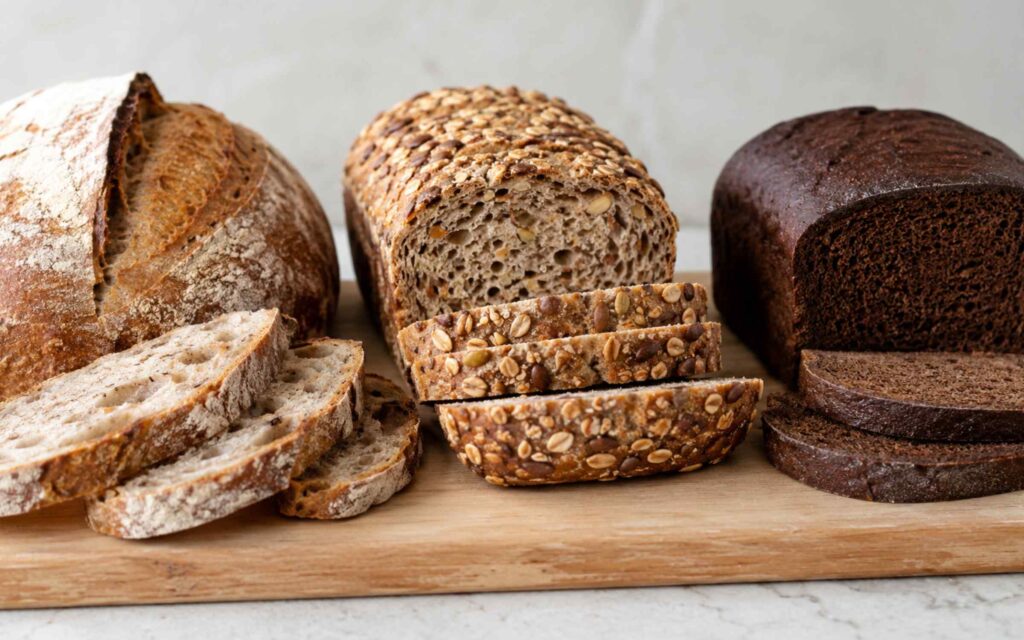
#1: Real Sourdough — The Fermentation Advantage
People often ask me why they can eat bread every day on a trip to Europe and feel fine, then come home and watch their glucose go haywire. There's no single answer; wheat variety, portion size, and the rest of the meal all play a role, but one thing is clear: authentic sourdough is metabolically different from standard commercial bread. During slow fermentation, wild yeast and friendly bacteria produce organic acids that lower the bread's pH and change how fast it breaks down in your gut. In a study of people with impaired glucose tolerance, a meal made with real sourdough produced a noticeably lower glucose and insulin response than the same meal made with ordinary yeast bread [1].
That second part matters most because it means the pancreas didn't have to work as hard, and less metabolic stress is exactly what you want over time. Just make sure it's the genuine article: flour, water, salt, a long ferment, and no synthetic additives. And don't eat it alone on an empty stomach, pair a slice with protein, fiber, and vegetables, like sourdough with mashed chickpeas and tomato.
#2: Sprouted Grain Bread — The Practical Everyday Pick
If sourdough is the most interesting loaf metabolically, sprouted grain bread is probably the most practical one for daily life. Sprouting changes the grain before it's ever baked: enzymes become active, some starches begin to break down, and the finished loaf ends up with more fiber, more protein, and a more intact grain structure than soft white bread. In one study of overweight and obese men, sprouted grain bread produced the lowest blood sugar response of all the breads tested [2]. It's also more filling, and that detail matters.
When bread genuinely satisfies you, you're less likely to go hunting for something sweet 45 minutes later and trigger the glucose rollercoaster that wrecks your afternoon. Read the label closely, though, because some products only sprinkle in a little sprouted grain, so they sound healthy. You want sprouted whole grains and legumes listed as the main ingredients. I personally buy Ezekiel bread; it's flourless, low in sodium, sugar-free, and made entirely from sprouted grains and legumes. Two slices with hummus and a few berries are a completely different experience for your body than toast with butter and jam.
#3: Dense Rye and Pumpernickel — The Underrated Loaf
This one flies under the radar, but real pumpernickel or dense rye truly deserves a place here. The keyword is real, not caramel-colored soft bread pretending to be healthy, but dark, heavy bread made from whole or coarsely ground rye.
Because that dense structure is harder for your body to break down quickly, glucose trickles into your bloodstream more gradually instead of arriving all at once. In diabetic volunteers, pumpernickel had a markedly lower glycemic impact than white bread [3], and whole-grain rye has been shown to trigger a lower insulin response than white wheat bread [4]. Pumpernickel is also remarkably filling; you don't eat six slices of it without noticing. One slice with hummus and cucumber, or with a hearty bean chili, leaves you satisfied. Look for a short ingredient list of roughly five or six items, and skip loaves with a long list of preservatives.
The Part Most People Get Wrong
Here's the bigger truth, and it matters more than any single loaf: the bread choice counts, but the rest of the meal counts even more. You can take the best bread in the world and turn it into a poor blood sugar meal by drowning it in butter, skipping the fiber, and sitting still afterward. Or you can pair a smarter bread with lean protein, vegetables, and fruit, take a short walk after eating, and get a completely different outcome. According to research published in Diabetes Care, people who ate their vegetables and protein before the carbohydrate saw their post-meal glucose drop dramatically compared with those who ate the carbohydrate first [5]. That's why we never reduce diabetes to one food. The real issue is insulin resistance, how sensitive your cells are, how much fiber you eat, and how much you move. For a closer look at the foods that quietly make insulin resistance worse, read The Worst Foods for Insulin Resistance on the Type 2 Diabetes Revolution blog.
You don't have to fear bread for the rest of your life, but you also can't pretend that most store-bought loaves aren't fast-digesting and unhelpful for your numbers. So be intentional: choose authentic sourdough, real sprouted grain bread, or dense whole-grain rye, then build the rest of the plate around fiber, protein, and a little movement. For more meal ideas designed around steadier blood sugar, browse The Best Foods to Lower Blood Sugar on the blog. That's how you enjoy your food and move your numbers in the right direction at the same time.
References
[1] Maioli et al. (2008). Sourdough-leavened bread improves postprandial glucose and insulin plasma levels in subjects with impaired glucose tolerance. Acta Diabetologica.
[2] Mofidi et al. (2012). The Acute Impact of Ingestion of Sourdough and Whole-Grain Breads on Blood Glucose, Insulin, and Incretins in Overweight and Obese Men. Journal of Nutrition and Metabolism.
[3] Jenkins et al. (1986). Low Glycemic Response to Traditionally Processed Wheat and Rye Products: Bulgur and Pumpernickel Bread. American Journal of Clinical Nutrition.
[4] Rosén et al. (2009). Endosperm and Whole Grain Rye Breads Are Characterized by Low Post-Prandial Insulin Response and a Beneficial Blood Glucose Profile. Nutrition Journal.
[5] Shukla et al. (2015). Food Order Has a Significant Impact on Postprandial Glucose and Insulin Levels. Diabetes Care.