If you're trying to manage blood sugar, what you drink between meals and before bed can matter just as much as what's on your plate. Sugary sodas and juices are an obvious problem, but even innocent-looking herbal waters and store-bought wellness shots often do little to improve glucose control.
These four drinks are different. Each one is built around an ingredient with real clinical research behind it, from apple cider vinegar to fenugreek to ashwagandha, and each is meant to be used with intention: one before meals, one as a midday reset, two in the evening. None of them replace medication or a balanced plate, but sipped consistently, they give you four more small levers to pull.
Pre-Meal Blood Sugar Sparkler: A Tart Sipper Before Carbs
Ten to fifteen minutes before a carb-heavy meal, this drink is worth having on hand. It combines lemon juice, apple cider vinegar, fresh ginger, a touch of monk fruit or stevia, and sparkling water. Apple cider vinegar is the real engine here. A 2025 dose-response meta-analysis of controlled trials found that apple cider vinegar meaningfully lowered fasting blood sugar and improved insulin sensitivity in people with type 2 diabetes [1]. The acetic acid appears to slow gastric emptying and blunt the enzymes that break starches into glucose. Ginger adds a second layer of support: a meta-analysis of ten randomized trials found it lowered fasting glucose and HbA1c, likely by improving insulin sensitivity [2].
Pre-Meal Blood Sugar Sparkler

Prep Time: 5 minutes Course: Beverage Servings: 1
Ingredients
- 1 tablespoon freshly squeezed lemon juice
- 1 tablespoon apple cider vinegar
- 1 teaspoon finely grated peeled fresh ginger
- Pinch of pure monk fruit extract or stevia extract, to taste
- 1 cup sparkling water
- Ice, for serving
Instructions
- Add the lemon juice, apple cider vinegar, ginger, and sweetener to a highball glass. Stir to combine.
- Add the sparkling water and ice, then gently stir. Serve immediately.
Note: depending on your grater, small bits of ginger may remain in the drink. Strain before serving if you prefer it smoother.
Fenugreek Savory Broth: A Midday Reset in a Mug
Not every blood sugar-friendly drink needs to be sweet. This warm, umami-rich broth uses low-sodium broth, miso, ground fenugreek seed, apple cider vinegar, and a pinch of dried ginger. Fenugreek has one of the longer research trails of any spice used for glucose support. A meta-analysis of ten clinical trials found meaningful reductions in fasting glucose, two-hour post-meal glucose, and HbA1c with fenugreek intake [3]. The soluble fiber in the seed is thought to slow carbohydrate absorption in the gut, while compounds in fenugreek may also help stimulate insulin release. This one works well as an afternoon reset, especially after a lunch that leaned heavily on refined carbs.
Fenugreek Savory Broth
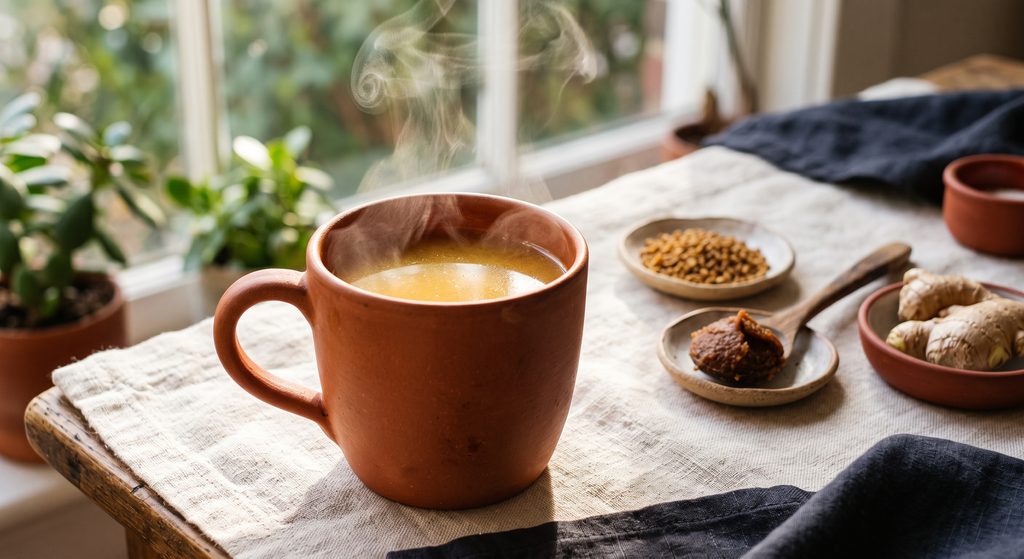
Prep Time: 5 minutes Cook Time: 5 minutes Course: Beverage Servings: 1
Ingredients
- 1 cup low-sodium broth, homemade or store-bought
- 1 teaspoon white or yellow miso paste
- 1/2 teaspoon ground fenugreek seed
- 1/2 teaspoon apple cider vinegar
- 1/4 teaspoon dried ground ginger
Instructions
- Warm the broth in a small saucepan over medium heat until hot but not boiling.
- Whisk in the miso paste, fenugreek, apple cider vinegar, and ginger until fully dissolved and smooth.
- Simmer gently for 2 to 3 minutes over low heat, then pour into a mug and sip warm.
Ceylon Cinnamon Tea: A Steeped Classic With Real Data Behind It
This one is as simple as it looks: a cinnamon stick simmered in water and steeped for fifteen minutes, sweetened if you like. A systematic review and meta-analysis of ten randomized trials in the Annals of Family Medicine found that cinnamon lowered fasting plasma glucose, total cholesterol, and triglycerides in people with type 2 diabetes [4]. Researchers believe compounds in cinnamon mimic insulin's effects and improve how cells respond to it, which is a big part of why this humble spice keeps showing up in diabetes research decade after decade.
Ceylon Cinnamon Tea
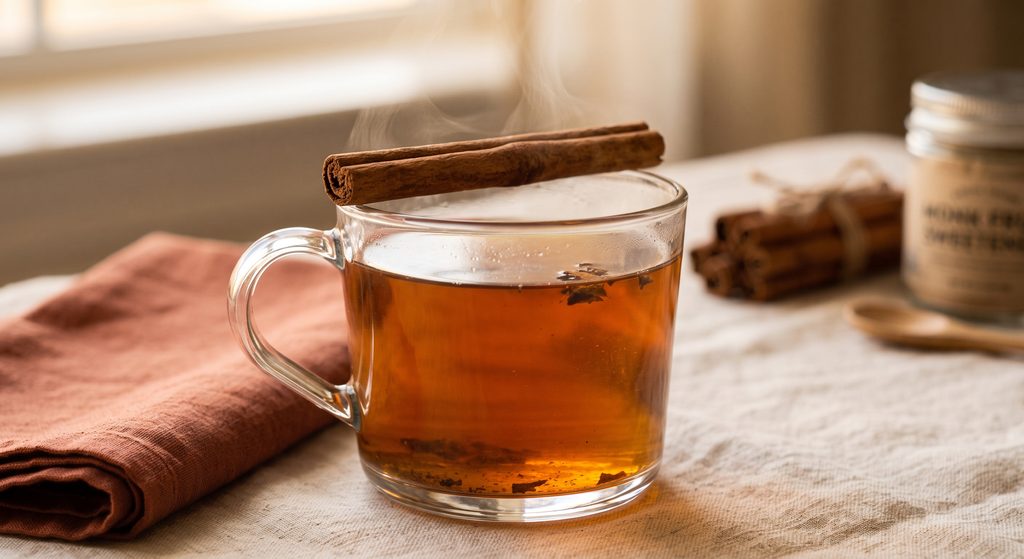
Prep Time: 2 minutes Cook Time: 15 minutes Course: Beverage Servings: 1
Ingredients
- 1 large Ceylon cinnamon stick (or 2 small, or 1/2 teaspoon ground Ceylon cinnamon)
- 1 1/4 cups filtered water
- Noncaloric sweetener of choice, such as monk fruit sweetener (optional)
Instructions
- Combine the cinnamon stick and water in a small saucepan over medium heat. Bring to a boil, then remove from heat, cover, and steep for at least 15 minutes.
- Strain out the cinnamon stick, pour into a mug, and sweeten to taste.
Warm Almond Moon Milk: Magnesium and Ashwagandha Before Bed
This one is dessert-like enough to feel like a treat: milk, almond butter, vanilla, ashwagandha, cinnamon, and nutmeg, whisked into a frothy nightcap. Almond butter provides magnesium, a mineral associated with insulin sensitivity in a dose-response meta-analysis of prospective cohort studies, in which each additional 100 milligrams of daily magnesium intake was linked to a meaningfully lower risk of developing type 2 diabetes [5]. Ashwagandha is the other key player. It's best known for lowering cortisol, the stress hormone that can push blood sugar upward when chronically elevated, and a 2025 meta-analysis of randomized trials found that ashwagandha supplementation significantly reduced both perceived stress and cortisol levels compared with placebo [6]. Stress and poor sleep quietly undermine glucose control just as much as diet does, which is exactly why this drink is designed for the hour before bed rather than the middle of the day.
Warm Almond Moon Milk
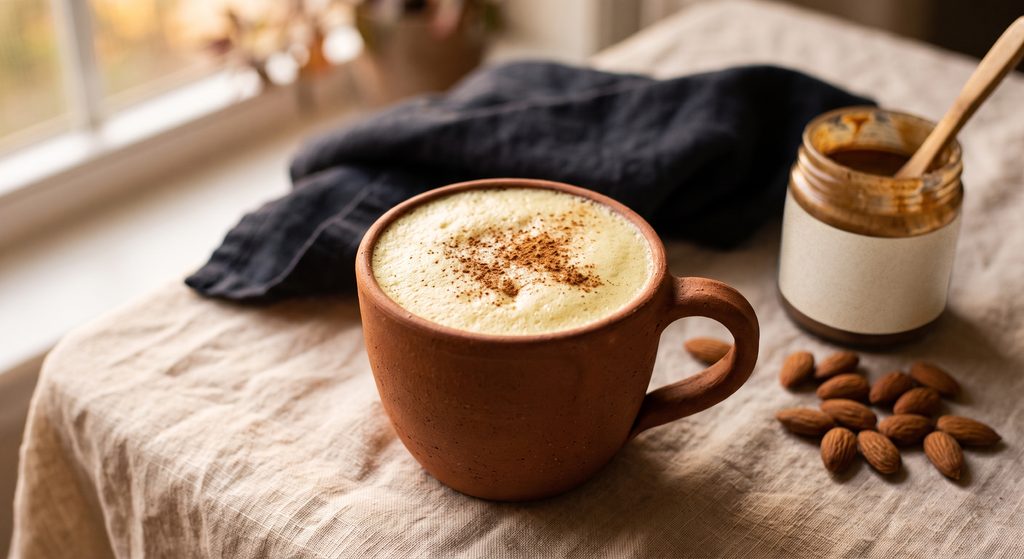
Prep Time: 2 minutes Cook Time: 5 minutes Course: Beverage Servings: 1
Ingredients
- 1 cup milk, such as dairy milk or unsweetened soy milk
- 1 tablespoon almond butter
- 1/2 teaspoon vanilla extract
- 1 capsule JADE Ashwagandha
- 1/8 teaspoon cinnamon
- 1/8 teaspoon nutmeg
- Sweetener of choice, to taste
Instructions
- Warm the milk gently in a small saucepan over low heat until it reaches a light simmer; do not boil. Whisk in the almond butter until fully smooth.
- Add the sweetener, vanilla, ashwagandha, cinnamon, and nutmeg. Whisk continuously for 1 to 2 minutes until well combined and lightly frothy.
- Remove from heat and pour into a mug. Froth briefly with a handheld frother or blender before serving, if desired.
Why These Four Drinks Work Together
None of these are a substitute for the fundamentals: a balanced plate, regular movement, sleep, and whatever your care team has you on. What they add are four small, specific levers you can pull throughout the day: one before a carb-heavy meal, one as an afternoon reset, and two in the hour before bed. If you want to stack the effect even further, pair the Sparkler with a short walk after your next meal. Our post on 5 Post-Meal Movements That Lower Blood Sugar Fast breaks down which movements work best and how soon to start them. And if the magnesium and ashwagandha combination in the Moon Milk interests you, we go much deeper into the dosing and timing in The 4-Part Combo That Fights Insulin Resistance While You Sleep.
References
[1]] Arjmandfard, D., Behzadi, M., Sohrabi, Z., & Mohammadi Sartang, M. (2025). Effects of Apple Cider Vinegar on Glycemic Control and Insulin Sensitivity in Patients With Type 2 Diabetes: A GRADE-Assessed Systematic Review and Dose-Response Meta-Analysis of Controlled Clinical Trials. Frontiers in Nutrition.
[2] Zhu, J., Chen, H., Song, Z., Wang, X., & Sun, Z. (2018). Effects of Ginger (Zingiber officinale Roscoe) on Type 2 Diabetes Mellitus and Components of the Metabolic Syndrome: A Systematic Review and Meta-Analysis of Randomized Controlled Trials. Evidence-Based Complementary and Alternative Medicine.
[3] Neelakantan, N., Narayanan, M., de Souza, R. J., & van Dam, R. M. (2014). Effect of Fenugreek (Trigonella foenum-graecum L.) Intake on Glycemia: A Meta-Analysis of Clinical Trials. Nutrition Journal.
[4] Allen, R. W., Schwartzman, E., Baker, W. L., Coleman, C. I., & Phung, O. J. (2013). Cinnamon Use in Type 2 Diabetes: An Updated Systematic Review and Meta-Analysis. Annals of Family Medicine.
[5] Fang, X., Han, H., Li, M., Liang, C., Fan, Z., Aaseth, J., He, J., Montgomery, S., & Cao, Y. (2016). Dose-Response Relationship Between Dietary Magnesium Intake and Risk of Type 2 Diabetes Mellitus: A Systematic Review and Meta-Regression Analysis of Prospective Cohort Studies. Nutrients.
[6] Bachour, G., Samir, A., Haddad, S., Houssaini, M. A., & El Radad, M. (2025). Effects of Ashwagandha Supplements on Cortisol, Stress, and Anxiety Levels in Adults: A Systematic Review and Meta-Analysis. BJPsych Open.

Diana is a nationally recognized Registered Dietitian and Certified Diabetes Care and Education Specialist (CDCES), and holds a Master’s degree in Nutrition Science and Policy from the Tufts Friedman School of Nutrition. She received her education and dietetics training from Villanova University, Tufts University, and UC San Diego Health. Diana has over 8 years of experience working in the field of type 2 diabetes.