When most people think about lowering blood sugar, they focus on cutting carbs, swapping bread for veggies, or skipping dessert. Those choices matter, but they overlook the biggest player in glucose control: your muscles. Skeletal muscle is the largest glucose disposal system in your body, responsible for clearing most of the sugar that enters your bloodstream after a meal [1].
When that system is strong and responsive, blood sugar normalizes quickly. When it shrinks or becomes resistant, glucose lingers, insulin climbs, and the slow slide toward prediabetes and type 2 diabetes begins.
This is where a small, well-researched supplement enters the conversation. Creatine, yes, the same compound athletes have used for decades, is gaining serious attention in metabolic health because it directly supports the muscle tissue your body relies on to clear sugar. For adults in their 40s, 50s, and 60s already losing muscle each year, the timing matters more than most realize. Below, we'll walk through what creatine actually does, why it's relevant for blood glucose, and how to use it correctly.
What Creatine Really Is (Hint: Your Body Already Makes It)
A common misconception is that creatine is some artificial bodybuilder ingredient. It isn't. Your liver and kidneys produce creatine naturally from three amino acids: glycine, arginine, and methionine — and you also get small amounts from foods like red meat and fish [2]. About 95% of your body's creatine is stored in skeletal muscle, where it acts as a rapid energy reserve for cellular work [2]. The remaining bit fuels other high-demand tissues, including the brain and heart.
Inside the cell, creatine helps recycle ATP, the molecule that powers nearly every biological process. Higher creatine stores mean your muscles can contract harder, recover faster, and adapt more efficiently to exercise. That improved capacity is what eventually translates into stronger, more metabolically active muscle, the kind of muscle that handles glucose well.
How Creatine Connects to Insulin Resistance and Blood Sugar
Here's where it gets interesting for anyone managing type 2 diabetes. Inside your muscle cells are tiny “doors” called GLUT4 transporters. After you eat carbs, insulin signals those doors to move to the cell surface so glucose can enter and be used or stored as glycogen. With insulin resistance, that signal weakens, fewer doors open, and sugar piles up in the bloodstream. Research published in the journal Diabetes showed that oral creatine supplementation increased GLUT4 protein content in human skeletal muscle by roughly 40% during a rehabilitation training period [3]. More transporters mean more glucose is pulled out of circulation, regardless of how well insulin is working.
A landmark trial by Gualano and colleagues took this further in adults with type 2 diabetes [4]. Over 12 weeks, participants taking 5 grams of creatine daily alongside an exercise program saw significantly greater drops in HbA1c and improved post-meal glucose compared with exercise alone, with no negative effect on kidney function. That kind of additive benefit on top of exercise is rare and worth paying attention to.
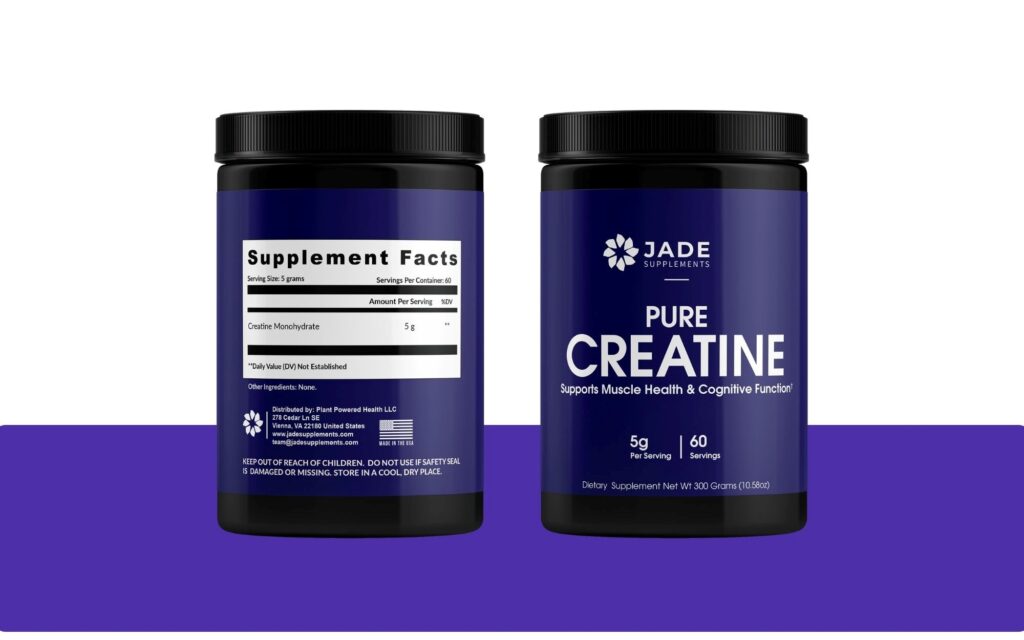
Ready to put this research to work? Quality matters when it comes to creatine. JADE Pure Creatine is a clean, third-party-tested creatine monohydrate at the exact 5g daily dose used in the studies above — no fillers, no junk. Try JADE Pure Creatine here.
Why Creatine Without Strength Training Falls Flat
Here's the part most articles skip: creatine is not a passive pill. It works in partnership with resistance exercise: dumbbells, resistance bands, bodyweight squats, or cable machines. Strength training is the actual signal that tells your muscles to grow denser, more vascularized, and more insulin-sensitive. Creatine simply gives your muscles the energy currency to respond to that signal harder and recover faster. Skip the workouts, and you'll get very little out of the supplement.
You don't need to live in a gym either. Two to three sessions per week of compound movements that recruit large muscle groups: legs, back, chest, are enough to start meaningful change. Every muscle contraction physically pushes GLUT4 transporters to the cell surface, essentially a glucose-clearing event in real time [3].
Why This Matters Even More After 45
After about age 45, adults lose roughly 1 to 2% of their muscle mass each year through a process called sarcopenia. Less muscle means fewer GLUT4 transporters, weaker glucose clearance, and rising insulin resistance — even when your diet hasn't changed. A 2021 systematic review in Nutrients found that combining creatine with resistance training in older adults significantly improved muscle strength and lean mass compared with training alone [5]. Preserving muscle as you age isn't vanity; it's metabolic insurance.
There's also a brain bonus. According to a systematic review in Nutrition Reviews, creatine supplementation has been shown to improve memory and attention, particularly in older adults [6]. Managing diabetes is mentally taxing, so a little extra cognitive support is a welcome side benefit.
How to Take Creatine the Right Way
The clinically established dose is 3 to 5 grams of creatine monohydrate daily, and more is not better. Take it every day, not just on workout days, because the goal is to keep muscle stores saturated over time. Mix it into at least 12 ounces of fluid (water, coffee, or a smoothie all work) and stay well hydrated, since creatine pulls water into muscle cells.
Timing is flexible; morning, with a meal, or post-workout are all fine. Saturation typically takes about three to four weeks, which lines up with how long it takes to feel real adaptation from strength training.
Final Thoughts
Creatine isn't a glucose-lowering medication, and it won't cancel out a poor diet or a sedentary lifestyle. What it does is fuel the system your body already has for clearing sugar, your muscles. When paired with regular resistance work, balanced meals, and good sleep, it becomes a powerful part of a sustainable approach to better blood sugar control. For midlife adults who want to protect both their muscle and their metabolic health, few supplements offer this much science for so little effort.
Ready to get started? Skip the guesswork and grab a creatine you can trust. Shop JADE Pure Creatine here, pure creatine monohydrate, no fillers, formulated for adults serious about protecting their muscles and blood sugar.
References
[1] DeFronzo RA & Tripathy D (2009). Skeletal Muscle Insulin Resistance Is the Primary Defect in Type 2 Diabetes. Diabetes Care.
[2] Kreider RB et al. (2017). International Society of Sports Nutrition position stand: safety and efficacy of creatine supplementation in exercise, sport, and medicine. Journal of the International Society of Sports Nutrition.
[3] Op ‘t Eijnde B et al. (2001). Effect of Oral Creatine Supplementation on Human Muscle GLUT4 Protein Content After Immobilization. Diabetes.
[4] Gualano B et al. (2011). Creatine in Type 2 Diabetes: A Randomized, Double-Blind, Placebo-Controlled Trial. Medicine & Science in Sports & Exercise.
[5] Dos Santos EEP et al. (2021). Efficacy of Creatine Supplementation Combined with Resistance Training on Muscle Strength and Muscle Mass in Older Females: A Systematic Review and Meta-Analysis. Nutrients.
[6] McMorris S et al. (2025). Creatine and Cognition in Aging: A Systematic Review of Evidence in Older Adults. Nutrition Reviews.