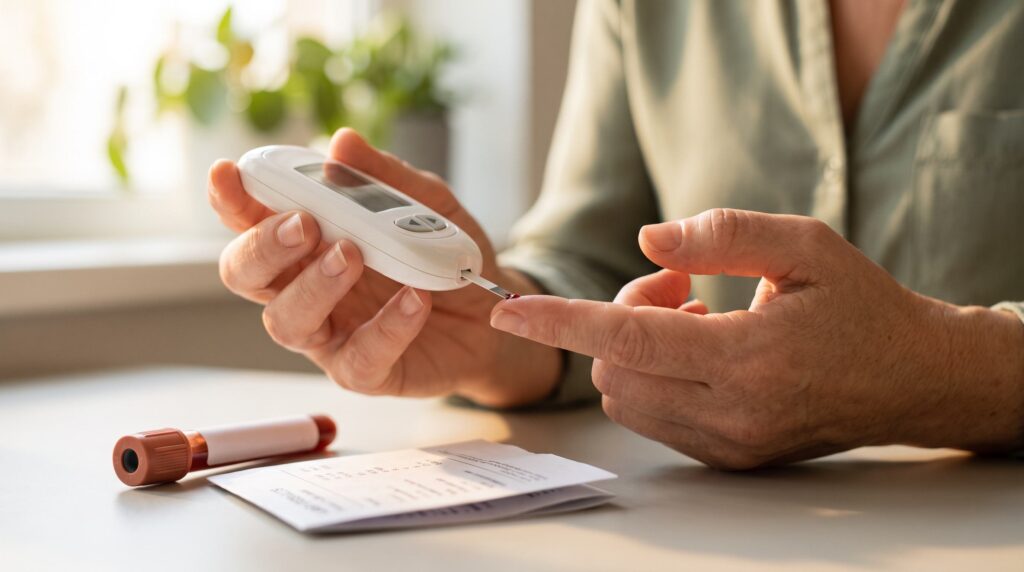
You get your yearly lab results back, see the word “normal,” and breathe a sigh of relief. That's a great starting point. Normal ranges are designed to diagnose disease, though, and research shows risk can start creeping up before you ever reach those lines. As an exercise physiologist working exclusively in metabolic health, I help people close the gap between normal and optimal every day. In this post, I'll walk you through four numbers worth knowing: fasting blood sugar, post-meal blood sugar, A1c, and one that rarely shows up on a standard panel, fasting insulin. For each, you'll get the official range, the tighter target I aim for, and the research behind it. That way, you can have a more informed conversation with your healthcare team.
Fasting Blood Sugar: Why Under 100 Isn't the Finish Line
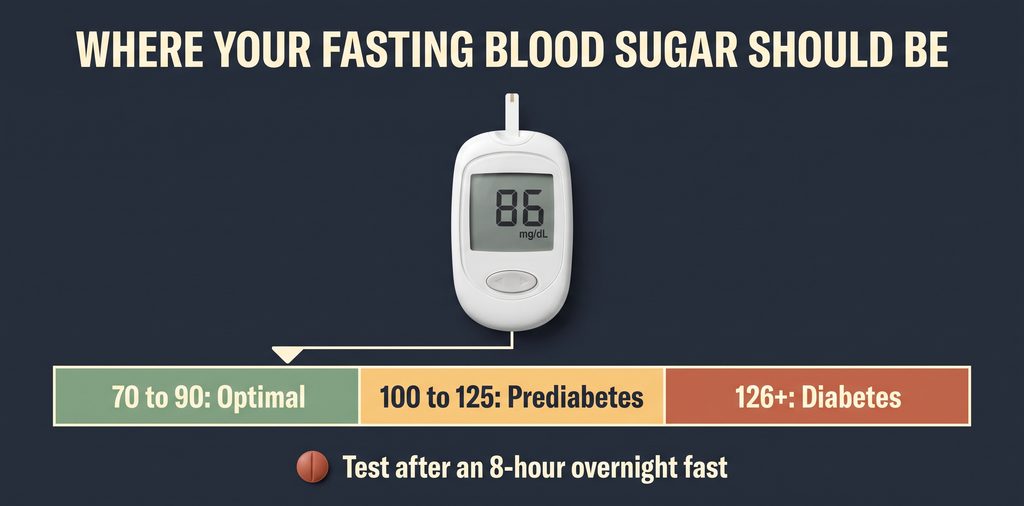
The official guideline says a fasting blood sugar (glucose) under 100 mg/dL is normal, 100 to 125 is prediabetes, and 126 or higher is diabetes. My recommendation is tighter: 70 to 90 mg/dL. A meta-analysis in The BMJ pooled 53 studies and more than 1.6 million people. It found that even mild prediabetes, starting at a fasting level of just 100 mg/dL, carried about a 13% higher risk of cardiovascular disease [1]. Risk doesn't switch on like a light at the diagnostic line. It climbs slowly well before it, which is exactly why your goal should sit comfortably below 100. If your morning readings run high even when you eat well, read Why Fasting Can Raise Your Blood Sugar (And the Real Fix) to learn what may be behind it.
The After-Meal Number That Predicts More Than Your Morning Reading
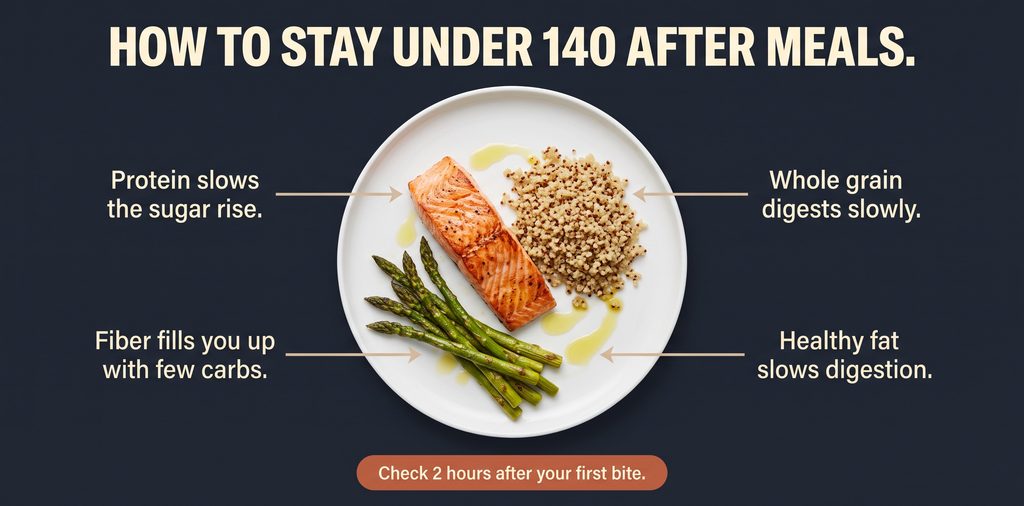
Post-meal blood sugar is often the least-tracked number of the four, since routine lab work is drawn after an overnight fast. I recommend keeping yours under 140 mg/dL, checked two hours after your first bite. An Italian study followed 505 adults with type 2 diabetes for 14 years. Blood sugar two hours after lunch predicted heart attacks, strokes, and early death, while fasting blood sugar did not [2]. An earlier five-year analysis from the same clinic found that link was more than twice as strong in women as in men [3]. If you only test first thing in the morning, you may be missing the reading that matters most. For simple ways to bring it down, check out 5 Post-Meal Movements That Lower Blood Sugar Fast.
Your A1c: The Range Linked to the Lowest Risk
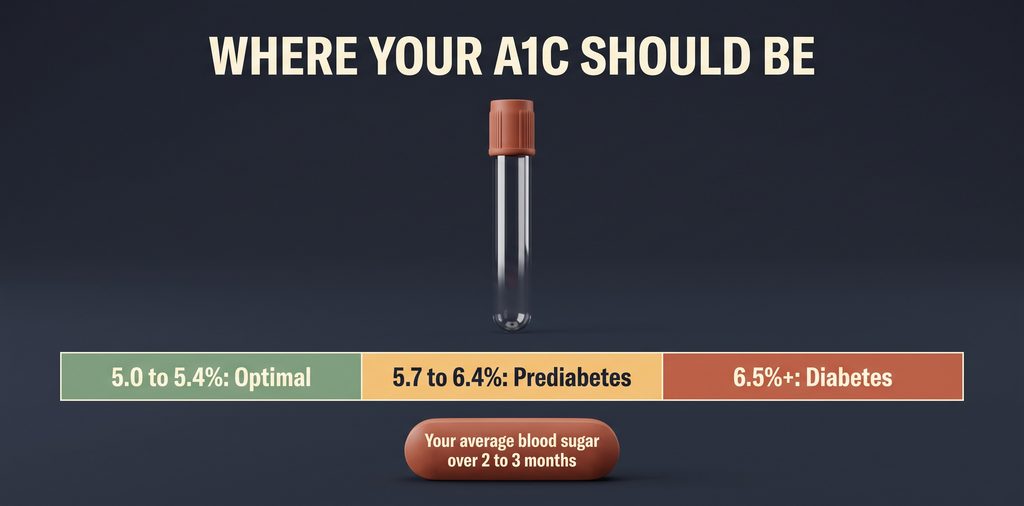
Your A1c reflects your average blood sugar over the past two to three months. Officially, under 5.7% is normal, 5.7 to 6.4% is prediabetes, and 6.5% or higher is diabetes. My recommendation is 5.0 to 5.4%. Harvard researchers studied women from the Nurses' Health Study and men from the Health Professionals Follow-up Study, two of the largest long-term health studies in the country, and excluded anyone with diabetes. Compared with people at an A1c of 5.0 to 5.4%, those at 6.0 to 6.4% had roughly 1.8 to 1.9 times the risk of heart disease [4]. In other words, people who had never been diagnosed with diabetes still faced nearly double the risk. You can read the full Pai et al. study on A1c and heart disease for the details. For what it's worth, my own A1c runs between 4.9 and 5.2%.
Fasting Insulin: The Early Warning Sign Worth Asking About
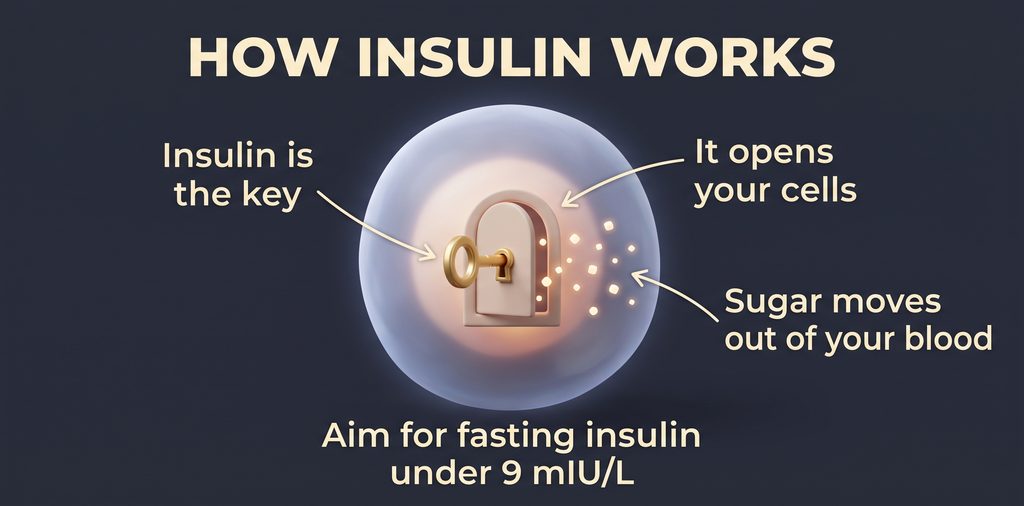
Fasting insulin isn't part of most standard blood panels, and there's no official cutoff. Many labs list anything under about 25 mIU/L as within range. Researchers analyzed data from CARDIA, a study that has followed healthy young adults for more than three decades. The level that best predicted future heart disease was about 9 mIU/L [5]. My recommendation is to stay under 9 and also ask about your HOMA-IR, a simple calculation that uses your fasting glucose and fasting insulin. I aim for under 1.4, ideally closer to 1, and mine runs at 0.85. A meta-analysis of 65 studies found HOMA-IR was more strongly tied to heart disease than fasting glucose or fasting insulin on its own [6]. That matters because type 2 diabetes roughly doubles heart disease risk, so every number in this post is really an early warning for your heart [6].
How to Move All Four Numbers at Once
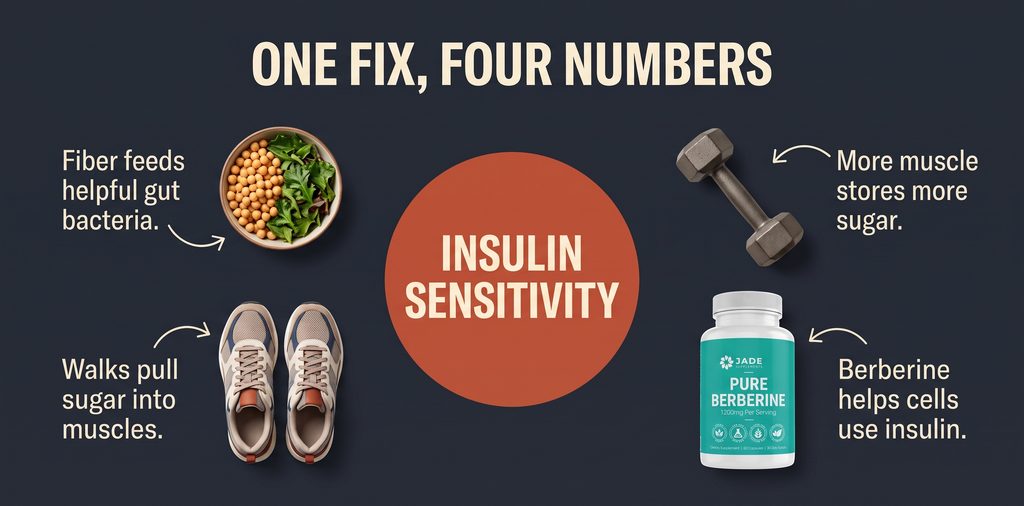
All four numbers trace back to one thing: insulin sensitivity. Picture your cells covered in tiny doors, with insulin as the key. When you're insulin sensitive, the key turns easily, and sugar moves out of your blood and into your cells. With insulin resistance, the doors stick, so your pancreas pumps out more and more insulin to do the same job. That's why fasting insulin often rises years before fasting glucose or A1c budge. Common causes include excess belly fat, poor sleep, ongoing stress, insufficient physical activity, and a diet low in fiber and high in saturated fat.
The encouraging part is that the same habits improve all four numbers at once. High-fiber, plant-forward meals feed the gut bacteria that support better insulin signaling. Post-meal walks let your muscles pull sugar from your blood without needing insulin at all. Strength training builds muscle, which gives glucose more places to go around the clock. I also take JADE Pure Berberine daily, the formula Diana and I created, with one 600 mg capsule at breakfast and one at dinner, because berberine activates a cellular switch called AMPK that helps cells respond to insulin. You can learn more in Berberine for Blood Sugar: Why It Works (For Some), and always check with your doctor first if you take diabetes medication.
Your lab report doesn't have to feel like a mystery anymore. Bring these four numbers to your next checkup, or every six months if you're already managing your blood sugar, and talk through the targets with your healthcare team. Then focus on building insulin sensitivity instead of chasing one number at a time. To get started, grab our free 10-habit insulin resistance checklist for simple daily habits that support every number on your lab report.
References
[1] Huang et al. (2016). Association Between Prediabetes and Risk of Cardiovascular Disease and All Cause Mortality: Systematic Review and Meta-Analysis. The BMJ.
[2] Cavalot et al. (2011). Postprandial Blood Glucose Predicts Cardiovascular Events and All-Cause Mortality in Type 2 Diabetes in a 14-Year Follow-Up: Lessons From the San Luigi Gonzaga Diabetes Study. Diabetes Care.
[3] Cavalot et al. (2006). Postprandial Blood Glucose Is a Stronger Predictor of Cardiovascular Events Than Fasting Blood Glucose in Type 2 Diabetes Mellitus, Particularly in Women: Lessons From the San Luigi Gonzaga Diabetes Study. The Journal of Clinical Endocrinology & Metabolism.
[4] Pai et al. (2013). Hemoglobin A1c Is Associated With Increased Risk of Incident Coronary Heart Disease Among Apparently Healthy, Nondiabetic Men and Women. Journal of the American Heart Association.
[5] Garza et al. (2023). Prognostic Cut Point of Fasting Insulin in Apparently Healthy Young Adults for the Development of Future Cardiovascular Disease. Circulation (Abstract P335). [Confirm author list and link before publishing]
[5] Gast et al. (2012). Insulin Resistance and Risk of Incident Cardiovascular Events in Adults Without Diabetes: Meta-Analysis. PLOS One.

Jose Tejero is an exercise physiologist and two-time Ironman Triathlete. He holds a degree in Exercise Science from the University of Maryland and has over six years of experience working in the field of type 2 diabetes. Jose is currently working towards becoming a Clinical Exercise Physiologist and a Certified Diabetes Care and Education Specialist, combining his two passions: exercise and diabetes care.