You step on the scale, and the number hasn't changed much, yet your pants keep getting tighter around the middle. That's frustrating, but it's also useful information. Weight that settles around your belly, especially fat that feels firm rather than soft, often points to visceral fat, the deep fat that wraps around your liver and other organs. This type of fat is active, sending out inflammatory signals that push blood sugar higher, and it's built by two hormones working together: cortisol and insulin. As a registered dietitian and certified diabetes care and education specialist, I see this pattern often in the people I work with. In this post, I'll walk you through seven daily habits that target both hormones, the research behind each one, and how to stack them together in one week.
Post-Meal Walks: Why Timing Matters More Than Distance
The simplest habit on this list is a 10-minute walk after breakfast, lunch, and dinner. When your muscles contract, they pull sugar out of your blood through a pathway that doesn't need insulin, so your pancreas has less work to do. A study in Diabetologia followed 41 adults with type 2 diabetes and found that walking for 10 minutes after each meal lowered post-meal blood sugar by 12% compared with one 30-minute walk at any time of day [1]. After dinner, usually the biggest and most carb-heavy meal, the drop reached 22% [1]. Blood sugar typically peaks 30 to 90 minutes after eating, so my recommendation is to head out within a few minutes of your last bite. For more ideas, check out 5 Post-Meal Movements That Lower Blood Sugar Fast.

Morning Light: The Free Way to Reset Your Cortisol Curve
Cortisol isn't the enemy. It's meant to rise sharply in the morning to wake you up, then fall all day until it bottoms out at night so you can sleep. Ongoing stress can flatten that curve, leaving you dragging until your second coffee and wide awake at 10 p.m. Morning light is one of the strongest signals your body uses to reset it. In one study, healthy men exposed to bright light right after waking had about 35% higher cortisol than when they woke in the dark [2]. Outdoor light is far brighter than even a sunny kitchen, so I recommend 10 minutes outside within an hour of waking, even on a gray day. A strong morning rise sets up a natural drop by bedtime.

Three Food Shifts That Keep Insulin Lower All Day
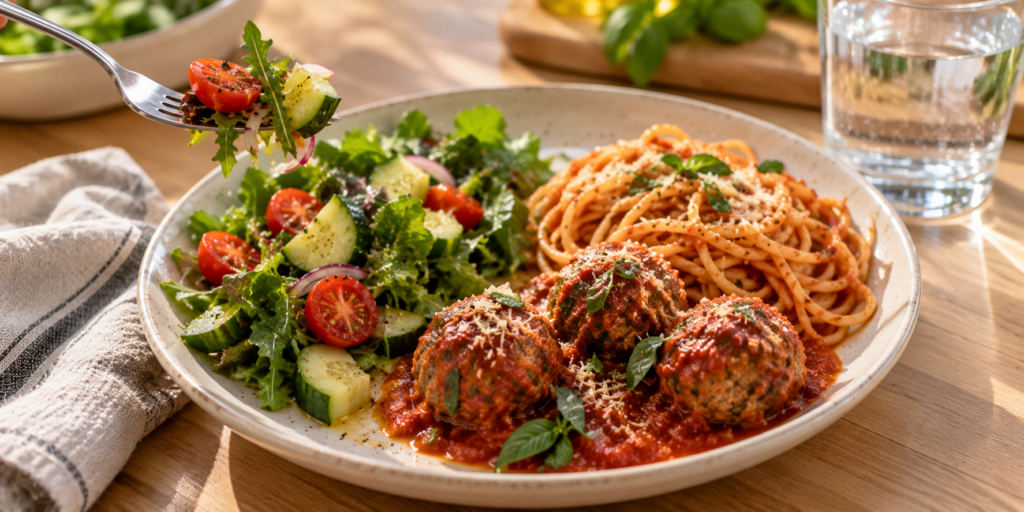
None of these changes remove a single meal from your day. First, close the kitchen between meals and allow 12 to 14 hours overnight without eating, such as dinner done by 7 p.m. and breakfast between 7 and 9 a.m. Constant grazing keeps insulin from ever fully coming down. Second, eat your protein and vegetables first and save the starch for last. In a study of 16 adults with type 2 diabetes, eating carbs last led to a 54% lower blood sugar peak and a lower insulin response than eating the same meal carbs first [3]. Third, cut liquid sugar. In a six-month trial, adults who drank about a liter of regular cola daily more than doubled their liver fat and raised visceral fat by 24% to 31% compared with those drinking milk, diet cola, or water [4]. If cutting back feels hard, read Breaking Up With Sugar Without Feeling Deprived.
Sleep and Late Dinners: The Belly Fat Link Most People Miss
Sleep is often the missing piece. In a Mayo Clinic study on sleep loss and visceral fat, 12 healthy adults who slept four hours a night for two weeks ate more than 300 extra calories a day and gained visceral fat, even though the scale barely moved [5]. The reverse holds true, too.

When 80 adults with overweight received one sleep coaching session, they slept about 1.2 hours longer and ate roughly 270 fewer calories a day, with no diet changes [6]. My recommendation is 7 to 8 hours of sleep, with your last bite at least 3 hours before bed. A late meal raises insulin right when cortisol should be at its lowest, which keeps both hormones working against you overnight.
How to Target Cortisol and Insulin at the Same Time
Every habit above works on the same pairing. Think of cortisol as the delivery truck that drops fuel into your blood, and insulin as the worker who stacks it into storage around your middle. When both stay busy all day, visceral fat builds. Women may be especially sensitive to this, since a Yale study on stress and body shape found that women with more belly fat released more cortisol under stress than women who carried weight on their hips [7].

Some supplements may support both sides. A review of 23 randomized controlled trials with more than 1,700 adults found that ashwagandha significantly lowered cortisol [8]. A 2025 analysis of 12 placebo-controlled trials found that berberine lowered fasting blood sugar and triglycerides and trimmed waist size by about 1.3 inches on average [9]. My protocol is 600 mg of JADE Pure Berberine, the formula Jose and I created, with the first bite of breakfast and dinner, plus JADE Ashwagandha in the evening. You can learn more in Berberine for Blood Sugar: Why It Works (For Some), and always check with your doctor first if you take medication for blood sugar or blood pressure.
None of these habits require a gym, a strict meal plan, or giving up foods you love. Start all seven this week and notice how your energy, cravings, and waistband feel by day seven. For a step-by-step plan with recipes, grab our free guide to clearing liver fat.
References
[1] Reynolds et al. (2016). Advice to Walk After Meals Is More Effective for Lowering Postprandial Glycaemia in Type 2 Diabetes Mellitus Than Advice That Does Not Specify Timing: A Randomised Crossover Study. Diabetologia.
[2] Scheer & Buijs (1999). Light Affects Morning Salivary Cortisol in Humans. The Journal of Clinical Endocrinology & Metabolism.
[3] Shukla et al. (2017). Carbohydrate-Last Meal Pattern Lowers Postprandial Glucose and Insulin Excursions in Type 2 Diabetes. BMJ Open Diabetes Research & Care.
[4] Maersk et al. (2012). Sucrose-Sweetened Beverages Increase Fat Storage in the Liver, Muscle, and Visceral Fat Depot: A 6-Mo Randomized Intervention Study. The American Journal of Clinical Nutrition.
[5] Covassin et al. (2022). Effects of Experimental Sleep Restriction on Energy Intake, Energy Expenditure, and Visceral Obesity. Journal of the American College of Cardiology.
[6] Tasali et al. (2022). Effect of Sleep Extension on Objectively Assessed Energy Intake Among Adults With Overweight in Real-life Settings: A Randomized Clinical Trial. JAMA Internal Medicine.
[7] Epel et al. (2000). Stress and Body Shape: Stress-Induced Cortisol Secretion Is Consistently Greater Among Women With Central Fat. Psychosomatic Medicine.
[8] Fornalik et al. (2026). Hormonal Modulation with Withania somnifera: Systematic Review and Meta-Analysis of Randomized-Controlled Trials. Planta Medica.
[9] Liu et al. (2025). Efficacy and Safety of Berberine on the Components of Metabolic Syndrome: A Systematic Review and Meta-Analysis of Randomized Placebo-Controlled Trials. Frontiers in Pharmacology.